 Email:
 Telephone: +86-13951382065

 English
 中文简体
 русский
 Français
 Español
 عربى

Content
Ask anyone who has spent a decade running a powder plant and they will usually say the same thing: the mill is rarely the first thing that goes wrong. The raw material is. A shipment that arrives two points lower in whiteness, or a little wetter than the last one, can ripple through the whole circuit — output drops, the classifier works harder, and suddenly the operator is chasing a problem that started hundreds of kilometres upstream.
That is why industrial mineral suppliers are worth evaluating the way you would evaluate any long-term production partner, not the way you would shop for a commodity. The mineral itself is only half of the story. The other half is how consistently it can be repeated, batch after batch, year after year.
What Industrial Mineral Suppliers Really Sell
The term covers a wide range of businesses, and it helps to know which one you are talking to. There are mine operators who extract limestone, kaolin, bentonite, silica, barite, gypsum or talc and sell the raw rock. There are processors who buy that rock, crush it, dry it and grind it into a saleable powder. There are traders who own no equipment at all and simply move material between markets. And there are toll processors who grind someone else's material to specification.
Each of these has a different relationship with consistency. A mine operator can control geology but not necessarily particle size. A trader can control delivery dates but not the grinding curve. A processor with its own mill house can control both — and that is usually the supplier who can answer a technical question without forwarding it to someone else.
So when we talk to buyers in metallurgy, building materials and chemicals, the conversation often shifts quickly from "what is your price per tonne" to "how tight can you hold the top cut". That is a healthy sign. It means the buyer already understands that a filler, a coating extender, a drilling-mud additive and a cementitious component are judged by different numbers, and that the supplier who understands those numbers is worth keeping.
Reading a Mineral Spec Sheet the Way a Buyer Should
Almost every supplier will send a certificate of analysis. The skill is in knowing which lines on that sheet actually decide whether your process runs smoothly, and which are simply nice to have.
| Parameter | Why it matters in production | Question worth asking |
|---|---|---|
| Chemical purity and whiteness | Drives brightness, colour and reactivity in fillers, coatings and ceramics | Is this a typical value or a guaranteed minimum? |
| Particle size distribution | Controls flow, packing density, strength and surface finish | Can you share D50 and D97 across the last ten batches? |
| Moisture content | Wet feed chokes mills, blinds classifiers and inflates drying costs | What is the moisture at the plant gate, not at the lab? |
| Hardness and abrasiveness | Sets wear rates on rollers, rings and liners | What is the Mohs range and how variable is it? |
| Batch-to-batch variation | Determines how often your operators must re-tune the circuit | What is your standard deviation on the key parameter? |
| Packaging and logistics | Affects contamination risk, unloading time and storage footprint | Bulk, big bag or bagged — and who handles the unloading? |
A single impressive test result tells you what a supplier can achieve on a good day. A trend chart tells you what they achieve on an ordinary one. Always ask for the second.
Where Processing Capability Becomes the Deciding Factor
Most industrial minerals reach the market as dry powder, which means the supplier's grinding circuit is effectively the last manufacturing step before your receiving bay. Two suppliers can dig from the same formation and still deliver noticeably different products, purely because one runs a tighter classification loop than the other.
In dry grinding, the practical envelope is fairly well understood. Materials that are non-flammable and non-explosive, with a Mohs hardness below about 7 and moisture below roughly 6%, are the natural candidates for pendulum, ring-roller and vertical mill systems. Finished fineness is usually adjustable somewhere between 0.25 mm and 0.023 mm, which corresponds to about 60 to 600 mesh. That range covers everything from a coarse agricultural limestone to a fine talc or barite product, and it explains why so many of the non-metallic minerals that dominate dry grinding are processed on similar equipment with different settings.
When a supplier can adjust that circuit in-house, they can respond to a customer's request for a slightly finer top cut without waiting on a third party. That responsiveness is often worth more than a small difference in unit price, particularly for buyers running continuous processes where a week of off-spec feed can cost more than a year of price negotiation saves.
Matching the Mill to the Mineral
Not every powder suits every mill, and a supplier building or upgrading a line has to make that match deliberately rather than defaulting to whatever is already on the floor. The classic pendulum configuration remains a workhorse for limestone, calcite, dolomite and barite, where a robust mechanical circuit and straightforward maintenance matter more than sophisticated control.
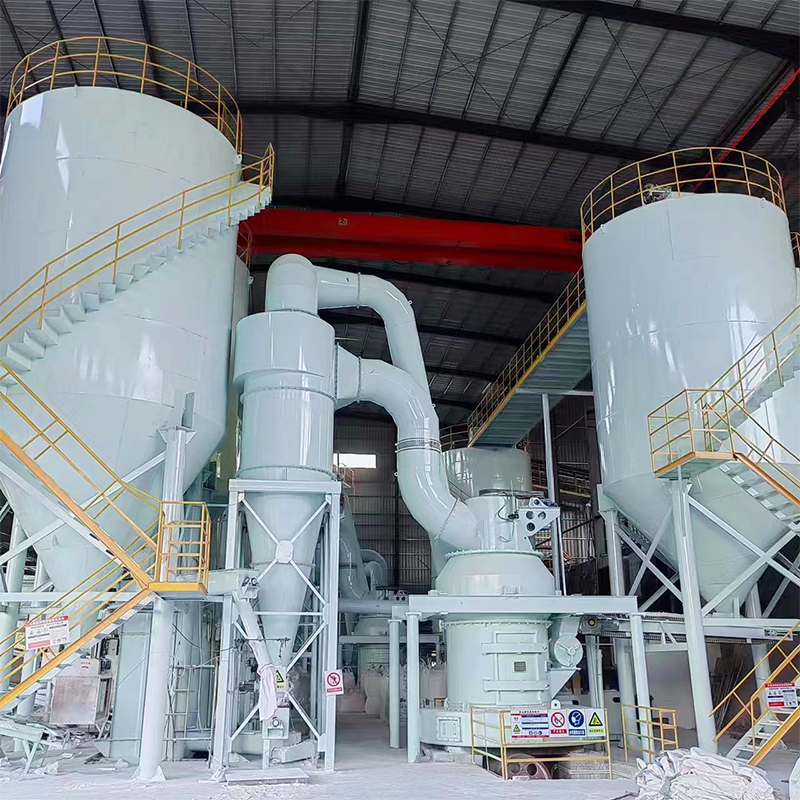 LYH998 Raymond Pendulum Mill for Mineral Powder ProcessingA robust pendulum mill suited to limestone, calcite, dolomite and barite, with adjustable 60–600 mesh fineness and PLC-controlled negative-pressure operation.View Product →
Where the target is a finer product with tighter control over the top cut, vertical ring-roller designs come into their own, combining grinding and classification in one body and making it easier to hold a stable particle size distribution as feed conditions drift.
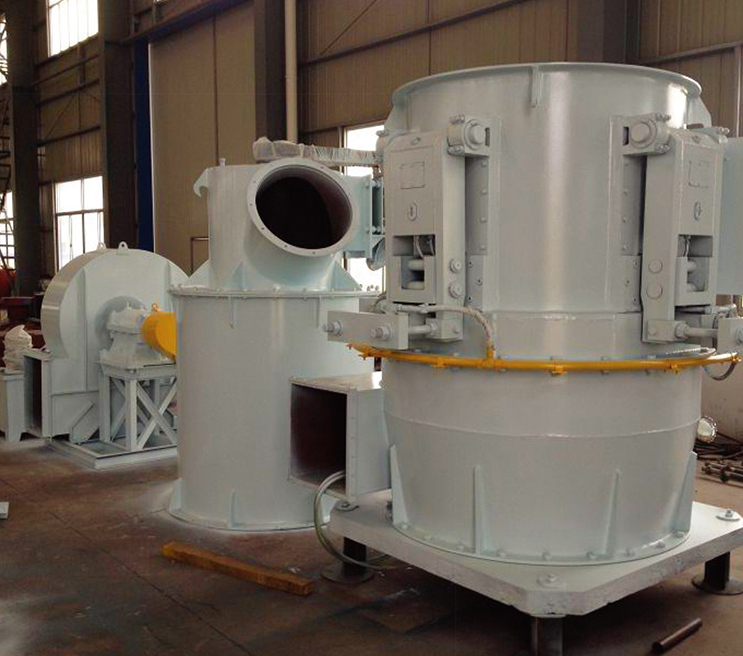 LYH996 Intelligent Vertical Ring Roller Mill for Ultrafine PowderCombines grinding and classification for 400–1500 mesh powders, with hydraulic loading, low iron content and capacities up to 3000 kg/h.View Product →
For larger throughputs and lines where energy per tonne is the dominant cost driver, vertical grinding mills are usually the more economical choice, since they handle higher capacities in a smaller footprint and recover heat more effectively in the drying zone.
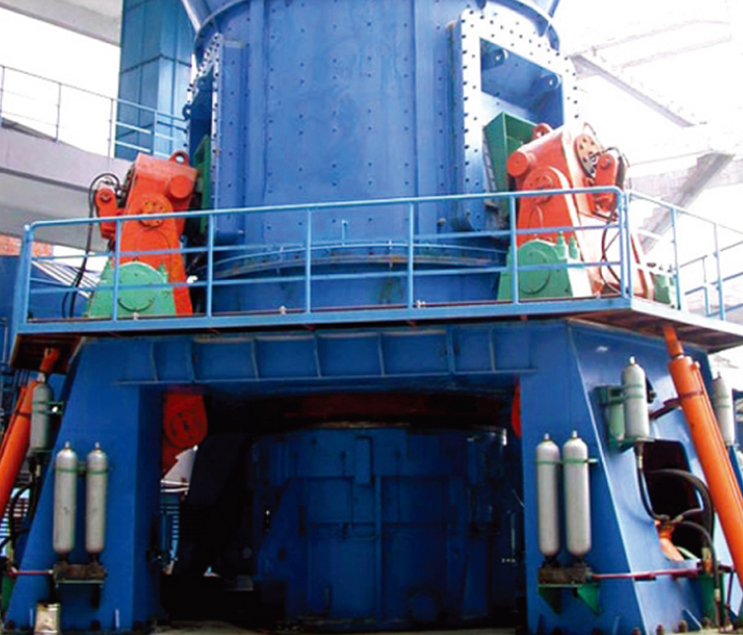 LYH1008 Vertical Grinding Mill for Ultrafine Mineral PowderIntegrates grinding, powder selection and drying for 325–2000 mesh, with limestone capacities up to 40–50 t/h at 325 mesh.View Product →
The honest answer for most projects is that the choice depends less on the mineral name and more on the target fineness, the required tonnage and how much variation the feed is likely to show. A supplier who can explain that trade-off clearly is usually the one who has actually run the equipment.
Questions Worth Asking Before You Sign
Over the years we have sat on both sides of this conversation, as equipment builders and as partners in complete grinding projects, and the same handful of questions tends to separate a reliable supplier from a merely inexpensive one.
- Which parameters are guaranteed in the contract, and which are "typical values"?
- How is the material sampled — from a static stockpile or from a moving stream?
- What is the actual moisture range at dispatch, in different seasons?
- Can you show three years of batch data for a customer making a similar product?
- If our specification changes, how quickly can your line be re-set?
- Who is technically responsible if the powder fails our incoming test — and how fast can they respond?
None of these questions require a supplier to reveal trade secrets. All of them require a supplier to know their own process. That distinction is useful, because enthusiasm is easy to manufacture and process knowledge is not.
Choosing a Partner, Not Just a Purchase
The same logic applies when a mineral producer decides to build or expand its own grinding capacity rather than buy finished powder. Projects of that size involve far more than a mill: feed systems, air classification, dust collection, negative-pressure operation, automation and commissioning all have to line up before the first tonne of product leaves the gate. That is why our engineering and service team works on complete grinding lines and EPCM delivery rather than dropping a machine on a concrete pad and driving away.
It is also why we tend to be cautious about promising numbers we have not verified ourselves. Nearly one hundred energy-saving grinding lines are running today in metallurgy, mining and related industries, and each one taught us something about how real feed behaves compared with lab samples. Those lessons are worth more to a new customer than any brochure.
So if you are evaluating industrial mineral suppliers, or preparing to become one, start with the specification, then look hard at the processing behind it. Ask how the powder is made, who watches the classifier, and what happens on a wet Monday in February. The answers will tell you far more about the next five years than the quotation ever will.

 Email:
 Telephone: +86-13951382065
 Phone: +86-13951382065
