 Email:
 Telephone: +86-13951382065

 English
 中文简体
 русский
 Français
 Español
 عربى

Content
- 1 See the Installation as a Drying-to-Grinding Circuit
- 2 Start With Material Conditions, Not Equipment Sizes
- 3 Matching the Mill to the Duty
- 4 Layout and Auxiliary Equipment That Decide Uptime
- 5 Commissioning Checks for a Combined Installation
- 6 Operating Discipline and Maintenance
- 7 Budget and Procurement Questions Worth Asking
- 8 A Practical Checklist Before You Request a Quote
Industrial drying and grinding installations succeed or fail on the handoff between moisture control and size reduction. A mill can be perfectly sized and still run poorly if the feed arrives wet, sticky, or inconsistent. That is the practical view we take at Nantong Liyuanheng Machinery: the dryer, the grinding mill, the air classifier, the dust collector, and the control logic have to be designed as one production circuit. Our work centers on ultrafine grinding equipment and EPCM delivery, and much of the value comes from getting the interfaces right before steel is erected.
See the Installation as a Drying-to-Grinding Circuit
Drying is not automatically part of every mineral grinding line. Our mills are intended for nonflammable, nonexplosive minerals below 6% moisture and below 7 Mohs hardness. But many plants receive material at higher moisture, or the moisture content shifts with the season and the quarry face. In those cases, drying belongs in the process design before the mill. The right question is not simply whether a dryer is needed, but where moisture leaves the circuit, how the dried material is buffered, and what happens to the mill when the feed changes.
| Feed condition | Effect on the grinding circuit | Design check |
|---|---|---|
| High surface moisture, material still free-flowing | Sticky buildup in the feed chute and reduced air sweep | Dryer outlet moisture, feed chute slope, and air volume |
| Moisture varies by shift or season | Mill output and fineness drift; dust collector load changes | Online moisture measurement, buffer storage, and control interlocks |
| Heat-sensitive material | Overdrying can alter color, reactivity, or product value | Drying temperature limit, residence time, and product testing |
| Fine product with a high dust load | Dust collection and negative pressure become the bottleneck | Bag filter sizing, fan curve, and maintenance access |
This is why we prefer to discuss the full circuit rather than sell a mill in isolation. If drying is required, it should be treated as an upstream conditioning step with clear battery limits: who supplies heat, who controls dust, and how the dried material is buffered before grinding. Those boundaries are just as important as the mill model number.
Start With Material Conditions, Not Equipment Sizes
Before anyone talks about motor power or roller diameter, the material should be characterized. We ask for the information that changes the process route, not just a product name. Useful details include:
- Mineral type, source, and variability across the deposit or supplier.
- Mohs hardness and abrasive content, which affect wear life and maintenance intervals.
- Feed size distribution and maximum lump size.
- Moisture range, not only the average value.
- Target fineness and particle size distribution, typically within the 60 to 600 mesh range for our grinding applications.
- Required throughput, operating hours, and whether the product will be sold or used downstream.
These inputs determine whether a vertical mill, ring roller mill, or pendulum mill is sensible. They also show whether the drying stage needs continuous control or simple batch conditioning. We would rather ask for a sieve analysis and a moisture history than guess a model and correct the mistake later.
Matching the Mill to the Duty
Grinding equipment should follow the duty, not the other way around. In our range, three mill families cover different combinations of capacity, fineness control, and operating style. The choice is usually a balance between product specification, available space, and the maintenance resources on site.
Vertical grinding for continuous, high-volume duty
When the line runs continuously and the priority is stable throughput with a compact footprint, a vertical grinding mill is often the starting point. It combines grinding and classification in a vertical arrangement and suits mineral powders where the feed is prepared consistently. The LYH1008 series vertical grinding mill is the option we discuss for plants that want a straightforward continuous circuit and a clear path from feed preparation to product collection.
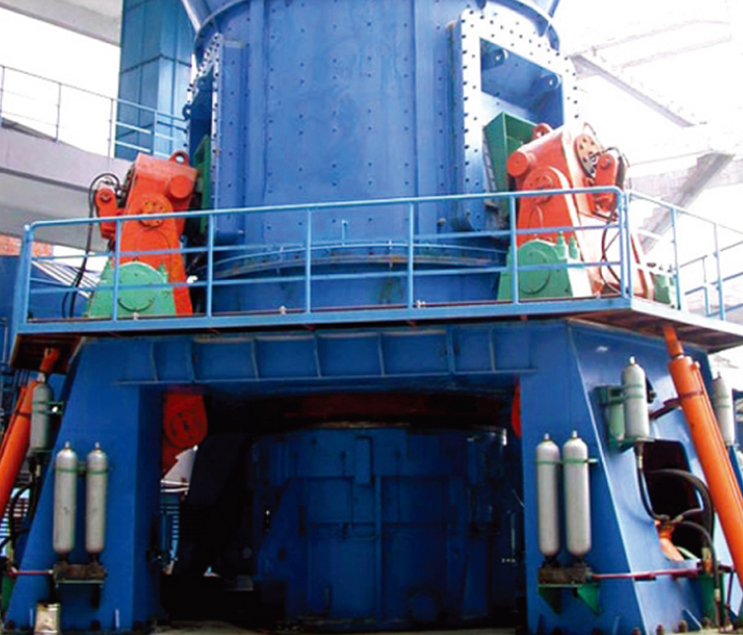 LYH1008 Series Vertical Grinding MillA continuous vertical mill combining grinding, classification, and drying for mineral powders, suited to stable throughput and a compact plant footprint.View Product →
Intelligent ring roller mills for tighter ultrafine control
For ultrafine products and changing recipes, control matters as much as grinding force. The LYH996 series new type intelligent vertical ring roller mill is aimed at operators who need closer supervision of the grinding zone and more predictable product quality. It is not simply a bigger machine; it is a different way of managing the relationship between feed rate, air flow, and classification. That matters when the same plant must serve more than one product grade.
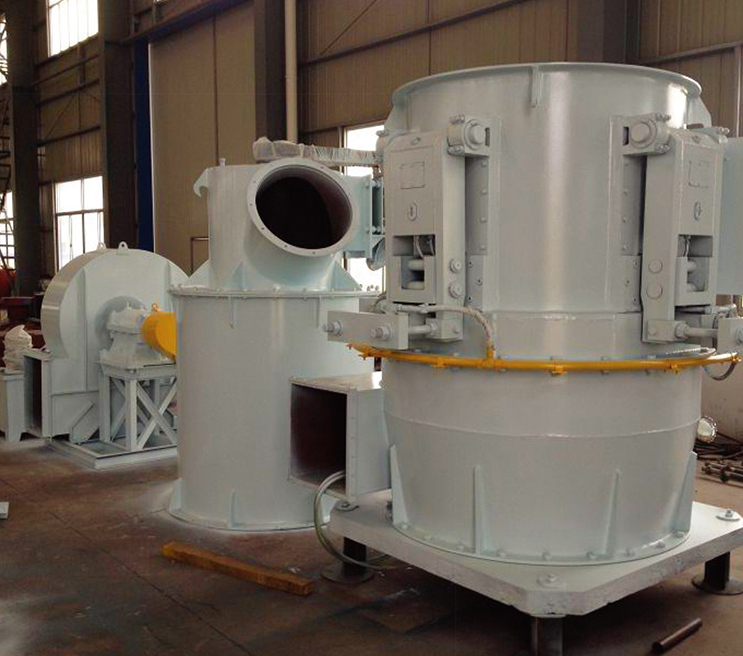 LYH996 Intelligent Vertical Ring Roller MillAn intelligent ultrafine roller mill with hydraulic loading and classification control, aimed at plants needing predictable quality across changing product grades.View Product →
Pendulum mills for proven, adaptable grinding
The LYH998 4-roller Raymond grinding pendulum mill remains a practical choice for many mineral powders because the operating principle is familiar and the application range is broad. It suits plants that value mechanical simplicity, accessible wear parts, and a predictable maintenance routine. For many industrial drying and grinding installations, a pendulum mill is the right fit when the product does not demand the most compact vertical layout.
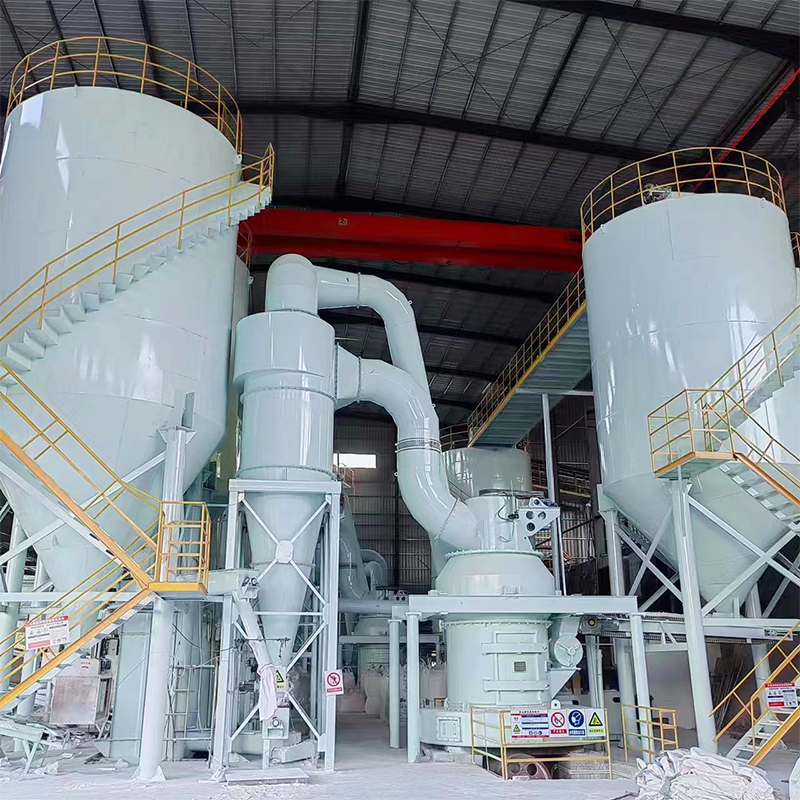 LYH998 4-Roller Raymond Pendulum MillA PLC-controlled pendulum mill for non-metallic minerals, offering adjustable 60–600 mesh fineness and a familiar maintenance routine for small-to-medium production.View Product →
Layout and Auxiliary Equipment That Decide Uptime
The mill may be the center of the installation, but the auxiliary equipment often decides whether the plant runs smoothly. Feed bins, conveyors, air locks, ducting, the classifier, the main fan, and the dust collector all have to work together under negative pressure. A layout that looks compact on paper can become a maintenance problem if access doors, inspection points, and wear-part handling are squeezed into leftover space.
Air balance deserves particular attention. The mill needs enough sweep air to carry fines out of the grinding zone, but too much air can disturb classification and overload the dust collector. Negative pressure helps contain dust and improve housekeeping, yet it must be designed with the fan curve and filter pressure drop in mind. During procurement, ask for a mass and energy balance, not just a list of equipment. This is where an EPCM scope earns its keep; a practical explanation of what turnkey EPCM means for a powder grinding project is useful before the tender stage.
Commissioning Checks for a Combined Installation
Commissioning should test the circuit, not just the mill. A useful sequence is to verify safety interlocks first, then establish air balance without feed, then introduce material at the design moisture range. Only after those steps should the team push toward nameplate throughput. Practical checks include:
- Confirm that the drying stage, if present, reaches the target outlet moisture without overheating the material.
- Check fan and damper positions against the design air volume and filter pressure drop.
- Run the feed system at low rate and watch for buildup in chutes, air locks, and the mill inlet.
- Step up throughput gradually while recording mill current, vibration, and outlet temperature.
- Sample product at each step and compare fineness, residue, and particle size distribution with the target.
- Inspect access points, dust emission, and housekeeping while the plant is running, not only when it is clean.
A plant that reaches output on acceptance day but cannot hold it across a normal moisture swing is not truly commissioned. The control philosophy should be tested with the same variability the operators will see in production.
Operating Discipline and Maintenance
A combined installation is only as reliable as its weakest routine. Moisture spikes should trigger a defined response, whether that means adjusting the dryer, reducing feed, or diverting material to a buffer bin. Wear parts such as rollers, rings, liners, and classifier blades should be inspected on a schedule tied to abrasive content and operating hours, not only after output drops. Lubrication, vibration, belt tension, and filter cleaning are simple checks that prevent expensive failures.
It also helps to keep a short daily log: feed moisture, mill current, air pressure, product fineness, and any unusual noise. Over a few weeks, that record reveals more than a single performance test. Our installation and service support work is built around this practical view, because the best installation is one the site team can understand and maintain.
Budget and Procurement Questions Worth Asking
Cost comparisons should look beyond the mill price. Drying energy, fan power, compressed air for filters, wear-part life, and product loss all affect the real cost per ton. It is also worth asking how the control system handles a moisture upset and whether spare parts are available on a realistic lead time. A lower initial price can disappear quickly if the plant must derate whenever the feed is wet.
- What is the total connected power, and which equipment dominates the load?
- How much drying energy is needed per ton of product?
- What availability and fineness guarantees are offered, and how will they be tested?
- Which wear parts are expected to be replaced first, and what is their service life?
- How are dust emissions and negative pressure verified after commissioning?
- What training and documentation are included for the operating team?
A Practical Checklist Before You Request a Quote
To design a sensible industrial drying and grinding installation, we need the material story before the equipment list. Send the mineral type, source, hardness, feed size, moisture range, target fineness, throughput, product use, and site conditions such as power and fuel availability. If the material is heat-sensitive or the product color matters, say so early. That single detail can change the drying temperature and the mill selection.
With that information, we can propose a process route that treats drying and grinding as one system. The goal is not a catalog number that fits a spreadsheet, but an installation that runs steadily through real feed variation, with maintenance access, dust control, and product quality that the site team can manage year after year.

 Email:
 Telephone: +86-13951382065
 Phone: +86-13951382065
