 Email:
 Telephone: +86-13951382065

 English
 中文简体
 русский
 Français
 Español
 عربى

Content
Anyone who has stood beside a clarifier at six in the morning knows that lime is one of the quiet workhorses of a water plant. The grade most operators order is hydrated lime: calcium hydroxide, Ca(OH)2, a fine white powder made by slaking quicklime under controlled conditions. Because it arrives already slaked, it can go straight into a slurry tank or a dry feeder without the heat, steam, and splashing that come with slaking on site. Over the years our team has built grinding systems for lime, quicklime, and hydrated lime, and the questions we hear are remarkably consistent: what does it actually do, how much should be fed, and how fine does it need to be? This article works through those three in order, with the practical detail that tends to decide whether a plant runs smoothly or spends its weekends cleaning out lime lines.
What Hydrated Lime Does in a Water Treatment Plant
Hydrated lime is a base, and almost everything it does downstream follows from that single fact. When it dissolves, it releases calcium ions and hydroxide ions together, lifting pH while adding alkalinity at the same time. That combination is why many plants prefer it to caustic soda where hardness, buffering, and sludge behaviour all matter. In day-to-day operation the main duties look like this:
- pH correction and alkalinity build-up, so a target pH holds instead of drifting back within the hour.
- Softening, where the hydroxide drives magnesium out as Mg(OH)2 and, with carbonate present, calcium out as CaCO3.
- Coagulation support, lifting the water into the pH band where alum or ferric salts work best and supplying nucleation sites for denser, faster-settling floc.
- Precipitation of heavy metals and other inorganics, since many metals leave solution as hydroxides; fluoride and phosphate reduction follow similar chemistry.
- Sludge conditioning and stabilisation, reducing odour and improving how well the cake dewaters.
- Corrosion control and odour control, adjusting the Langelier index in distribution systems and scrubbing hydrogen sulphide in collection networks.
None of these duties is exotic. What separates a comfortable plant from a struggling one is usually consistency: the same grade of lime, the same fineness, and a feed system that does not plug.
Quicklime or Hydrated Lime?
Both products are calcium-based, and the choice is normally about logistics and labour rather than chemistry. Quicklime carries more available calcium oxide per tonne, which matters when volumes are large, but it must be slaked on site with the equipment, heat, and supervision that implies. Hydrated lime costs more per unit of calcium oxide and ships more dead weight, yet it is far simpler to store, dose, and control. Most plants of moderate size find the simplicity worth the difference.
| Point of comparison | Quicklime (CaO) | Hydrated lime, Ca(OH)2 |
|---|---|---|
| Active form | Must be slaked before use | Ready to feed as supplied |
| Available CaO | Roughly 90 to 95 percent | Roughly 70 to 74 percent equivalent |
| Handling | Strongly exothermic slaking, heat and steam | Low dust when handled well; dry or slurry feed |
| Storage | Needs to be kept bone dry | Must be protected from air and moisture to limit carbonation |
| Typical fit | Large plants with slakers and trained staff | Smaller and packaged plants where simplicity wins |
| Common watch-outs | Slaker scaling, temperature control, grit disposal | Grit, carbonation in storage, settling in slurry lines |
Getting the Dose Right
Dosing is never a single fixed number, because raw water changes with the season and with upstream discharges. What works well is a repeatable routine that gets you close quickly and then lets the control loop do the fine work.
- Run a jar test on the actual raw water of the day, not on last month's sample.
- Estimate the stoichiometric demand from alkalinity and the target pH, then treat that as a starting point rather than an answer.
- Feed either as dry powder through a gravimetric feeder or as a slurry, typically in the five to ten percent solids range, kept moving at all times.
- Mix hard and briefly at the injection point. Hydrated lime dissolves slowly, so a short intense mix beats a long gentle one.
- Control on pH measured downstream of the reaction zone, where the reading reflects the settled result rather than a local cloud of undissolved particles.
- Watch the residuals. Overfeeding wastes lime, raises pH beyond what the next process wants, and encourages scaling in pipes and on probe surfaces.
One number is worth keeping in mind: hydrated lime dissolves only sparingly, on the order of a couple of grams per litre of water, and solubility falls as temperature rises. That is why slurry lines need velocity and regular flushing, and why fine, well-ground powder reacts so much more predictably than gritty material.
Particle Size, Reactivity, and the Grinding Step
Fineness is the variable that quietly controls everything else. Coarse particles sink and bury themselves in sludge before they dissolve, so the plant compensates by overfeeding; the grit that does not react ends up as deposits in basins, on diffusers, and inside slurry lines. A tighter particle size distribution gives faster dissolution, a more stable suspension, less overfeed, and a pH curve that behaves itself.
This is where the mill matters. A mill that delivers a consistent top size, with minimal oversize, does more for lime utilisation than most changes an operator can make on the dosing skid. There is more detail on the processing side in our guide to calcium hydroxide and hydrated lime grinding, and the practical summary is this: control the top size first, then worry about the average.
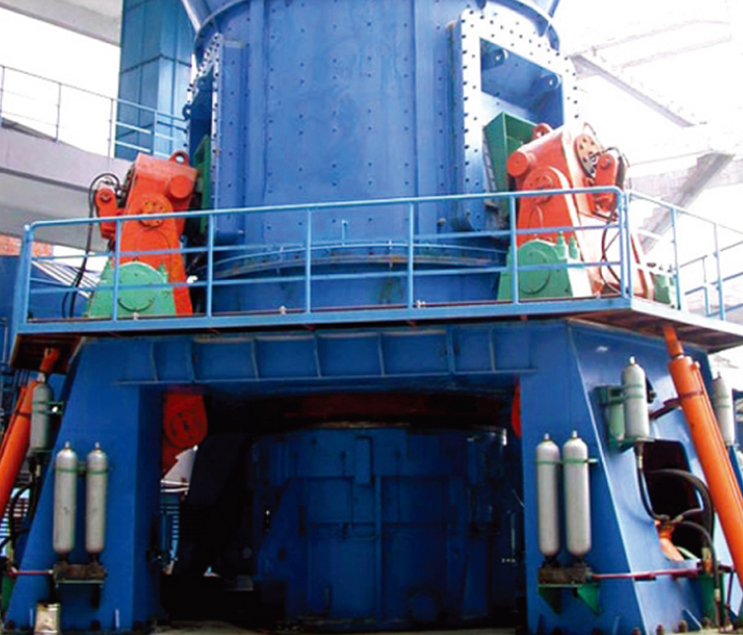 LYH1008 Series Vertical Grinding MillAn integrated vertical mill for lime and mineral powders, combining grinding, classification, and drying to help control top size and product consistency.View Product →
Two cautions come up again and again in lime circuits. First, keep milling temperatures modest. Hydrated lime is soft, but sustained heat pushes it back toward calcium oxide and you lose the combined water you already paid to put in. Second, handle the dust properly. A well-designed circuit runs under slight negative pressure, with a baghouse sized for the fines and a classifier holding the product band tight, so the powder that leaves the mill is the powder the plant can actually use.
Choosing a Mill for Lime and Hydrated Lime Duties
Lime is not a difficult material to grind in hardness terms, but it is unforgiving about moisture, dust, and consistency. Three configurations cover most of the duties we see in the field.
High-tonnage continuous duty
Where a plant or a lime producer needs a steady stream of fine product with a controlled top size, vertical grinding with an integrated classifier is usually the most economical choice per tonne. Throughput is high, the footprint is compact, and the product band can be adjusted without stopping the line.
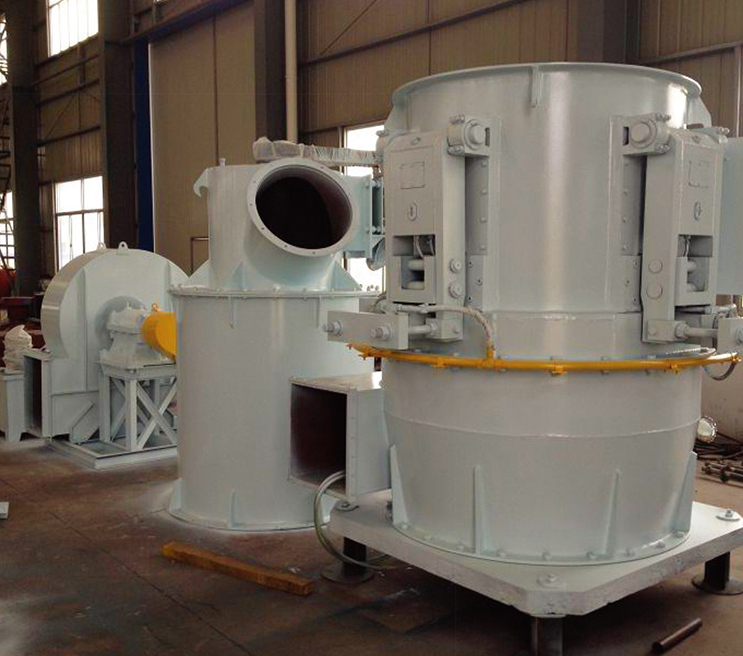 LYH996 Intelligent Vertical Ring Roller MillA hydraulic ring roller mill with integrated classifier and intelligent control, suited to flexible fine grinding where feed quality and product fineness shift.View Product →
Flexible, mid-range production
Ring roller and pendulum mills suit operations that switch between grades, or that need a dependable unit sized to a specific feeder and silo arrangement. Intelligent control on the newer ring roller designs helps hold fineness steady when the feed quality shifts, which is the usual cause of an off-spec day in a lime plant.
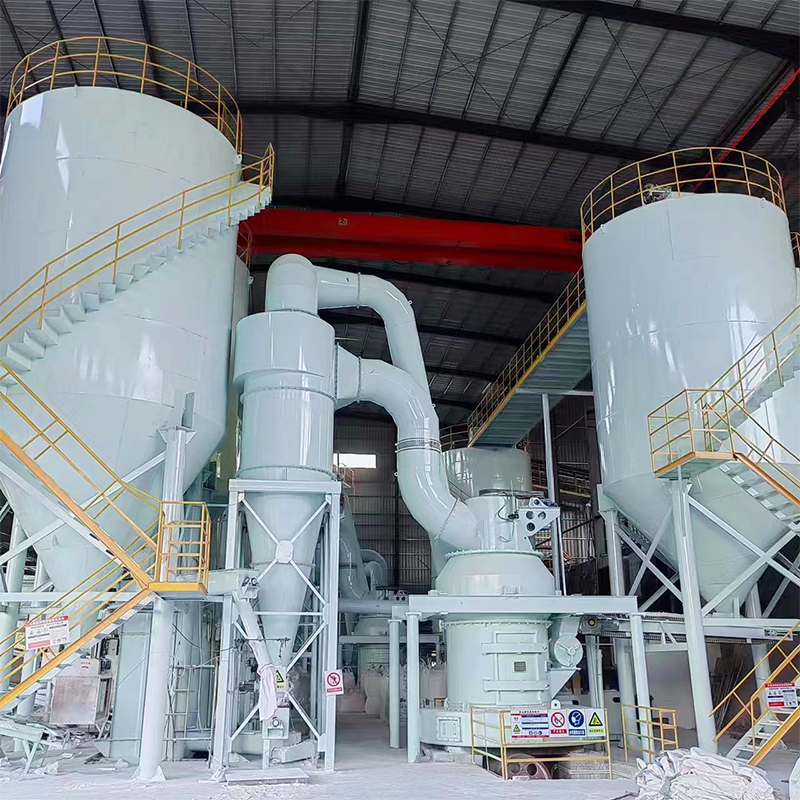 LYH998 Raymond Grinding Pendulum MillA PLC-controlled pendulum mill for non-metallic minerals, offering adjustable 60–600 mesh output and negative-pressure dust collection for lime and mineral lines.View Product →
Across all three types, the targets are the same: hardness below 7 on the Mohs scale, moisture below about 6 percent, and an adjustable product range from roughly 60 to 600 mesh. Beyond the mill itself, a lime line is a system of feeder, mill, classifier, collector, and conveying, and it pays to design them together. That is the thinking behind the way we handle projects, from equipment selection through installation and commissioning, with project support built around the plant's actual operating pattern rather than a catalogue sheet.
Quality Checks and a Few Handling Notes
Most lime problems that reach the dosing skid started with the delivered product or the storage silo. A short incoming check list covers nearly everything:
- Available calcium oxide or hydroxide content, with the certificate and a periodic independent test.
- Reactivity, measured by slaking rate or temperature rise, since two limes of identical assay can behave quite differently.
- Fineness and residue on the screen, plus a note on grit, which tells you what will settle in the basins.
- Insolubles and moisture, both of which quietly dilute your dose and your budget.
- Storage discipline: keep silos sealed and dry, use first in, first out, and avoid long residence times that let carbonation creep in.
- Safety basics: the dust is alkaline and irritating to eyes, skin, and airways, so dust extraction, eye protection, and gloves are not optional extras.
Bringing It Together
Hydrated lime earns its place in water treatment because it does several jobs at once: it lifts pH, adds buffering, softens, helps floc form, and pulls metals out of solution. Getting the best from it is less about buying a better grade and more about consistency. Test the raw water, feed a slurry or a dry powder that stays moving, control on a downstream pH signal, and make sure the powder you feed is fine enough and uniform enough to dissolve before it settles. Do those four things and lime becomes the most predictable chemical on site, which is exactly what a plant wants at six in the morning.

 Email:
 Telephone: +86-13951382065
 Phone: +86-13951382065
