 Email:
  Telephone: +86-13951382065
 English
 中文简体
中文简体 русский
 Français
 Español
 عربى
عربى
Content
- 1 What Is Calcium Hydroxide (Hydrated Lime)?
- 2 From Quicklime to Hydrated Lime: The Production Journey
- 3 Why Grinding Fineness Matters for Hydrated Lime
- 4 Choosing the Right Grinding Equipment for Hydrated Lime
- 5 Typical Process Flow for a Hydrated Lime Grinding Line
- 6 Common Challenges and Practical Solutions
- 7 How Nantong Liyuanheng Supports Hydrated Lime Projects
Calcium hydroxide, commonly called hydrated lime, is one of those materials that quietly keeps modern industry running. It helps purify drinking water, scrubs sulfur from power plant exhaust, stabilizes roadbeds, and even appears in food processing. If your operation handles hydrated lime, you know that performance depends on more than chemical purity. Particle size, consistency, and moisture control all shape how the powder behaves downstream. This guide covers the essentials of calcium hydroxide and the grinding decisions that turn it into a dependable product.
What Is Calcium Hydroxide (Hydrated Lime)?
Calcium hydroxide is an inorganic compound with the formula Ca(OH)2. It forms when water is added to quicklime (calcium oxide, CaO) in a controlled reaction called slaking. The result is a soft, white powder that is slightly soluble in water and strongly alkaline, with a pH near 12.4. Its reliable reactivity and low cost have made hydrated lime a standard reagent in environmental, construction, and industrial applications.
It also goes by slaked lime, builders' lime, pickling lime, and calcium hydrate. Whatever the name, the properties that matter most for grinding and end use are fairly consistent.
| Property | Typical Value | Practical Note |
|---|---|---|
| Chemical formula | Ca(OH)2 | Stable under normal storage |
| Mohs hardness | 2 to 3 | Soft, but abrasive when dry |
| Solubility in water | About 1.7 g/L at 20°C | Forms limewater at low concentration |
| Common ground fineness | 60 to 600 mesh | Application dictates the target range |
From Quicklime to Hydrated Lime: The Production Journey
Hydrated lime starts with limestone, which is quarried and crushed before being calcined in a kiln at roughly 900 to 1,000 degrees Celsius. This drives off carbon dioxide and leaves quicklime. The quicklime is then hydrated with a carefully controlled amount of water. The reaction is fast and exothermic, so water addition, mixing intensity, and residence time all need close attention. Too little water leaves unreacted lime; too much creates a paste that requires extra drying.
After hydration, the material is dried, ground, and classified. This is where grinding technology earns its keep. A well-designed milling circuit does more than reduce particle size. It helps control the particle size distribution, preserves reactivity, and keeps energy consumption in check. For a closer look at the full chain, our team has prepared a practical explanation of how lime is produced, from quarry to finished powder.
Why Grinding Fineness Matters for Hydrated Lime
Particle size is not a cosmetic detail. In flue gas desulfurization, finer hydrated lime offers more surface area for reaction with acidic gases, which can improve capture efficiency and reduce lime consumption. In water treatment, the right fineness helps the material disperse quickly and react uniformly. In construction and soil stabilization, a consistent powder supports better mixing and predictable set behavior.
Most hydrated lime applications call for a finished product between 60 and 600 mesh. The exact target is usually set by the end use rather than by a universal standard. A 200-mesh product may suit one process, while a 325-mesh or finer powder is required for another. What matters is that the mill can hold that target steadily, shift after shift. Our grinding systems are designed for non-flammable minerals with a Mohs hardness below 7 and moisture content below 6 percent. Hydrated lime fits that range comfortably, but moisture control remains critical because the material is hygroscopic and can cake if it picks up humidity.
Choosing the Right Grinding Equipment for Hydrated Lime
Hydrated lime can be processed with several types of mills, and the best choice depends on your target fineness, capacity, floor space, and budget. At Nantong Liyuanheng Machinery, we build three families of grinding equipment that are frequently used in lime and mineral powder lines.
The LYH998 4-Roller Raymond Grinding Pendulum Mill is a robust option for medium-fineness hydrated lime production. It handles capacities that suit many construction and environmental applications, and its proven mechanical design makes it a practical entry point for new powder lines.
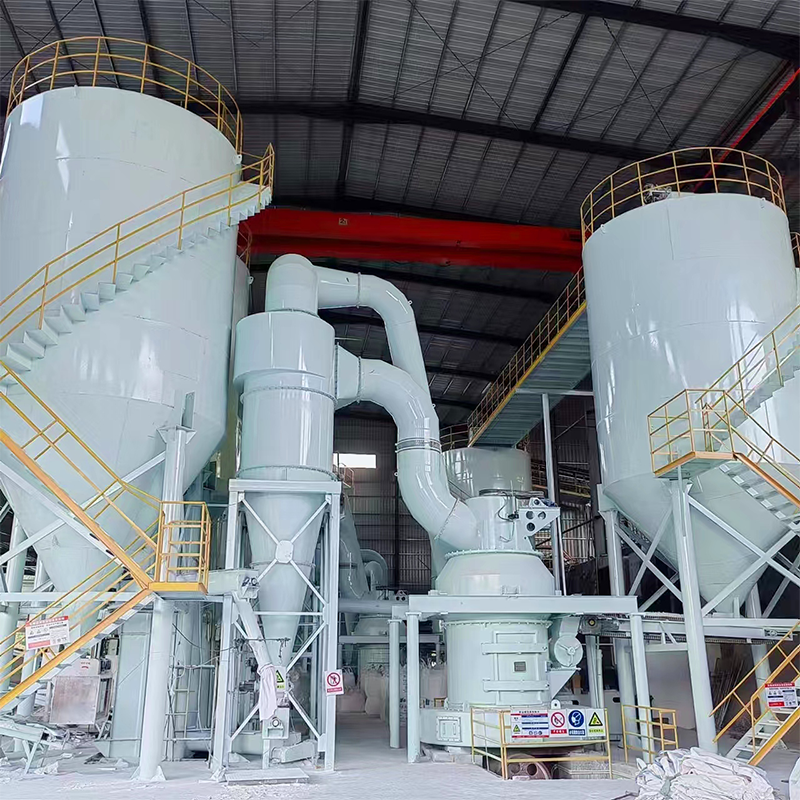 LYH998 Raymond Grinding Pendulum MillLYH998 series new type intelligent Raymond grinding mill is the latest type of milling machine, based on extensive cooperation with major universities and colleges, dr...View Product →
When the goal is finer powder and higher energy efficiency, the LYH996 Series New Type Intelligent Vertical Ring Roller Mill is a strong fit. Its vertical ring roller structure and intelligent control system help stabilize product fineness while reducing power consumption per ton.
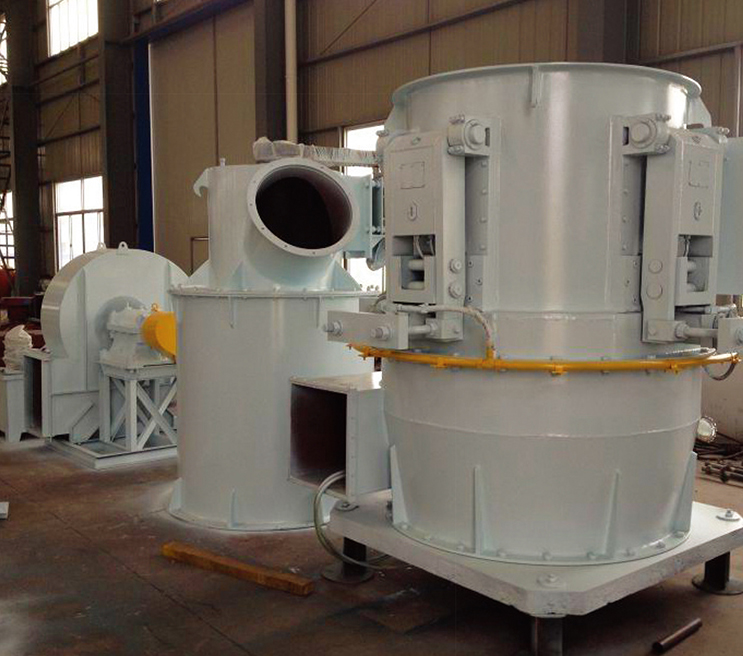 LYH996 Series New Type Intelligent Vertical Ring Roller MillIn the field of ultrafine powder processing, facing more and more ultrafine powder requirements, traditional ultrafine powder processing equipment has been difficult t...View Product →
For larger-scale projects that need high throughput and a compact footprint, the LYH1008 Series Vertical Grinding Mill offers integrated drying, grinding, and classification functions. It is well suited to complete production lines where uptime and consistency are top priorities.
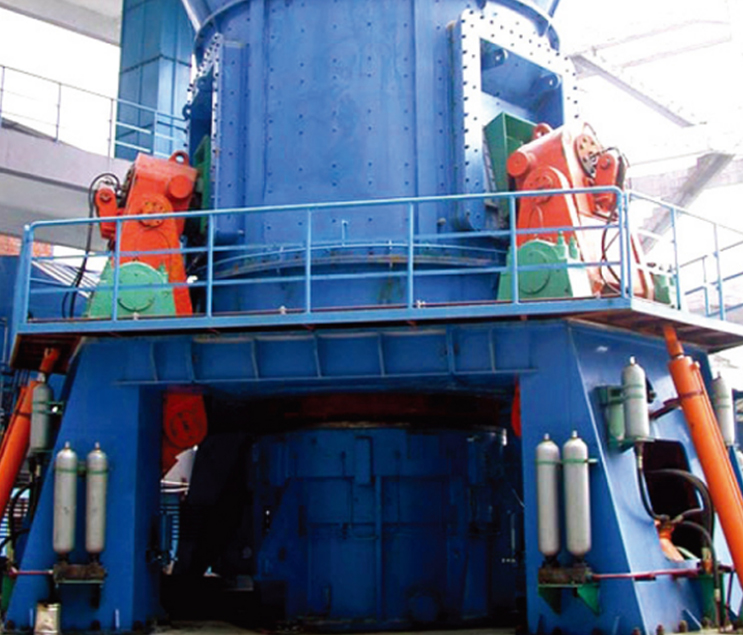 LYH1008 Series Vertical Grinding MillLYH1008 series vertical mill is a new type of equipment designed to absorb foreign technology. It grinds the material (0-15MM) on the rotating grinding disc by rolling...View Product →
Typical Process Flow for a Hydrated Lime Grinding Line
A complete hydrated lime grinding system usually follows a logical sequence. Each stage has a role in protecting product quality and keeping the plant safe and efficient.
- Raw material reception and storage, with moisture protection to prevent caking.
- Feeding at a controlled rate to match mill capacity and avoid surges.
- Grinding in the selected mill, where particle size reduction takes place.
- Classification to separate finished powder from oversize material.
- Product collection through cyclones, bag filters, or a combination of both.
- Dust collection and negative-pressure operation to protect workers and the environment.
- Storage, packing, or bulk loading for shipment.
Because hydrated lime is alkaline and can be irritating to skin and eyes, dust control is not optional. A well-integrated system keeps the process under negative pressure and routes exhaust air through suitable filtration before release.
Common Challenges and Practical Solutions
Even a straightforward material like hydrated lime can create headaches if the system is not designed for it. Here are a few issues we see often, along with the practical responses that keep lines running.
- Moisture pickup and caking: keep storage silos sealed, use dehumidified air where needed, and avoid long residence times in open conveyors.
- Uneven fineness: pair the mill with a high-efficiency classifier and tune airflow and rotor speed to hold the target range.
- Wear on grinding elements: select wear-resistant rollers and rings, and schedule inspections before production drops.
- Dust emissions: use negative-pressure operation, well-maintained bag filters, and proper sealing at transfer points.
- Energy cost creep: monitor kWh per ton, optimize grinding pressure, and avoid over-grinding beyond the required fineness.
How Nantong Liyuanheng Supports Hydrated Lime Projects
As a manufacturer focused on ultrafine grinding equipment and EPCM services, Nantong Liyuanheng Machinery works with customers from initial process design through equipment supply, installation, and commissioning. Our team has delivered nearly 100 energy-saving grinding production lines for metallurgy, mining, building materials, and chemical applications. For hydrated lime, that experience translates into practical decisions about mill selection, circuit layout, dust control, and operating parameters.
We do not believe in one-size-fits-all solutions. Whether you are adding a single mill to an existing line or building a complete turnkey powder plant, our engineers start with your material, your target fineness, and your site conditions. From there, we recommend the configuration that balances capital cost, operating cost, and product quality.
Hydrated lime will keep doing its quiet work in water treatment, emissions control, construction, and agriculture. If your project involves grinding calcium hydroxide, the right equipment and system design can make the difference between a line that merely runs and one that performs reliably for years. We are always glad to talk through your material, your target powder, and the practical path to get there.

 Email:
  Telephone: +86-13951382065
 Phone: +86-13951382065