 Email:
  Telephone: +86-13951382065
 English
 中文简体
中文简体 русский
 Français
 Español
 عربى
عربى
Content
- 1 What the Term Calcined Calcium Carbonate Really Covers
- 2 The Calcination Reaction and Its Temperature Window
- 3 From Kiln Lumps to Saleable Powder
- 4 Calcined Calcium Carbonate at a Glance
- 5 Matching a Mill to Calcined Lime and Its Cousins
- 6 Process Variables Worth Watching
- 7 Where Calcined Calcium Carbonate Powder Goes
- 8 Housekeeping, Safety and Dust Control
Calcined calcium carbonate is the material that leaves the kiln after limestone, chalk, marble or shell has been heated until its carbonate structure breaks down. The reaction is one of the oldest in industrial chemistry: calcium carbonate (CaCO3) becomes calcium oxide (CaO) plus carbon dioxide, which departs with the flue gas. What remains is quicklime, a porous and reactive solid that behaves nothing like the stone it came from.
The kiln, however, is only half the story. The lumps that come out still have to be cooled, stored, crushed and ground to the particle size their users need, whether that user is a steel plant, a flue gas desulfurization scrubber, a water treatment works or a chemical reactor. This guide looks at the chemistry, the kiln window, the grinding step and the practical details that decide whether the finished powder performs as promised.
What the Term Calcined Calcium Carbonate Really Covers
Strictly speaking, calcined calcium carbonate is the solid residue of the calcination reaction, calcium oxide. Much of the market simply calls it quicklime or burnt lime, and that is the meaning most purchasing teams have in mind when they ask for a calcined product.
The phrase also appears in a looser sense, describing calcium carbonate that has been through a heat cycle and then returned to carbonate form. Precipitated calcium carbonate is a good example: limestone is calcined, the resulting lime is slaked, and the slurry is carbonated with captured CO2. The finished product is CaCO3 again, but with a controlled crystal shape and a very different particle size distribution from the original rock.
Both readings share one practical consequence. The material has been through a thermal process that changes hardness, porosity, reactivity and moisture sensitivity, and those changes reshape the requirements for grinding.
The Calcination Reaction and Its Temperature Window
The decomposition of calcite begins at roughly 825 °C when the CO2 partial pressure around the particle is low, and it is strongly endothermic, absorbing about 178 kJ per mole of calcium carbonate. Real kilns never run at the theoretical minimum. Operators work between roughly 900 °C and 1,100 °C so that heat moves into the stone quickly enough to keep the calcination zone short and the kiln productive.
Soft-burned, hard-burned and dead-burned lime
Temperature and residence time decide the character of the product, and the same kiln can turn out quite different materials depending on how it is run.
- Soft-burned lime is made at the lower end of the range with a short residence time, so its crystals stay small and porous and react quickly with water and acid gases.
- Hard-burned lime is fired hotter and longer, sintering the crystals into a dense solid with a lower surface area, which suits applications that need a slow, controlled reaction.
- Dead-burned or overburned lime is an extreme case, often treated as off-specification material where reactivity matters, because the surface has effectively been sealed.
Cooling and storage matter as much as firing
Quicklime is hygroscopic and reacts with water exothermically to form calcium hydroxide, Ca(OH)2. Even ordinary humidity begins slaking the outer layer of a lump, which reduces the reactive content delivered to the mill. Short, dry storage in sealed silos, plus a feed system that keeps rain and washdown water away from the kiln discharge, protects both the chemistry and the grinding budget.
From Kiln Lumps to Saleable Powder
Very little quicklime reaches a customer as a lump. Most of it is crushed and ground to a specification, and fineness drives reaction speed downstream. A coarse 60 to 100 mesh lime may suit some building applications, while flue gas desulfurization, water treatment and chemical routes usually ask for 200 mesh or finer, sometimes 325 mesh and beyond. Hydrated lime lines often target 200 to 325 mesh with a tight top cut, because oversize particles pass through the process without reacting at all.
Calcination also changes how a mill behaves. Calcium oxide is relatively soft, around 3.5 on the Mohs scale, so it does not demand the abrasion resistance that quartz does. The real challenges are moisture, dust and heat: a warm product that picks up humidity will coat mill internals and classifier blades, and lime dust is fine, alkaline and unpleasant unless the circuit is sealed and properly ventilated.
Calcined Calcium Carbonate at a Glance
| Parameter | Typical value or note |
|---|---|
| Calcined product | Calcium oxide (CaO), known as quicklime |
| Reaction | CaCO3 to CaO plus CO2, endothermic, about 178 kJ/mol |
| Industrial kiln temperature | Approximately 900 to 1,100 °C |
| Hydrated form | Ca(OH)2 after controlled water addition |
| Mohs hardness of CaO | About 3.5 |
| Common ground fineness | 60 to 600 mesh (0.25 to 0.023 mm) |
| Main milling risks | Moisture pickup, dust emission, warm feed |
Matching a Mill to Calcined Lime and Its Cousins
Calcined lime, hydrated lime and limestone share a family resemblance inside a mill, and equipment selection usually follows the fineness target, the throughput and how many hours a day the line runs.
Vertical mills for higher capacity
A vertical grinding mill presses rollers against a rotating table, so material is ground in a thin bed and classified in the same body. For lime and limestone lines running continuously at high tonnage, that layout offers a compact footprint, dry operation and good energy efficiency per tonne of product.
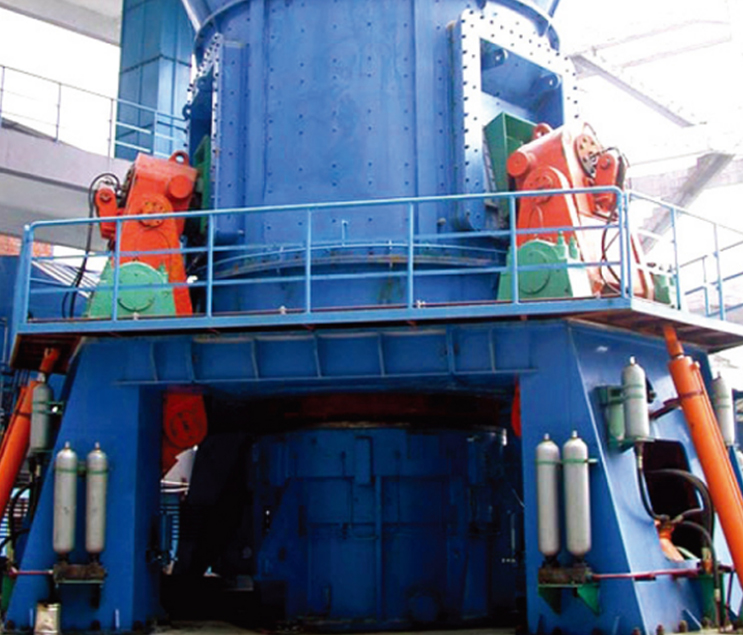 LYH1008 Series Vertical Grinding MillLYH1008 series vertical mill is a new type of equipment designed to absorb foreign technology. It grinds the material (0-15MM) on the rotating grinding disc by rolling...View Product →
Ring roller mills for fine and ultrafine powder
Where the target is a fine or ultrafine powder with a tight particle size distribution, a vertical ring roller mill paired with a high-precision classifier is often the better fit. Intelligent control keeps grinding pressure, airflow and classifier speed in balance as feed conditions drift through the shift.
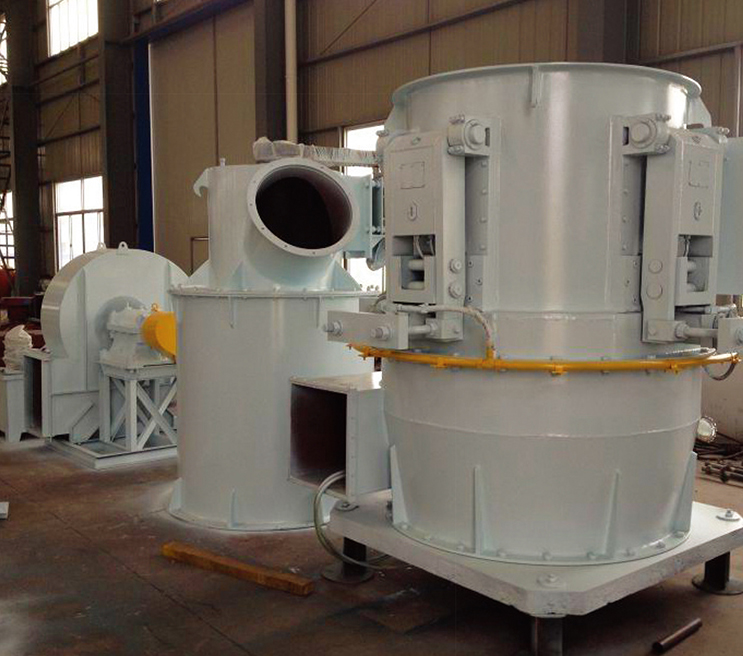 LYH996 Series New Type Intelligent Vertical Ring Roller MillIn the field of ultrafine powder processing, facing more and more ultrafine powder requirements, traditional ultrafine powder processing equipment has been difficult t...View Product →
Pendulum mills for flexibility
The classic workhorse, a pendulum mill with several rollers sweeping a grinding ring, remains a practical choice for medium-fineness lime powder and for plants that grind several different minerals on the same line.
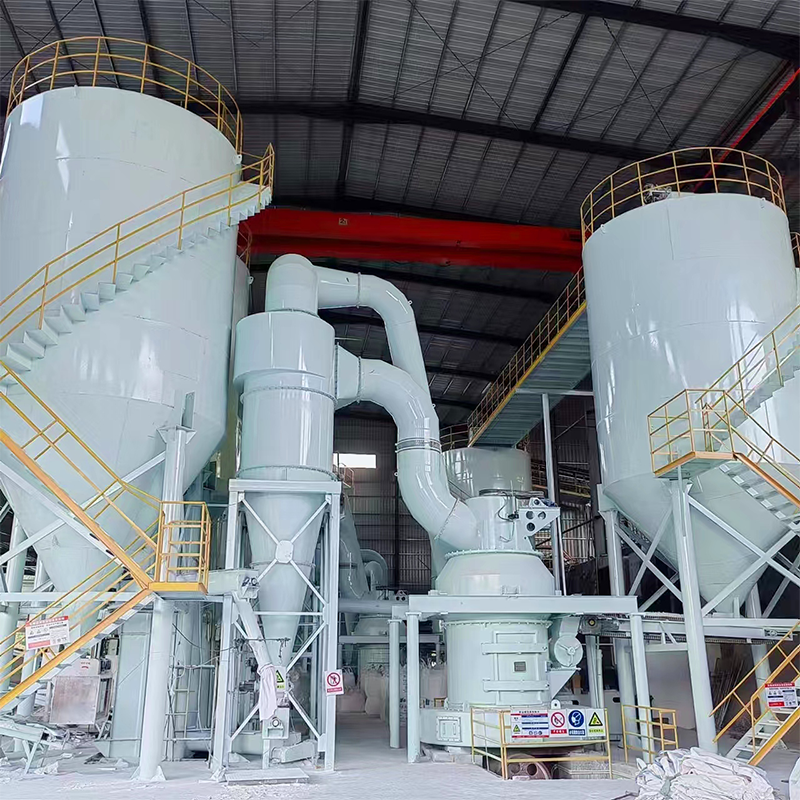 LYH998 Raymond Grinding Pendulum MillLYH998 series new type intelligent Raymond grinding mill is the latest type of milling machine, based on extensive cooperation with major universities and colleges, dr...View Product →
Beyond the mill itself, a complete line needs feeding, classification, product collection, dust extraction, conveying and a control layer that ties them together. As a manufacturer with EPCM experience, we supply complete sets of grinding equipment and stay involved from layout to commissioning, with close to 100 energy-saving grinding lines already in service in metallurgical and mining operations.
Process Variables Worth Watching
Fineness alone rarely explains a disappointing result. A handful of variables decide whether a calcined lime line holds its specification from one week to the next.
- Feed moisture and free lime content, since both shift the effective grinding load.
- Target fineness expressed as a percentage passing 200 or 325 mesh, not as an average particle size.
- Classifier speed and airflow balance, the two settings that most often drift out of step.
- Inlet temperature, because warm feed carries its own surprises into a closed circuit.
- Dust collection and negative-pressure operation, which protect both the product and the workplace.
- Wear part inspection intervals for rollers, rings and sleeves, set by hours run rather than guesswork.
Where Calcined Calcium Carbonate Powder Goes
Ground quicklime and hydrated lime appear in an unusually wide range of industries, which is one reason lime grinding lines are often specified for flexibility as much as for output.
- Steel and metallurgy: flux in converter and electric furnace steelmaking, hot metal desulfurization and slag conditioning.
- Flue gas desulfurization: SO2 capture in power stations, cement kilns and waste incinerators.
- Water and wastewater treatment: pH correction, softening and sludge conditioning.
- Construction and building materials: mortar, plaster, aerated concrete and soil stabilization.
- Chemical manufacturing: calcium carbide, precipitated calcium carbonate, sugar refining and bleaching agents.
- Agriculture and environmental work: correcting soil acidity and neutralizing acidic streams.
For the wider picture of how the raw material travels before it reaches the mill, our article on how lime is produced, from quarry to finished product follows the sequence from extraction to dispatch.
Housekeeping, Safety and Dust Control
Lime powder is alkaline, and the fine fraction from any grinding system will find its way into the air if the circuit is not sealed. Running the mill under slight negative pressure keeps dust inside the system, protects operators and makes housekeeping far easier. Dust masks, goggles, gloves and long sleeves are basic good practice around the mill, the bag filter and every transfer point. For hydrated lime the commercial argument is just as strong, because absorbed moisture affects flowability, bagging weight and the reactivity figure printed on the certificate of analysis.
Whether you are commissioning a new lime grinding line or revisiting the performance of an older one, the fundamentals hold: understand the calcined feed, set a realistic fineness target, and choose equipment that can keep those numbers shift after shift. You can browse the machinery we build in our grinding mill range, or talk to our engineers about a complete line for quicklime, hydrated lime or limestone.

 Email:
  Telephone: +86-13951382065
 Phone: +86-13951382065