 Email:
  Telephone: +86-13951382065
 English
 中文简体
中文简体 русский
 Français
 Español
 عربى
عربى
Content
Air classifier design rarely gets the attention it deserves. In most grinding projects the conversation revolves around the mill, its rollers, its rings and its motor, while the classifier quietly decides whether the finished powder actually meets the customer's specification. After delivering close to 100 energy-saving grinding lines across metallurgy, mining, building materials and chemical processing, we have learned one simple lesson: a well-designed classifier can make an average mill look excellent, and a poorly designed one can make excellent equipment look broken.
What follows is a practical look at the design principles behind air classification, the variables that genuinely move the cut point, and the way the choice of mill shapes the classifier sitting above it. None of this is theory for its own sake. Every point comes from commissioning, sampling and troubleshooting work on real production lines.
What an Air Classifier Really Does in a Grinding Circuit
An air classifier is not a screen. There is no mesh, no aperture and no mechanical barrier stopping oversized particles. Separation happens through a balance of forces. Inside the classification zone, every particle is pushed outward by centrifugal or inertial force and pulled inward by aerodynamic drag. Because centrifugal force grows with mass while drag grows with surface area, larger particles are driven outward while finer ones follow the air stream. The size at which the two forces cancel each other out becomes the cut point.
In a closed grinding circuit, the classifier performs three jobs at the same time:
- It splits the mill discharge into a finished product stream and a coarse return stream.
- It controls the top size and the overall particle size distribution of the final powder.
- It limits over-grinding by removing fines as soon as they are fine enough.
Four performance numbers tell you whether a design actually works. The cut point, often expressed as d50 or d97, defines where the split happens. The sharpness of cut describes how clean that split is. The circulating load shows how much material is being recycled. Specific energy per ton of finished powder reveals the real operating cost. A classifier that cuts too coarse overloads the mill. One that cuts too fine recirculates powder that was already acceptable and burns energy for nothing.
Core Design Principles Behind Effective Classification
The force balance at the cut point
Rotor speed is the most visible lever in any classifier. Raising rotor tip speed strengthens the centrifugal field and pushes the cut point finer. Since particle mass scales roughly with the cube of diameter while drag scales with the square, even a modest speed change produces a measurable shift in the finished particle size distribution. This is exactly why variable frequency drives have become standard on modern units: the cut point turns into an operating parameter rather than a fixed mechanical fact.
Geometry of the classification zone
Rotor diameter, blade count, blade angle, the gap between rotor and housing, and the depth and diameter of the vortex finder all shape the internal flow field. A taller, narrower classification zone increases residence time and usually improves sharpness, but it also raises pressure drop. A short, wide zone handles more air and more throughput at the cost of a softer cut. There is no universally correct geometry, only geometry that matches the feed and the target product.
Airflow, pressure and sealing
Air performs two distinct duties: it transports particles and it disperses them. Transport air volume sets capacity, while dispersion quality sets sharpness. Feed that enters the classification zone in clumps will be classified as clumps, no matter how precise the rotor is. Running the whole circuit under negative pressure keeps dust inside the system and improves housekeeping, and seal air protects bearings from fine abrasive particles. Where a stable ultrafine output is the goal, the relationship between rotor speed and the resulting particle size distribution deserves deeper study; our article on high precision classifiers in a vertical grinding mill explores that link in detail.
Design Variables That Move the Cut Point
The table below summarizes how the main design and operating variables behave in practice. Treat the direction of change as reliable and the exact magnitude as something that must be confirmed by sampling on your own material.
| Design variable | How it is adjusted | Effect on cut point | Effect on capacity and quality |
|---|---|---|---|
| Rotor speed | Variable frequency drive | Higher speed gives a finer cut | Tunable in operation; a finer cut raises circulating load |
| Rotor diameter and blade count | Fixed during design | Larger rotor with more blades cuts finer | Higher capacity but higher pressure drop |
| Primary transport air | Damper or fan speed | More air shifts the cut coarser | Increases throughput and risks a coarse tail |
| Secondary dispersion air | Damper setting | Little direct effect | Sharper cut and fewer coarse particles in the fines |
| Vortex finder depth | Mechanical change | Lower or smaller finder cuts finer | Improves fines recovery, adds pressure drop |
| Seal air flow | Pressure regulator | No direct effect | Protects bearings and prevents contamination |
Matching Classifier Design to the Mill Upstream
Classifier design does not exist in isolation. The mill determines the feed size distribution, the dust loading and the way material enters the classification zone, so the two have to be engineered as one system. This is where experience with complete grinding lines pays off, because a change on one side always shows up on the other.
Vertical mills with an integral dynamic classifier
In a vertical grinding mill the classifier rotor sits directly above the grinding table and shares the same housing as the grinding zone. Material is carried upward by the air stream, classified in a single pass, and returned internally if it is too coarse. The design priorities here are a generously sized rotor, an adjustable vortex finder and seal air strong enough to keep fine abrasive dust away from the bearings. Because the circuit runs under negative pressure, the classifier and the dust collector must be sized together rather than separately. Our LYH1008 series vertical grinding mill is built around exactly this arrangement, with grinding, classification and transport handled in one machine.
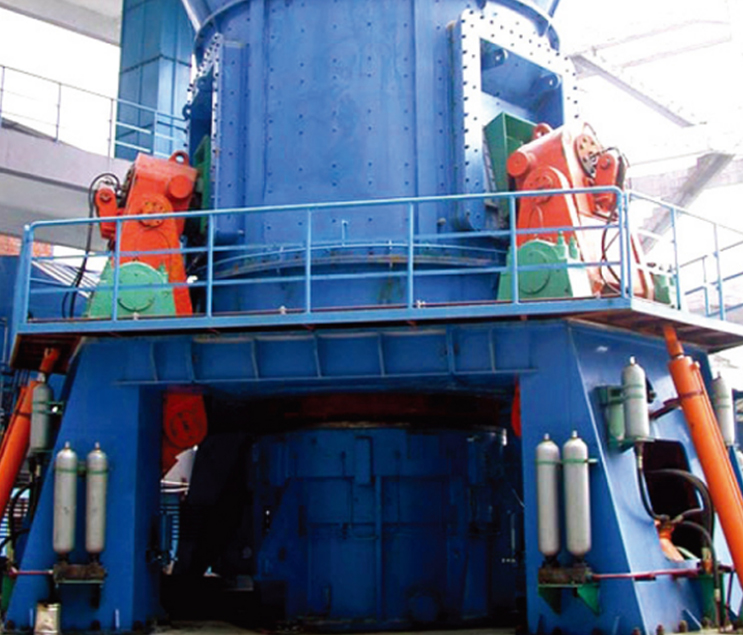 LYH1008 Series Vertical Grinding MillLYH1008 series vertical mill is a new type of equipment designed to absorb foreign technology. It grinds the material (0-15MM) on the rotating grinding disc by rolling...View Product →
Ring roller mills and intelligent classification
Ring roller mills run at lower speeds and produce a narrower feed distribution, which changes what the classifier has to cope with. Here the emphasis shifts toward precise, repeatable control. A variable speed cage combined with programmable logic control lets operators trim the product fineness without stopping the line, and it lets the control system compensate automatically when feed hardness or moisture drifts. The LYH996 series new type intelligent vertical ring roller mill follows this philosophy, pairing a ring roller grinding stage with a classifier whose speed is managed as part of the process recipe.
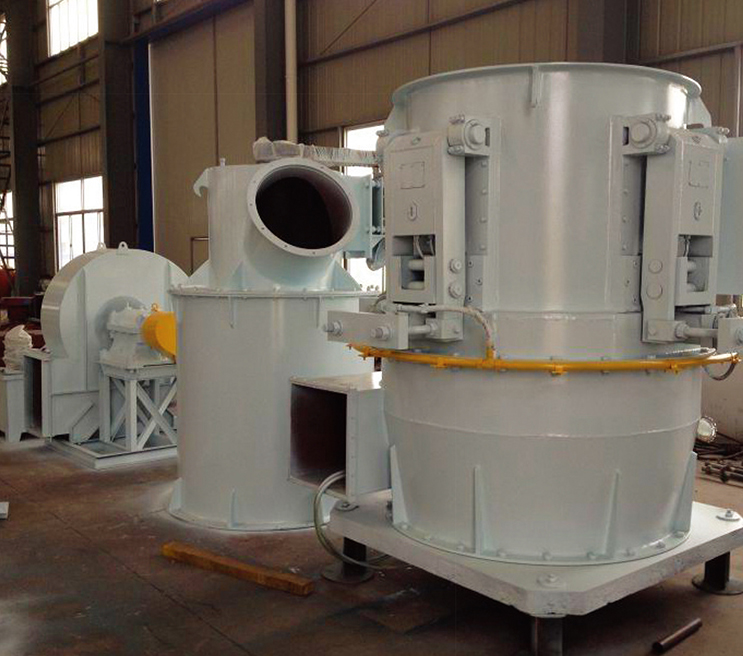 LYH996 Series New Type Intelligent Vertical Ring Roller MillIn the field of ultrafine powder processing, facing more and more ultrafine powder requirements, traditional ultrafine powder processing equipment has been difficult t...View Product →
Pendulum mills and retrofit-friendly classification
Four-roller pendulum mills of the Raymond type remain the workhorse for limestone, calcite, barite, dolomite and similar minerals, and many of them are decades old. Their classifier is usually a double-cone or turbine type mounted on top of the mill housing. The design priority is different here. Upgrading the classification stage often returns more value than rebuilding the grinding stage, provided the fan and ducting can absorb the additional pressure drop. The LYH998 4-roller Raymond grinding pendulum mill is designed with this upgrade path in mind, so that an existing plant can improve product fineness and output without replacing its entire circuit.
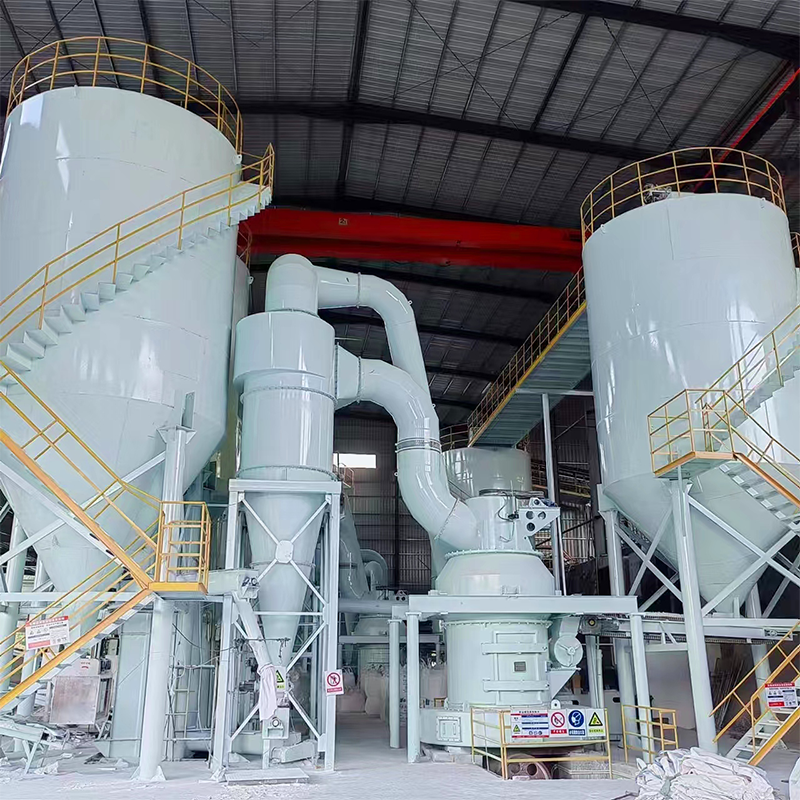 LYH998 Raymond Grinding Pendulum MillLYH998 series new type intelligent Raymond grinding mill is the latest type of milling machine, based on extensive cooperation with major universities and colleges, dr...View Product →
Design Mistakes We See Most Often
Most classifier problems are not exotic. They come from a handful of recurring decisions made too early in the project.
- Sizing the fan for the mill and then asking the classifier to do more than the available air volume allows.
- Feeding the classifier with an uneven or wet material stream; moisture above roughly six percent turns classification into a blockage problem rather than a separation problem.
- Choosing an ambitious cut point on paper without calculating the circulating load it creates.
- Ignoring wear. Blade tips and liners erode, the rotor gap opens up, and the cut point drifts coarser month by month.
- Treating seal air as optional. Dust ingress into bearings is one of the most common causes of unplanned downtime.
- Commissioning without sampling. A particle size distribution measured at steady state is the only reliable proof that the design intent was achieved.
From Design to Commissioning
Good classifier design ends with documentation, sampling and adjustment, not with a drawing set. On a complete grinding line the classification stage is benchmarked against feed size, target fineness and available air volume, then verified with sieve and laser analysis once the circuit reaches steady state. Because we also deliver projects on an EPCM basis, we can take responsibility for the whole chain from engineering through procurement to construction management, which is often the simplest way to avoid the gaps that appear when several suppliers share one battery limit.
If you are planning a new project or rebuilding an existing line, our overview of what turnkey EPCM means for a powder grinding project explains how scope, responsibilities and handover are normally structured.
Air classifier design rewards patience. The physics is straightforward, but the details of geometry, airflow, sealing and control decide whether a circuit runs at its design point or drifts away from it within a few months. Get the force balance right, size the air system honestly, and plan for wear from the first day.
At Nantong Liyuanheng Machinery, we have spent years building grinding and classification equipment for minerals with a Mohs hardness below seven and moisture below six percent, with finished products adjustable between roughly 60 and 600 mesh. If you would like a second opinion on your classification stage, our engineers are always happy to talk through the numbers with you.

 Email:
  Telephone: +86-13951382065
 Phone: +86-13951382065