 Email:
  Telephone: +86-13951382065
 English
 中文简体
中文简体 русский
 Français
 Español
 عربى
عربى
Content
- 1 The Chemical Formula of Hydrated Lime
- 2 Hydrated Lime vs. Quicklime: Two Formulas, One Production Chain
- 3 From Limestone to Hydrated Lime: The Three-Stage Production Route
- 4 Why Fineness Is Not Optional When the Formula Is Fixed
- 5 How to Match a Grinding Mill to Your Hydrated Lime Process
- 6 Practical Procurement Considerations for Hydrated Lime Grinding Lines
When you open a product data sheet for hydrated lime, the first line usually reads: Ca(OH)2. That formula is more than a chemical label. It tells you that this powder will react with acids, raise pH in water, and harden in mortars. It also tells you that the raw material was once quicklime, and that somewhere in the production chain, water was added in a controlled reaction. If you build or operate a lime grinding line, the chemical formula of hydrated lime sets the boundaries for material handling, milling, and dosing.
The Chemical Formula of Hydrated Lime
Hydrated lime is the common name for calcium hydroxide, a compound with the formula Ca(OH)2. The molecule consists of one calcium ion (Ca2+) bound to two hydroxide ions (OH−). In its dry form, it appears as a white, fine powder with a specific gravity of about 2.21 and a molecular weight of 74.09 g/mol. It is sparingly soluble in water — roughly 1.65 g/L at 20°C — but even that small amount is enough to create a strongly alkaline solution with a pH around 12.4 in a saturated suspension.
The formula is often written incorrectly as "CaO2H2" in casual documents. That is the same empirical ratio but does not show the ionic structure. For engineering purposes, the correct dissociation behavior matters: Ca(OH)2 breaks into Ca2+ and 2OH−, which determines how much reagent is needed to neutralize a given acid load.
Hydrated Lime vs. Quicklime: Two Formulas, One Production Chain
Quicklime is calcium oxide, formula CaO. It is produced by calcining limestone at about 900°C. Hydrated lime is produced by adding water to quicklime:
CaO plus H2O produces Ca(OH)2 plus heat.
The reaction is exothermic enough to boil the water if it is not controlled. In a continuous hydrator, operators regulate water addition and temperature to produce a dry powder instead of a paste. The table below compares the two forms from a buyer's point of view.
| Property | Quicklime (CaO) | Hydrated Lime (Ca(OH)2) |
|---|---|---|
| Chemical formula | CaO | Ca(OH)2 |
| Common name | Quicklime, burnt lime | Hydrated lime, slaked lime |
| Water content | None; reacts with atmospheric moisture | Contains water as hydroxide |
| Reaction with water | Violent exothermic reaction | Stable, does not generate heat |
| pH in water | Converts to Ca(OH)2 in solution | Directly forms highly alkaline solution |
| Typical applications | Steelmaking, flue gas treatment, soil stabilization | Water treatment, construction, chemical processing |
| Storage recommendations | Dry, sealed, avoid water contact | Dry, dust-controlled, less reactive |
For a grinding project, this distinction changes the equipment list. If your feedstock is quicklime, you may need a slaker before the mill. If your feedstock is already hydrated lime, you can focus on grinding and classification. The chemical formula tells you which path your plant must follow.
From Limestone to Hydrated Lime: The Three-Stage Production Route
Commercial hydrated lime starts as limestone (CaCO3). The process has three stages that each affect the final product quality.
Stage 1: Calcination. Limestone is crushed and fed into a kiln, where it is heated to around 900°C. The thermal decomposition releases carbon dioxide: CaCO3 yields CaO plus CO2.
The resulting quicklime is a porous, highly reactive solid. Its specific surface area depends on the kiln type and temperature profile.
Stage 2: Slaking. Quicklime is mixed with a measured amount of water. The hydration reaction converts CaO to Ca(OH)2. In a modern hydrator, an internal paddle shaft continuously mixes the material while the temperature is kept below about 100°C to avoid overheating. The product is a fine dry powder, but it may contain agglomerates.
Stage 3: Grinding and classification. If the hydrated lime will be used for flue gas desulfurization, water treatment, or building materials, a consistent fineness is required. Hydrated lime powder from the hydrator often has a wide particle size distribution. A grinding mill with an integrated air classifier can reduce the coarse fraction and produce a uniform 100 to 600 mesh product.
Nantong Liyuanheng Machinery has delivered complete grinding lines for lime applications. Our vertical grinding mill series is often used when the feed is softer and the target is moderate fineness.
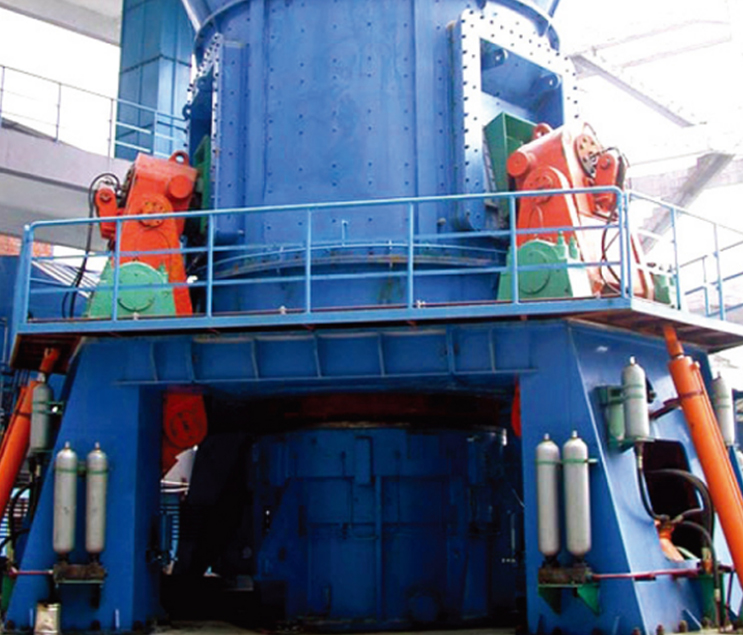 LYH1008 Series Vertical Grinding Mill for Lime PowderThis vertical mill grinds materials to 325-2000 mesh, integrating grinding, drying, and classification. It suits lime applications requiring moderate to fine fineness with low energy consumption.View Product →
Why Fineness Is Not Optional When the Formula Is Fixed
Once the chemical formula is Ca(OH)2, the reaction chemistry does not change. But the physical state does. For hydrated lime, the particle size controls the available surface area. A 300-mesh powder has roughly four times the specific surface area of a 100-mesh powder, which can dramatically change the rate of reaction.
In municipal water treatment, hydrated lime is used to adjust pH and soften water. A finer powder dissolves more quickly, allowing shorter mixing zones and lower residual solids. In flue gas desulfurization, fine hydrated lime contacts SO2 more effectively, improving the desulfurization efficiency with the same reagent mass. In construction, a controlled fineness improves the consistency of lime mortar and reduces the risk of cracking.
However, over-grinding comes with its own operational costs. Extremely fine hydrated lime can become electrostatic, leading to poor flow from hoppers and higher filter bag loads. Therefore, the target fineness must be defined by the downstream process, not simply by "make it as fine as possible."
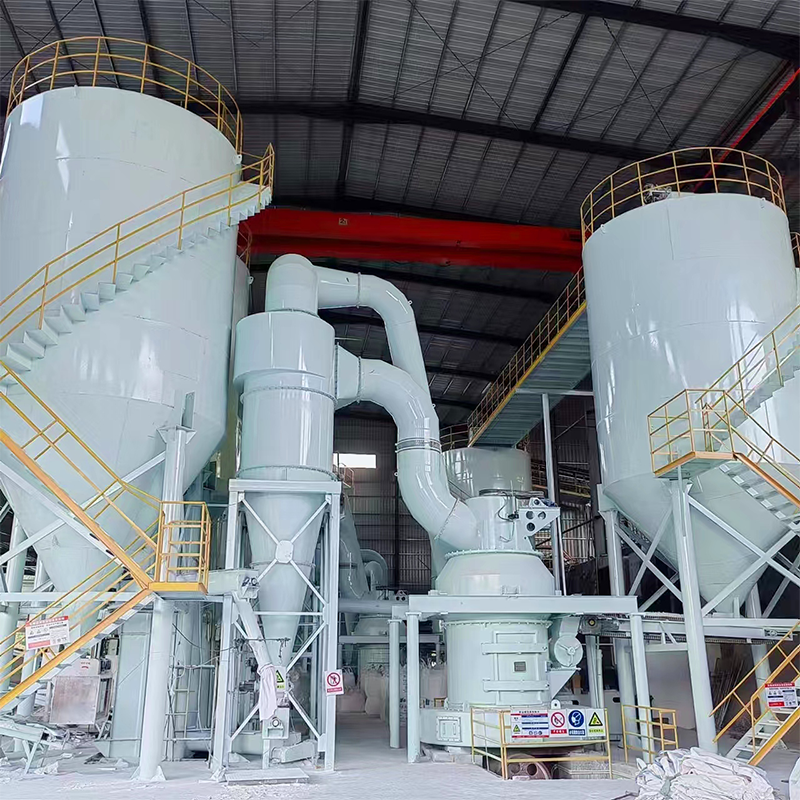 LYH998 Raymond Pendulum Mill for Hydrated LimeThis mill offers easy adjustment of fineness and low energy use. Ideal for hydrated lime with moderate grinding requirements, but avoid over-grinding and manage moisture above 6% risk.View Product →
How to Match a Grinding Mill to Your Hydrated Lime Process
Choosing the right mill for hydrated lime requires knowing your material and your product spec. Hydrated lime has a Mohs hardness of about 2 to 3, so it is easy to grind mechanically. Water content is the bigger risk: if the filter cake or hydrated lime contains more than 6% moisture, the mill can suffer from clogging and accelerated wear on grinding elements.
Our three main product families cover different operating ranges:
LYH1008 Series Vertical Grinding Mill
This design uses a vertical table and roller assembly, making it suitable for materials with moderate hardness. It is a good fit when the plant needs high throughput with a controlled fineness range.
LYH996 Series Intelligent Vertical Ring Roller Mill
This series adds a ring roller configuration and intelligent control features. It is often selected for ultrafine grinding projects that require a consistent particle size distribution and lower energy consumption per ton.
LYH998 4-Roller Raymond Grinding Pendulum Mill
This is a classic pendulum swing mill with four rollers on the grinding ring. It is a proven solution for lime and mineral powders where 60 to 600 mesh output is acceptable, and where the plant staff is familiar with Raymond mill maintenance.
To match a mill to your hydrated lime line, you need to specify the following data to the equipment supplier:
- Feed moisture content (should be below 6% for our standard design)
- Required product fineness (mesh or D50/ D90 values)
- Throughput target in tons per hour
- Available power and heat balance constraints
- Material properties such as bulk density and flowability
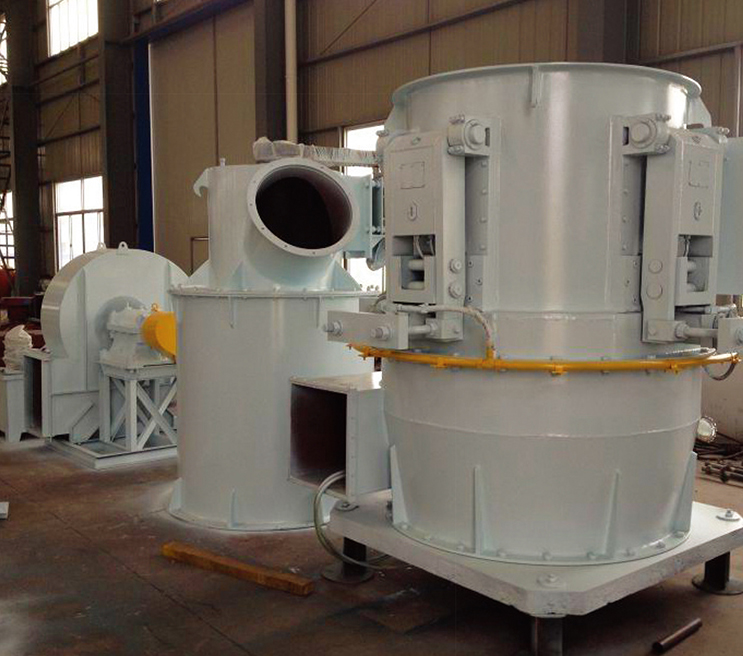 LYH996 Ring Roller Mill for Ultrafine Lime PowderThis new intelligent mill produces ultrafine powders with high efficiency. It can be integrated with a slaker and complete negative-pressure system for lime processing lines.View Product →
For plants that need to connect a mill after a lime slaker, the LYH996 series is a common recommendation. It can be integrated with a baghouse, fan, and classifier to form a complete negative-pressure system.We have published a detailed guide on the lime production process, from quarry to finished powder, which covers the layout decisions and common pitfalls in limestone and lime grinding plants. If you are evaluating a new project, start with that article before locking in the equipment spec.
Practical Procurement Considerations for Hydrated Lime Grinding Lines
When buying equipment for a hydrated lime plant, the most common mistake is to focus only on capacity and price while ignoring the moisture and abrasiveness of the feed. Hydrated lime is soft, but it can be sticky. A mill designed for limestone might have a grinding pressure that is too high for Ca(OH)2, causing the material to be over-grinded and the classifier to overload.
Another risk is the mismatch between the hydration process and the milling process. If the hydrator produces a product with 10% free moisture, the mill must handle that wet feed or have a drying capability. Otherwise, the mill may experience internal water condensation, which causes the grinding roller to slip and the output to drop sharply.
Consider the total cost of the system, not just the mill price. A complete grinding line includes the feed hopper, belt conveyor, grinding mill, classifier, dust collector, and control panel. Suppliers who offer a full system can balance the air volume and negative pressure across the entire line. Nantong Liyuanheng Machinery's engineers have delivered nearly 100 energy-saving grinding production lines in metallurgy, mining, and material processing, including projects where lime or limestone is the main feed.
Whether you are purchasing hydrated lime or building a line to make it, the chemical formula Ca(OH)2 is the fixed fact. The variable is the physical form — particle size, moisture, and surface area. Start with the reaction chemistry, then define the fineness and throughput your application needs. Only after those steps should you choose a grinding mill. That sequence will give you the lowest cost per ton and the fewest operational surprises.

 Email:
  Telephone: +86-13951382065
 Phone: +86-13951382065