 Email:
  Telephone: +86-13951382065
 English
 中文简体
中文简体 русский
 Français
 Español
 عربى
عربى
Content
- 1 What Air Classification Equipment Actually Does
- 2 Where the Classifier Sits in a Grinding Circuit
- 3 Static Versus Dynamic Classifiers
- 4 Specifications That Decide Whether a Classifier Fits Your Job
- 5 Material Limits Worth Respecting
- 6 When Fineness Drifts, Look at Classification First
- 7 Buy the Circuit, Not a Standalone Machine
Run the same calcite through two nearly identical pendulum mills and you can still end up with two very different products. One plant holds a firm 325-mesh top size with a narrow particle size distribution; the other keeps shipping fines laced with grit, no matter how carefully the operators feed the mill. The difference is rarely the grinding rolls. It is the air classification equipment — the unit that decides which particles leave the circuit and which ones go back for another pass.
The conclusion first: in an airswept grinding system, the mill creates fine particles, but the classifier sets the product's top size, the width of its distribution, and a large share of the energy cost per ton. If you evaluate a grinding line by the mill alone, you will spend years tuning around a limit that was designed in on day one.
What Air Classification Equipment Actually Does
Air classification separates powder by physics, not by screens. Every particle inside the classifier sits between two opposing forces. Aerodynamic drag from the airflow tries to carry the particle up and out with the fines. Centrifugal force, generated by a rotating rotor cage or by the vortex itself, throws the particle outward toward the coarse reject. The size at which these two forces balance is the cut point, usually reported as D50 — the particle size with a 50 percent chance of leaving with the fines or returning with the coarse.
Three operating levers move that cut point in practice: rotor speed, air volume through the system, and guide vane position. Raise rotor speed or reduce air volume and the product gets finer; do the reverse and throughput climbs while top size loosens. Because nothing physical blocks the product path — no screen, no sieve — there is nothing to blind or clog, which is why classification stays practical at fine sizes where sieving no longer works. In mineral grinding lines, this is the mechanism behind stable products anywhere in the 60 to 600 mesh range, roughly 0.25 mm down to 0.023 mm.
Where the Classifier Sits in a Grinding Circuit
In a classic airswept Raymond-type circuit, the sequence works like this: crushed feed enters the mill, rollers grind it, and the system fan pulls air through the mill body. That air lifts ground material to the classifier in the upper housing. Fines pass through the rotor with the air and are captured in a cyclone and baghouse; coarse particles are rejected, fall back into the grinding zone, and try again. The share of material circulating this way — the recirculating load — follows directly from classification sharpness. A blunt classifier recirculates already-fine particles and burns power regrinding them; a sharp one lets finished product escape on the first pass.
Classifiers are either built into the mill housing or installed as a standalone machine downstream. Integrated designs keep the plant compact and the ducting short. Standalone classifiers split grinding and classifying into separate functions, which gives operators independent control of each step — useful when one line serves several products with different specifications.
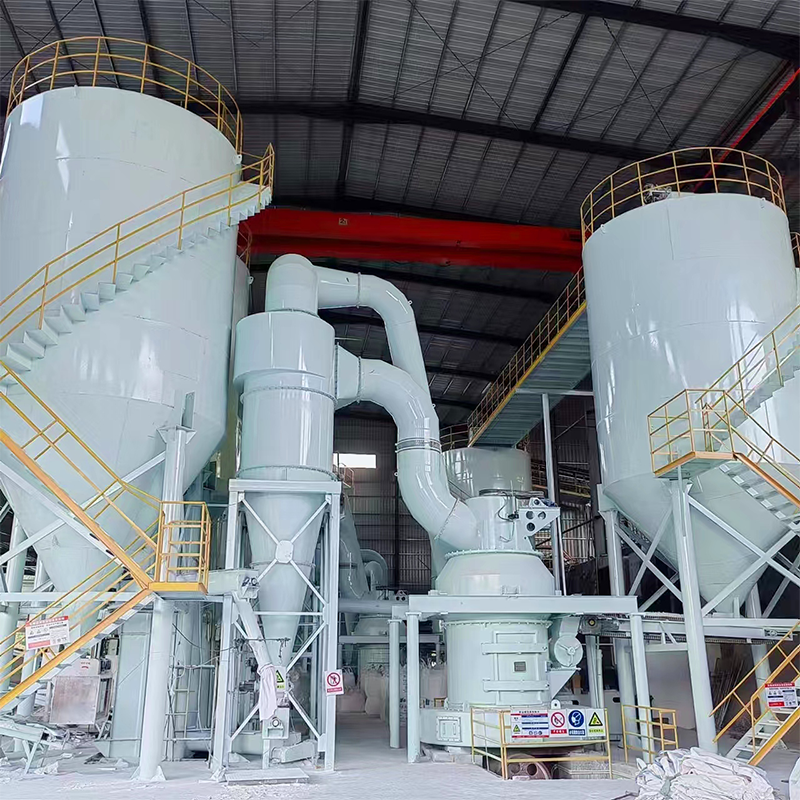 LYH998 Four-Roller Pendulum Raymond Grinding MillThis pendulum mill pairs four grinding rollers with a rotating ring and an integrated classifier-fan loop, keeping the path from grinding to classification short. It suits producers of calcium carbonate, gypsum and barite fillers needing a compact line.View Product →
The LYH998 four-roller pendulum mill follows the integrated pattern: four grinding rollers working against a rotating ring, with the classifier and fan forming one aerodynamic loop inside the system. For producers of calcium carbonate fillers, gypsum, barite and similar minerals, this layout keeps the path from the grinding zone to classification as short as possible.
Static Versus Dynamic Classifiers
Older and smaller pendulum mills rely on static cone separators: no moving parts, low capital cost, and a cut that responds mainly to airflow. The penalty is sharpness. A static separator can hold a coarse, forgiving specification, but fine particles routinely leak into the rejects and coarse particles slip into the product. Dynamic rotor classifiers — now standard on modern lines — add a variable-speed cage whose speed becomes an independent fineness control, so the distribution tightens without forcing the whole mill to grind finer.
| Aspect | Static classifier | Dynamic rotor classifier |
|---|---|---|
| Moving parts | None; separation by airflow alone | Variable-speed rotor cage with guide vanes |
| Cut point control | Air volume only, coarse adjustment | Rotor speed plus air volume, fine adjustment |
| Cut sharpness | Low; coarse particles leak into fines | High; tighter particle size distribution |
| Energy and pressure drop | Lower resistance in the air loop | Slightly higher; offset by less regrinding |
| Best fit | Coarse products, loose specifications | Fine powders, tight top-size limits, frequent grade changes |
Specifications That Decide Whether a Classifier Fits Your Job
Catalogs list many numbers, but a short list actually predicts how the machine will behave in your plant:
- Cut point range against your target fineness. Confirm the machine can reach your required top cut or D97, not just its headline D50.
- Throughput quoted at your fineness. A rating given at 100 mesh tells you little about output at 400 mesh.
- Fan air volume and static pressure. Classifier, mill and collector share one air loop; mismatched fan duty either starves classification or blows coarse particles through.
- Turndown ratio. How far output can fall before the distribution drifts matters if you serve seasonal or mixed markets.
- Feed moisture ceiling. Above roughly 6 percent, damp particles agglomerate, false coarse returns build up, and the cut point drifts.
- Wear protection on rotor blades and vanes. A worn cage quietly coarsens the product long before anyone adjusts a setpoint.
Precision also has a control-system dimension. On vertical ring roller mills, rotor speed, air volume and mill load are interlocked so ultrafine output stays stable across feed variations; the reasoning behind that design is explained in our article on how high-precision classifiers in a vertical grinding mill ensure stable ultrafine particle output.
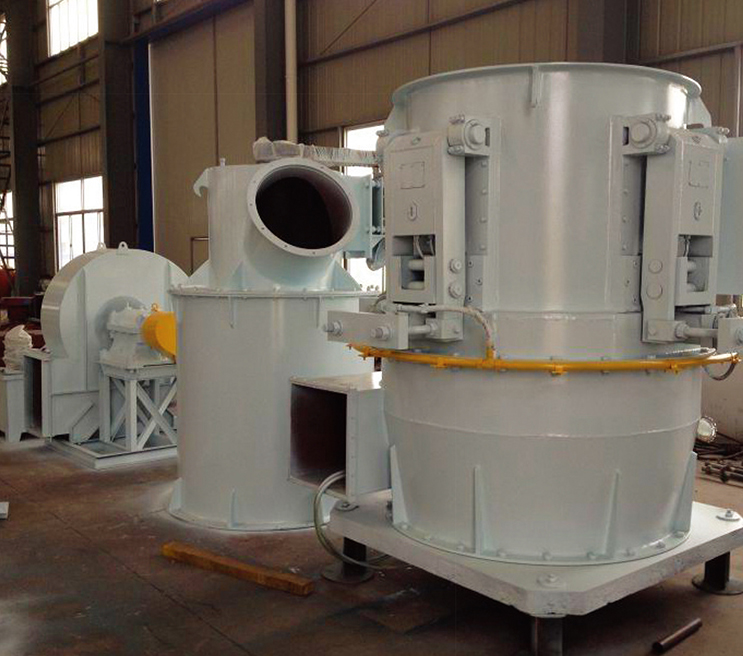 LYH996 Intelligent Vertical Ring Roller MillDesigned for ultrafine mineral powders, this vertical ring roller mill interlocks rotor speed, air volume and mill load under intelligent control, helping output stay stable across feed variations with repeatable particle size distributions.View Product →
The LYH996 was developed around exactly this interlock: intelligent control of a vertical ring-roller grinding system, aimed at producers who need ultrafine mineral powders with repeatable distributions rather than occasional best-case results.
Material Limits Worth Respecting
Air classification in grinding circuits is dry work, and the equipment has boundaries. For the mineral grinding lines described on this site, the practical envelope is Mohs hardness below 7 and feed moisture below 6 percent, covering non-flammable, non-explosive materials. Inside that envelope the range is wide: calcite, dolomite, barite, gypsum, talc, feldspar, quartz, bauxite, blast furnace slag, and the coal family, ground anywhere from 60-mesh construction fillers to 600-mesh fine powders.
Moisture causes most of the trouble at the classification stage. Slightly damp powder stops behaving like discrete particles; it sticks to rotor blades, builds up on guide vanes, and forms agglomerates that register as coarse even though the individual crystals are fine. The system responds by rejecting more material, output falls, and operators often blame the mill. Drying the feed or trimming system temperature usually restores performance faster than any mechanical change.
When Fineness Drifts, Look at Classification First
Most cases of "the mill got worse" are really classification cases. Fineness drift usually traces to a worn rotor or seal, an air leak that changes the effective air-to-material ratio, rising feed moisture, or fan performance eroding as impellers wear. Output drops that coincide with a coarser cut point point in the same direction. Before scheduling major mill work, check the classification side: rotor speed feedback, vane positions, system airflow and temperature, and the pressure profile across the loop.
The interplay is easiest to see on Raymond-type circuits, where the classifier and the grinding force respond to the same air stream. Our guide on how a Raymond roller mill controls product particle size walks through that relationship, and it doubles as a troubleshooting map when top size starts to creep.
Buy the Circuit, Not a Standalone Machine
Air classification equipment never performs alone. Its real behavior emerges from the loop it shares with the mill, the fan and the dust collection system, so the sensible buying decision treats those four as one engineered package. That is how we quote projects as well: complete grinding equipment with sizing, ducting, collection and control worked out together, delivered either as individual machines or as full engineering, procurement and construction management for an entire new line — the same approach behind the nearly one hundred grinding lines already running in metallurgy, mining and building materials.
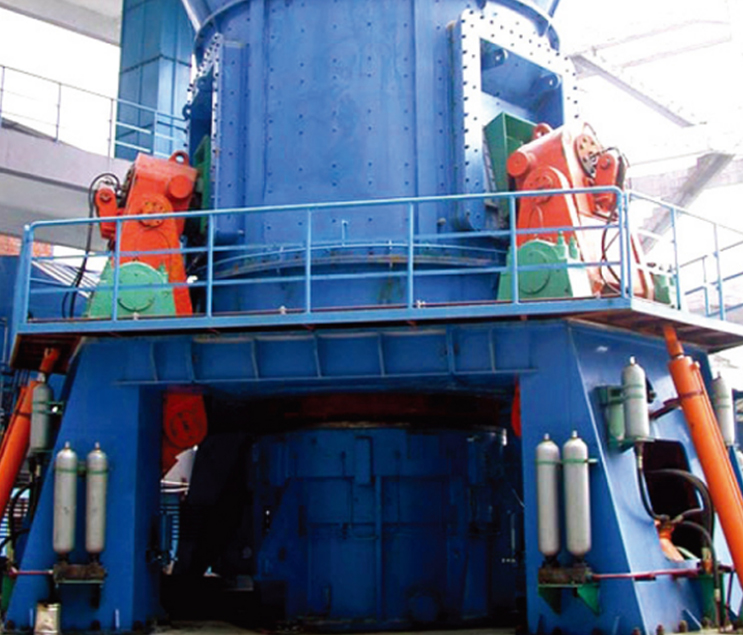 LYH1008 Vertical Grinding Mill for Medium-Fine PowdersIntegrating grinding, powder selection and drying, this vertical mill covers 325-2000 mesh non-metallic mineral applications. It completes the range alongside the pendulum and ring-roller designs for matching fineness and tonnage requirements.View Product →
For plants that need vertical mill economics across medium-fine mineral powders, the LYH1008 rounds out the range alongside the pendulum and ring-roller designs, giving a buyer three proven architectures to match against material, fineness and tonnage. Whichever architecture fits, ask one question before signing: not how fine the mill grinds, but how sharply the circuit classifies — because that answer, more than any other, decides what comes out of your silo.

 Email:
  Telephone: +86-13951382065
 Phone: +86-13951382065