 Email:
  Telephone: +86-13951382065
 English
 中文简体
中文简体 русский
 Français
 Español
 عربى
عربى
Content
A powder plant can have the right mineral deposit, a clean process flow, and a strong market for the final product, but if the grinding mill cannot hold the required particle size, the project will underperform. In non-metallic mineral processing, that is the first conclusion worth keeping in mind: the mineral defines the feed, while the grinding system defines the product. The practical question is whether the mill matches the feed's hardness, moisture, and the fineness target before the equipment is ordered.
What Are Non-Metallic Minerals?
Non-metallic minerals are minerals that are not mined primarily for the metals they contain. They include construction materials such as limestone, sand, gravel, and gypsum; chemical and fertilizer minerals such as barite, salt, and phosphate rock; and industrial minerals such as talc, kaolin, feldspar, and graphite. In everyday industrial terms, these are the base materials for cement, lime, ceramics, glass, paint, plastics, and paper.
Because they are used for their physical and chemical properties rather than for metal extraction, non-metallic minerals are usually judged by different criteria than ores. Purity, color, particle shape, brightness, oil absorption, and particle size distribution all matter more than metal content. A limestone that is perfectly adequate for aggregate may be rejected as a filler because its color is inconsistent; a barite product used in drilling may fail because its density or particle size distribution is off.
For an equipment buyer, this has a direct consequence: every non-metallic mineral project needs a process design that starts from the final powder specification and works back to the feed. A useful starting list of materials is covered in our guide to minerals you can process with a Raymond mill, but the principle is broader than any single machine type.
Feed Properties That Drive the Grinding Decision
Two feed properties have the largest influence on mill selection: Mohs hardness and feed moisture. Most non-metallic minerals can be ground with equipment designed for materials below 7 on the Mohs scale. Softer minerals such as talc, gypsum, and kaolin can be milled at higher speeds with relatively low wear. Medium-hard minerals such as limestone and dolomite require moderate grinding pressure, while minerals near the upper limit, such as feldspar, need tougher wear parts and a more conservative operating point. For most vertical grinding mills and ring roller mills, the practical window is a feed below 7 on the Mohs scale and a feed moisture below 6 percent.
Moisture is often the hidden problem. When feed moisture rises above about 6 percent, the material can cake inside the mill, coat the grinding rollers, and reduce classifier accuracy. Many non-metallic mineral plants handle this by drying the feed before milling, or by selecting a mill system with an integrated drying air flow.
The table below shows the range of common non-metallic minerals and the selection considerations that typically apply.
| Mineral | Approximate Mohs hardness | Typical powder applications | Selection note |
|---|---|---|---|
| Limestone | 3 | Cement, fillers, flue-gas treatment | Easy to grind; moisture control is important |
| Talc | 1 | Paper, plastics, paint | Platy particle shape must be preserved |
| Barite | 3 to 3.5 | Drilling mud, heavy fillers | Fineness and specific gravity control matter |
| Gypsum | 2 | Plaster, cement retarder | Heat-sensitive; air flow must be controlled |
| Feldspar | 6 to 6.5 | Ceramics, glass | Abrasive; wear protection is necessary |
| Kaolin | 2 to 2.5 | Ceramics, paper coating | Brightness and particle size distribution are critical |
Hardness and moisture are not the whole story. Abrasiveness can be higher than hardness suggests, especially if the mineral contains sharp quartz grains. The target particle size also matters: a 60-mesh product will behave differently from a 600-mesh product in the same mill, because the classifier, grinding pressure, and residence time must all change.
A Typical Non-Metallic Mineral Processing Line
Once the feed and target are known, the processing line usually follows a predictable sequence:
- Crushing and drying: reduce the feed to a size the mill can accept and bring moisture into the acceptable range.
- Grinding: reduce the mineral in the main mill to the target fineness.
- Classification: separate particles that have reached the required size and return oversize material for another pass.
- Collection and dust control: capture the finished powder in the baghouse and keep the milling loop under negative pressure.
- Storage and packing: move the finished powder to silos or packaging without losing its particle size distribution.
For most medium-fine powders, the circuit is not complicated, but the engineering of the circuit determines whether the mill runs close to its rated capacity. A raw material bin that is too small, a classifier that is poorly matched to the mill, or a baghouse with insufficient air volume can reduce output more than any difference between one mill and another.
How to Choose a Grinding Mill for Non-Metallic Minerals
There is no universal non-metallic mineral mill. The correct choice depends on the target fineness, throughput, energy cost, and the physical properties of the feed. In practice, three machine architectures cover most projects.
Classic pendulum mills for medium-fine powder
When the product target is between roughly 60 and 325 mesh, a four-roller Raymond pendulum mill is an economical and well-proven option. It suits limestone, gypsum, barite, kaolin, and many other minerals with moderate abrasiveness. For a mature plant where the operator wants simple maintenance and stable operation, the LYH998 4-Roller Raymond Grinding Pendulum Mill is the type of equipment we normally recommend in this range.
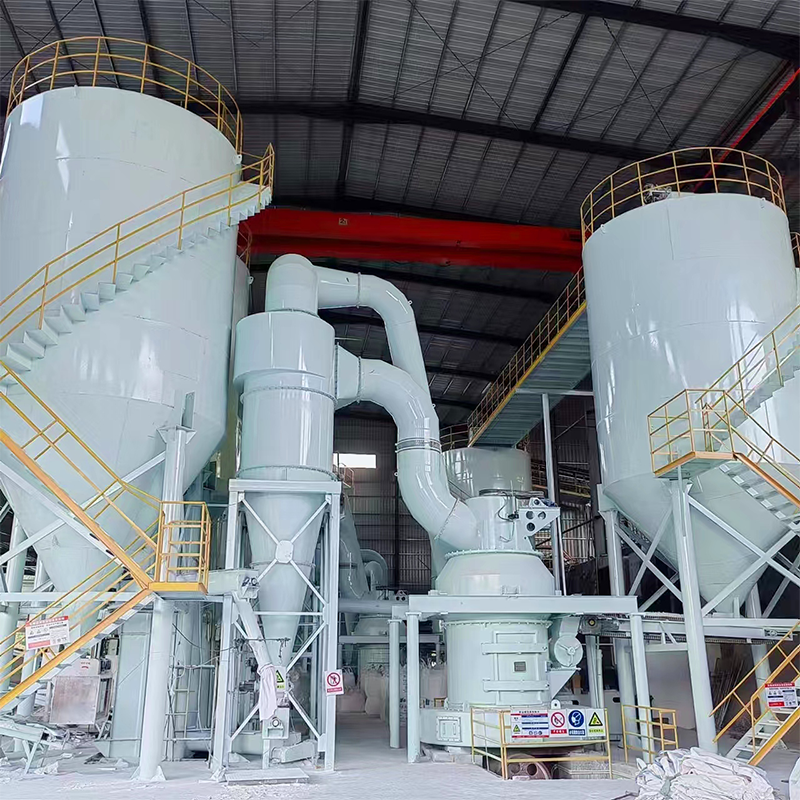 Raymond Mill Manufacturers, Pendulum Mill Factory, SuppliersLIYUANHENG - Raymond Roller Mill Manufacturers and Raymond Grinding Mill Factory, Pendulum Mill Suppliers in China, 4 Roller Raymond Pend...View Product →
Vertical grinding mills for higher throughput and energy efficiency
When the plant needs higher capacity per unit of floor area and lower power consumption per ton, a vertical grinding mill is usually the better architecture. Its classification is integrated with the grinding loop, and the vertical layout makes it easier to arrange the process flow. For operators upgrading from a ball mill or an older horizontal mill, the LYH1008 Series Vertical Grinding Mill gives a clear reference point for this type of system.
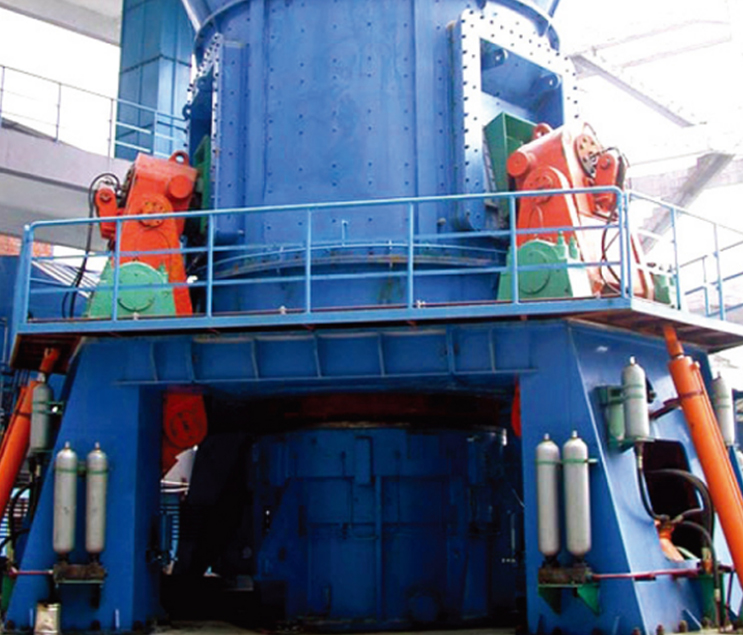 Vertical Grinding Mill Manufacturers, Factory, SuppliersLIYUANHENG Mineral Grinding Machine Manufacturers, China Vertical Grinding Mill Factory and Suppliers, Barite Grinding Mill and Dolomite ...View Product →
Intelligent vertical ring roller mills for fine and ultrafine powder
As the required fineness moves toward 400 mesh and beyond, the classifier and grinding pressure need more precise control. A vertical ring roller mill can handle softer non-metallic minerals with lower energy consumption than a conventional mill, and intelligent control helps keep the product stable when feed conditions vary. The LYH996 Series New Type Intelligent Vertical Ring Roller Mill is representative of this approach.
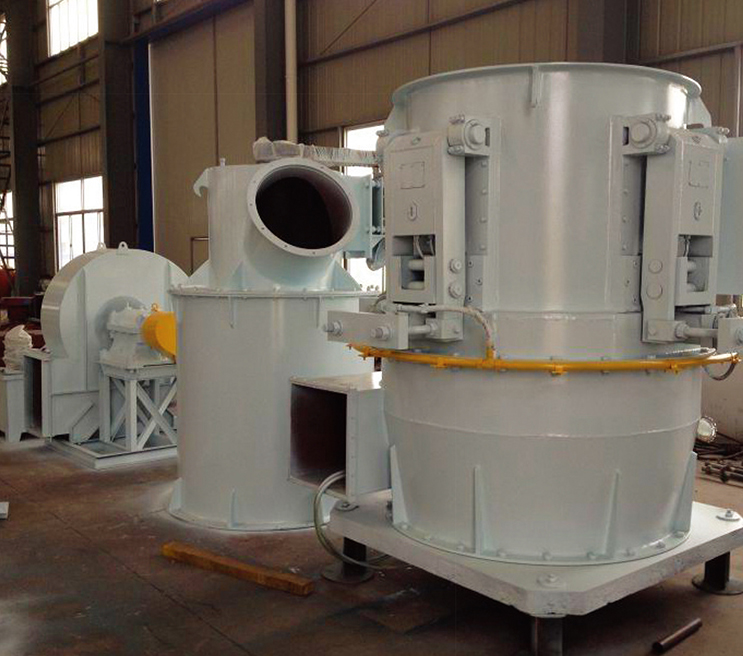 Ring Roller Mill Manufacturers, Vertical Roller Mill FactoryVertical Ring Roller Mill Manufacturers and Roller Grinding Machine Factory, Superfine Powder Roller Mill Suppliers in China, LIYUANHENG ...View Product →
Plant-Level Decisions: Energy, Dust, and Total Cost
Mill selection is only one part of a non-metallic mineral project. The surrounding system often decides whether the mill can operate reliably.
Energy efficiency has become a key purchasing criterion because power is often the largest controllable cost in a grinding plant. A well-designed vertical mill can reduce energy consumption per ton compared with a conventional ball mill, but only if the classifier, fan, and grinding pressure are set around the actual feed. For a pendulum mill, lubrication and roller wear also affect power draw; poorly maintained rollers force the mill to use more pressure to achieve the same product.
Dust emission control is equally important. Non-metallic mineral processing generates fine powder at every transfer point, and a compliant plant needs a dust collection system sized for the whole circuit, not just the mill outlet. Operating under negative pressure reduces leaks and keeps the working environment safe.
Before requesting a price, prepare the following information:
- Target product and the required fineness range, for example 200 mesh or 600 mesh
- Feed size after the crushing stage
- Feed moisture at the mill inlet
- Mohs hardness and abrasiveness, if known
- Required capacity in tons per hour
- Product specification such as brightness, color, or oil absorption
These details allow an equipment supplier to size the mill, classifier, fan, and dust collector as a system. They also reduce the risk of the mill being downrated after installation because a critical feed property was not disclosed.
The Practical Takeaway
Non-metallic minerals are not one family of materials when it comes to grinding. Talc and feldspar demand different operating strategies; limestone filler and barite drilling mud demand different quality controls. The common thread is that feed hardness, feed moisture, and target fineness should be fixed before the mill is chosen.
Start with the product specification. Work backward through the grinding circuit. Then select a mill architecture that can deliver the required fineness with a realistic maintenance plan and energy budget. That sequence has proven itself in plant after plant, and it is the most direct way to keep a non-metallic mineral project profitable.

 Email:
  Telephone: +86-13951382065
 Phone: +86-13951382065