 Email:
  Telephone: +86-13951382065
 English
 中文简体
中文简体 русский
 Français
 Español
 عربى
عربى
Content
Crushing and grinding facilities sit at the very front of almost every mineral powder business. Whether a plant feeds limestone to a cement kiln, prepares barite for drilling mud, or turns calcite into a filler for paint, the size of the incoming rock and the fineness of the outgoing powder decide how much money the operation makes. After years of building grinding lines, we have seen excellent deposits held back by poorly matched equipment, and modest deposits turned into steady profits by a well-designed circuit.
This guide walks through what these facilities actually do, how the main equipment fits together, and the practical choices that keep a powder line running at capacity instead of limping along on emergency repairs.
What Crushing and Grinding Facilities Actually Do
Crushing and grinding are often mentioned in the same breath, yet they do different jobs. Crushing reduces large rock from the quarry face to a size a mill can handle safely. Grinding takes the particles further, until valuable minerals are liberated from the gangue or the powder reaches the fineness a customer is willing to pay for.
In ore processing, the real objective is not simply smaller particles; it is dissociation of the useful mineral from the waste rock. Over-grinding wastes energy and creates too many fines, while under-grinding leaves locked particles that no downstream process can recover. That is why a well-designed circuit shifts as much size reduction as possible into the crushing stage, following the industry rule of more crushing and less grinding, because breaking rock is far cheaper per tonne than milling it.
In practice, a facility usually runs in stages:
- Primary crushing brings run-of-mine material down to a few hundred millimetres.
- Secondary and tertiary crushing reduces it further to a few tens of millimetres, forming stable mill feed.
- Grinding takes that feed down to the final product, commonly between 60 and 600 mesh.
Equipment That Makes Up a Complete Facility
A grinding system is never just a mill. It is a chain that runs from the feeder to the finished powder silo, and every link has to match its neighbours. Broadly speaking, the plant splits into a crushing section, a grinding section, and the auxiliary systems that keep both of them breathing.
The table below offers a general picture of a typical mineral powder project; the actual numbers depend on the material, the capacity requirement, and the target fineness.
| Stage | Typical equipment | Feed size | Product size | Main purpose |
|---|---|---|---|---|
| Primary crushing | Jaw or gyratory crushers | Up to about 1,000 mm | 100 to 300 mm | Break run-of-mine rock into transportable material |
| Secondary and tertiary crushing | Cone, impact or hammer crushers | 100 to 300 mm | 10 to 50 mm | Produce consistent, well-graded mill feed |
| Fine grinding | Raymond, vertical or ring roller mills | Below 20 to 30 mm | 0.25 to 0.023 mm | Deliver saleable powder at the target fineness |
Beyond the mill itself, the auxiliary systems include classifiers, baghouse dust collectors, centrifugal fans, belt conveyors or bucket elevators, and the electrical control system. The classifier decides which particles may leave the circuit and which ones return for another pass, so it is really the gatekeeper of product fineness. The dust collector keeps the workshop within environmental limits while recovering powder that would otherwise be lost.
Choosing the Right Mill for Your Material
Whatever the industry, the raw material conditions for mineral grinding usually fall into the same window: a Mohs hardness below 7, a moisture content below 6 percent, and no flammable or explosive content. Finished fineness is normally adjustable between 0.25 mm and 0.023 mm, which is roughly 60 to 600 mesh. Within that range, the choice of mill depends mainly on hardness, moisture, and the tonnes per hour you need.
Materials such as iron ore, copper ore, manganese ore, bauxite, slag, water-quenched slag, and red mud usually call for continuous, high-volume grinding where power consumption is the deciding factor. A vertical mill integrates grinding and classification inside one housing, which typically lowers specific energy consumption and reduces the footprint compared with older ball mill circuits.
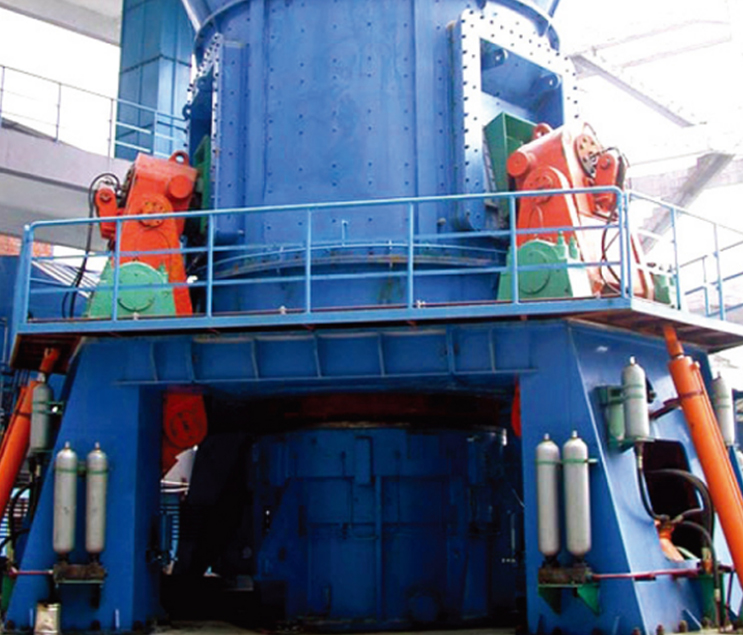 LYH1008 Series Vertical Grinding MillLYH1008 series vertical mill is a new type of equipment designed to absorb foreign technology. It grinds the material (0-15MM) on the rotating grinding disc by rolling...View Product →
When the target is ultrafine powder with a narrow particle size distribution, the picture changes. A ring roller structure creates multiple grinding layers between the rollers and the ring, and with intelligent control the feed rate and classifier settings can be adjusted in real time. For kaolin, barite, and talc, that is often the difference between a stable 600 mesh output and a line that stops for adjustment every shift.
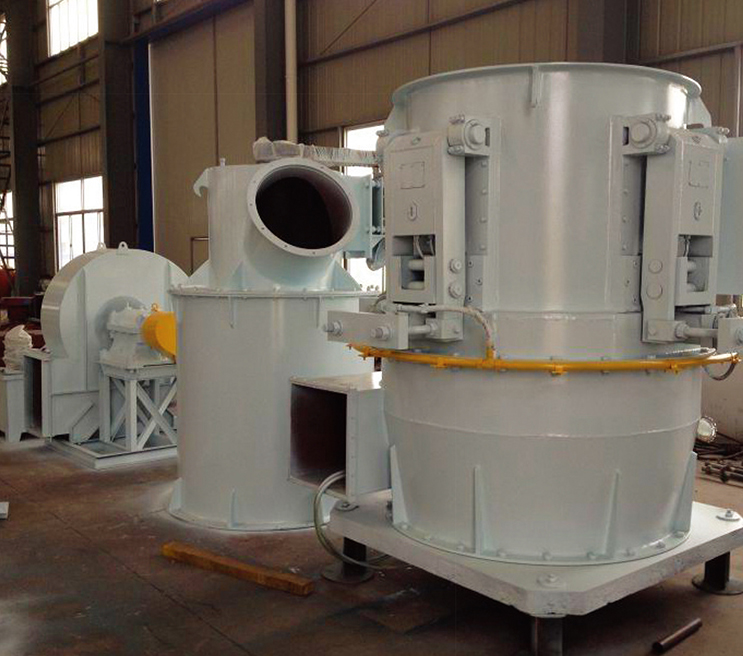 LYH996 Series New Type Intelligent Vertical Ring Roller MillIn the field of ultrafine powder processing, facing more and more ultrafine powder requirements, traditional ultrafine powder processing equipment has been difficult t...View Product →
There is also a mill that never left the stage. The four-roller Raymond pendulum mill is used across limestone, calcite, dolomite, gypsum, bentonite, feldspar, quartz, and a long list of other non-metallic minerals. Its simple mechanical structure, straightforward maintenance, and tolerance for varied feed make it a default choice when a project needs a proven machine with parts that are easy to source.
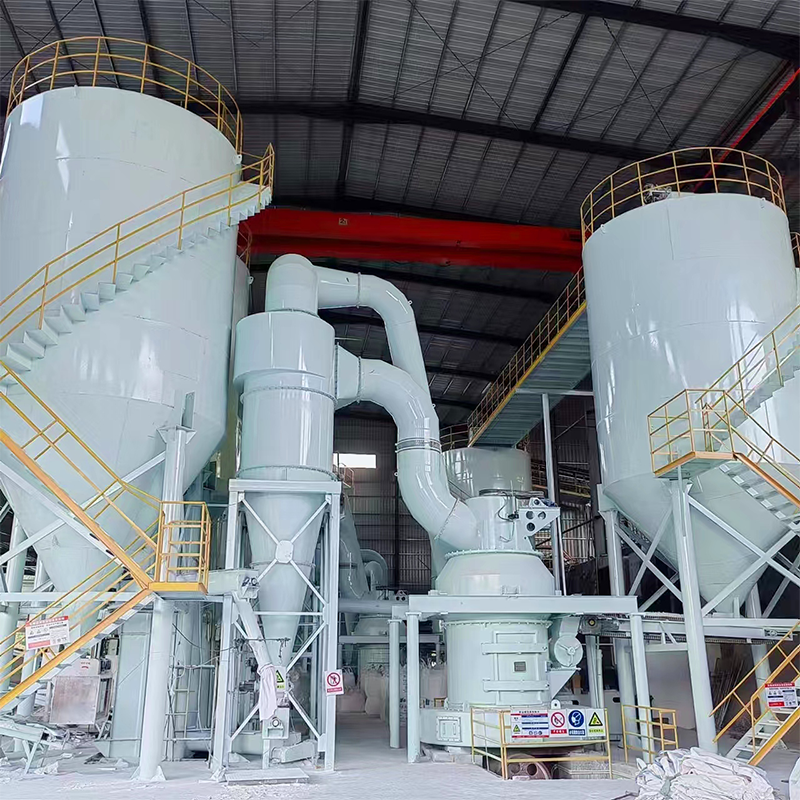 LYH998 Raymond Grinding Pendulum MillLYH998 series new type intelligent Raymond grinding mill is the latest type of milling machine, based on extensive cooperation with major universities and colleges, dr...View Product →
No single machine is best under every condition. The honest answer depends on your hardness, moisture, target fineness, and running hours, which is why we ask those questions before recommending a model.
Energy, Dust and Control: Running the Facility Well
Selecting the right equipment is only half of the job. What separates one facility from another is how the system runs and how it is monitored. Most modern lines now operate under full negative pressure: the pressure inside the circuit stays below atmospheric, so dust is held inside the system instead of escaping through flanges, inspection doors, and transfer points. Getting this right means a cleaner workshop, fewer safety concerns, and much less work for the dust collector.
A few practical points come up again and again in our experience:
- Match fan air volume to system resistance; an oversized fan burns electricity every hour of the shift.
- Treat the baghouse as process equipment rather than an accessory, and maintain bags and pulse valves on schedule.
- Use automatic monitoring for mill load, classifier speed, and bearing temperature so operators see a problem before it becomes a stoppage.
- Keep records of energy consumption and fineness, and let the data decide when an adjustment is genuinely needed.
From Single Machines to Full Lines: What EPCM Delivery Means
Once capacity grows, a project stops being a mill purchase and becomes a line that has to start up on schedule. EPCM, which stands for engineering, procurement, and construction management, covers exactly that cycle: process design, equipment selection, purchasing, site installation guidance, and commissioning.
Moving ore from the stockpile to a sealed bag involves more steps than most people expect. Taking a typical Raymond grinding line as an example, the flow from crushing to packaging shows how many decisions have to be designed together instead of one at a time.
Delivery experience matters here. Close to 100 energy-saving grinding lines supplied to metallurgy and mining customers have taught us something about feed variation, climate, and local power conditions that no drawing ever shows.
A Practical Checklist Before You Invest
Whether you are planning a new crushing and grinding facility or upgrading an existing one, these questions deserve an answer before a contract is signed:
- What is the material, and what are its Mohs hardness and moisture content?
- What is the incoming feed size and the required finished fineness?
- What capacity is needed per hour and per year?
- What space, power supply, and dust control conditions exist on site?
- Who is responsible for process design, and who handles installation and commissioning?
Answer those questions honestly and a crushing and grinding facility stops being a number in a budget and becomes a predictable, profitable production line. That, in the end, is the only measure that matters long after the start-up team has gone home.

 Email:
  Telephone: +86-13951382065
 Phone: +86-13951382065