 Email:
  Telephone: +86-13951382065
 English
 中文简体
中文简体 русский
 Français
 Español
 عربى
عربى
Content
- 1 What Happens Inside a Dry Ball Mill
- 2 Dry Versus Wet Ball Milling: The Differences That Matter
- 3 Where Dry Ball Milling Still Earns Its Place
- 4 Where a Dry Ball Mill Falls Short
- 5 Roller-Based Dry Grinding: The Alternatives Worth Comparing
- 6 Matching the Mill to Your Material and Your Product
- 7 Sizing and Operating a Dry Circuit Without Guesswork
- 8 Working With a Partner Who Has Built the Line Before
A dry ball mill is one of the least glamorous machines in a mineral processing plant, and often one of the most dependable. It is a rotating cylinder partly filled with grinding media, fed with crushed material and no water, so the powder leaves the mill ready for classification or storage without thickening, filtering or drying.
That simplicity is why dry ball milling still holds its ground in cement, lime, coal and a long list of non-metallic mineral operations. It is also why the limits of the technology are worth understanding before you specify one.
What Happens Inside a Dry Ball Mill
Material enters through the feed trunnion and is lifted by the rotating shell, then dropped and tumbled against the grinding media. Size reduction comes from a mix of impact and attrition, and the residence time is long enough that the product ends up with a fairly broad particle size distribution. Most dry mills use a slab-type discharge grate at the tail end, which lets finished powder leave quickly instead of building up inside the chamber.
Two conditions shape the rest of the circuit. The first is feed moisture. Dry grinding depends on powder flowing freely, so damp or sticky feed coats the media and liners and output drops away quickly. The second is air. With no water to absorb the heat generated by grinding, dry mills are usually ventilated or air-swept, with the airflow carrying fines out to a classifier and dust collector. Get that balance wrong and you end up with either a choked mill or a dusty plant.
Dry Versus Wet Ball Milling: The Differences That Matter
The two circuits look similar on a flowsheet and behave very differently in operation.
| Aspect | Dry ball milling | Wet ball milling |
|---|---|---|
| Water and slurry handling | None | Slurry pumping, thickening and water recovery required |
| Feed moisture | Must stay low; damp feed blinds the media | Tolerates noticeably higher moisture |
| Discharge method | Slab-type grate at the tail end, gravity or air swept | Overflow or grate discharge, as slurry |
| Product particle size | Broader distribution, overgrinding possible | Narrower and easier to control |
| Downstream steps | Straight to classifier, silo or packing | Dewatering, filtering and drying before dry use |
| Dust and housekeeping | Dust collection is essential | Minimal dust |
| Reported capacity and efficiency | Lower per unit of power | Higher per unit of power |
| Typical fit | Water-scarce sites, water-reactive materials, dry end products | High tonnage, fine grinding, water available |
Published open-circuit test work has reported wet grinding delivering roughly 39% more capacity and 26% higher efficiency than dry grinding on the same ore. Those numbers come from specific tests and should not be treated as universal, but the direction is consistent: where water is available, a wet circuit will usually grind more per kilowatt-hour. A dry circuit answers a different question, which is what the rest of your plant actually needs.
Where Dry Ball Milling Still Earns Its Place
There are situations in which the absence of water is the whole point:
- Water-constrained sites, where process water has to be paid for twice, once to buy it and once to remove it.
- Materials that react with, dissolve in or are altered by water, and products that must stay chemically dry.
- Processes that are already dry downstream, such as cement raw meal and clinker, lime, gypsum, coal, coke and dry mineral fillers.
- Coarse to medium targets, roughly 60 to 200 mesh, where a broad size distribution is acceptable and the low capital cost of a tumbling mill is attractive.
- Small plants and retrofits where a simple, well-understood circuit matters more than the last few percent of energy efficiency.
Where a Dry Ball Mill Falls Short
Push a dry ball mill toward very fine products and the economics change quickly. As the target moves below roughly 325 to 400 mesh, the energy needed per ton rises steeply, wear on media and liners accelerates, and the heat generated inside the chamber starts to affect both the material and the machine.
Soft or friable minerals are another difficulty, because long residence times tend to overgrind them and produce excess fines you then have to handle downstream. Combustible dusts such as coal bring their own requirements for inerting, explosion venting and collection. And any feed that arrives wet enough to be sticky will cost you output until it is dried.
Roller-Based Dry Grinding: The Alternatives Worth Comparing
If your product target sits in the fine to ultrafine range, or your capacity requirement is large, it is worth looking at mills that grind on a bed or a ring rather than with tumbling media.
Vertical grinding mills
A vertical grinding mill presses rollers onto a rotating table, so material is ground in a bed rather than struck by falling balls. The result is lower specific energy consumption, a more uniform product, and a design that accepts hot gas for simultaneous drying.
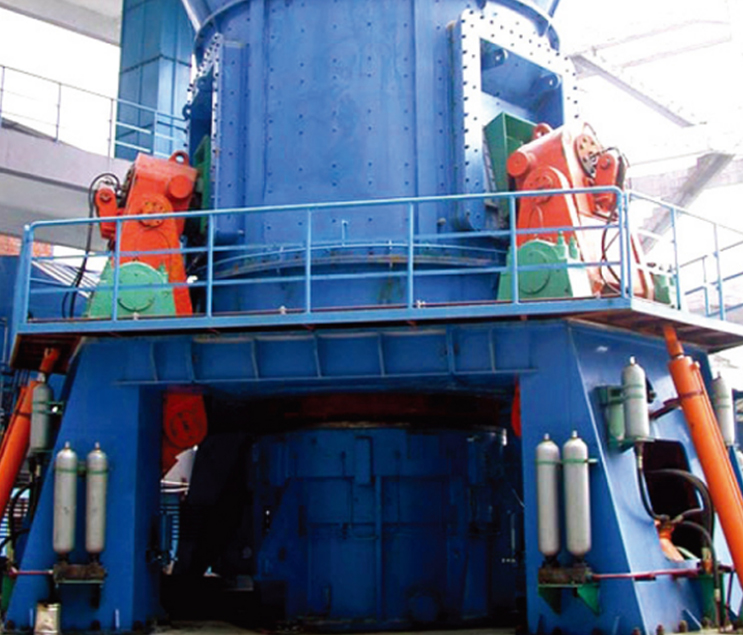 LYH1008 Vertical Grinding Mill for Ultrafine Powder ProductionA vertical mill that integrates grinding, drying and classification, offering lower energy consumption and uniform product for ultrafine mineral processing.View Product →
Ring roller mills
Ring roller mills press rollers against a grinding ring under controlled pressure, with an external classifier setting the top size. They are compact, respond well to automation, and are often chosen when product consistency matters more than raw throughput.
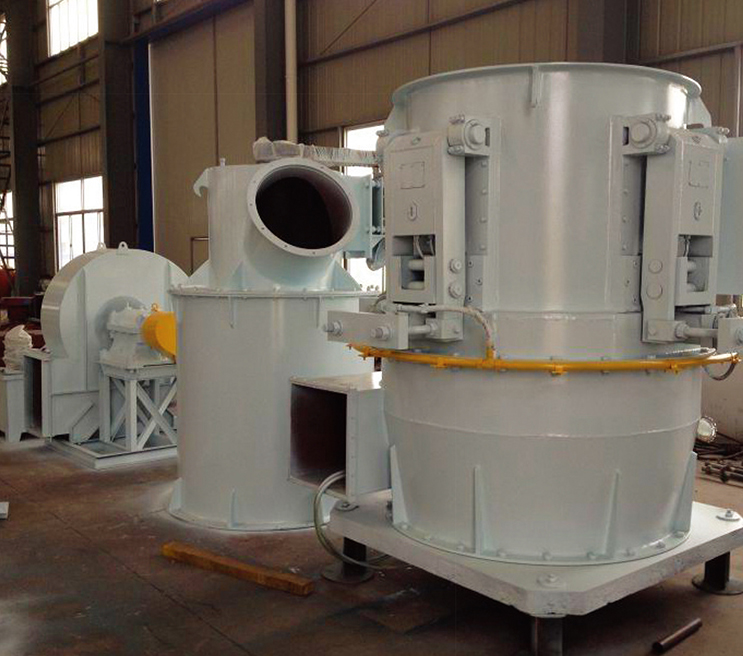 LYH996 Intelligent Vertical Ring Roller Mill for Ultrafine PowdersA ring roller mill with hydraulic pressurization and low iron contamination, designed for efficient ultrafine grinding from 400 to 1500 mesh.View Product →
Pendulum mills
The pendulum mill, better known as the Raymond mill, is the classic dry fine grinder: rollers swing outward against a ring under centrifugal force, and an air classifier returns oversize material to the grinding zone. It has served limestone, barite, gypsum, bentonite and similar minerals for generations, and remains a cost-effective route into the 60 to 600 mesh band. Working through an honest comparison of a Raymond mill and a ball mill is a useful exercise before you commit to a grinding principle.
Matching the Mill to Your Material and Your Product
Once you know the feed and the finished powder, the shortlist narrows quickly.
| Mill type | Grinding action | Best fit | Watch out for |
|---|---|---|---|
| Dry ball mill | Tumbling media, impact and attrition | Coarse to medium powders, tough or abrasive feeds, simple circuits | High energy per ton at fine sizes; broad particle size distribution |
| Vertical grinding mill | Material bed between rollers and table | Fine to ultrafine powders, large capacity, combined grinding and drying | Higher capital cost; needs a stable, well-controlled feed |
| Ring roller mill | Rollers pressed against a ring, external classifier | Consistent fine powder, automated control | Feed must be dry and free-flowing |
| Pendulum mill | Rollers against a ring, centrifugal force | 60 to 600 mesh from medium-hard minerals, small and mid-size plants | Regular roller and ring wear |
Sizing and Operating a Dry Circuit Without Guesswork
- Fix the product specification first: target mesh, acceptable spread of particle sizes and allowable moisture.
- Characterize the feed properly, including hardness, abrasiveness, moisture, bulk density and fines content.
- Choose the grinding principle using the table above, then size the mill with a realistic capacity margin.
- Treat classification as part of the mill. An air classifier matched to the mill sets the top size and lets you adjust the product without changing grinding pressure.
- Balance the air circuit, because the fan, ducting and dust collector have to match the mill rather than the other way round.
- Budget for wear parts from day one, and leave room for maintenance access around the equipment.
Working With a Partner Who Has Built the Line Before
Equipment selection is only half of the job. The rest is engineering: feed systems, classification, product collection, dust control, control philosophy and the civil and structural work that holds everything up. That is where a supplier with EPCM capability, rather than a machine catalogue, makes a practical difference.
At Nantong Liyuanheng Machinery we build complete grinding systems for metallurgy, building materials, chemical and mining applications, covering vertical mills, ring roller mills and the LYH998 4-roller pendulum mill. Our stated working envelope is straightforward: Mohs hardness below 7, moisture below 6%, and a finished product range from 0.25 mm down to 0.023 mm, or roughly 60 to 600 mesh. Close to 100 energy-saving grinding lines are reported in service. We also handle the process design, equipment supply and construction management that turn separate components into a working production line.
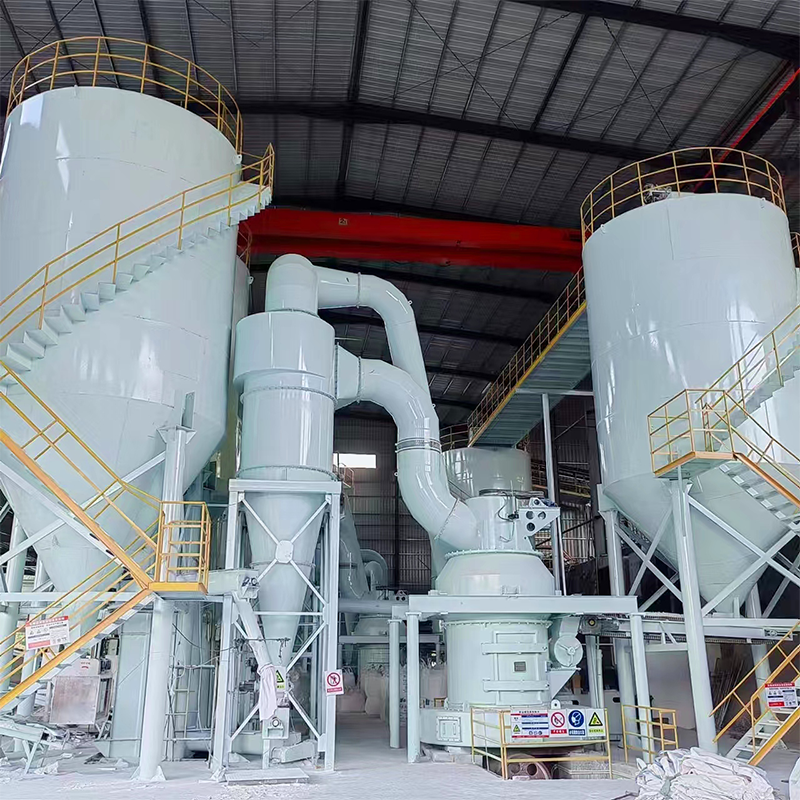 LYH998 Raymond Pendulum Mill for Fine Mineral GrindingA pendulum mill with PLC control and adjustable output from 60 to 600 mesh, suitable for minerals with Mohs hardness below 7.View Product →
Choosing a dry grinding solution comes down to three questions: what the powder has to be, what the feed actually contains, and how much water and energy you are willing to spend getting there. A dry ball mill answers some of those questions very well. When it does not, the answer is usually a different grinding principle rather than a bigger motor.
If you are weighing up the options, send us your material data and target fineness. We are happy to talk through what has worked in similar plants before you commit to a capital decision.

 Email:
  Telephone: +86-13951382065
 Phone: +86-13951382065