 Email:
 Telephone: +86-13951382065

 English
 中文简体
 русский
 Français
 Español
 عربى

Content
- 1 What Hydrated Lime Slurry Actually Is
- 2 Where Grinding Enters the Slurry Line
- 3 The Numbers That Decide Whether a Slurry Behaves
- 4 Where Hydrated Lime Slurry Is Used
- 5 How a Slurry Preparation Plant Is Put Together
- 6 Choosing the Grinding Equipment Behind the Slurry
- 7 Field Notes That Save Weeks
- 8 Bringing the Line Together
Hydrated lime slurry is one of those materials that looks forgiving and behaves anything but. A white powder stirred into water seems simple enough, yet the difference between a slurry that stays smooth in the tank and one that gels, scales, or drops grit into a dosing line usually comes down to two things: how the powder was ground, and how the water was added. We have spent years building grinding systems for lime, limestone, and calcium hydroxide, and what follows is the version of the conversation we usually have with a plant engineer long before a project is priced.
What Hydrated Lime Slurry Actually Is
Hydrated lime is calcium hydroxide, Ca(OH)2, produced when quicklime (calcium oxide) reacts with water. That reaction is called slaking, and it is vigorous: roughly 1.1 to 1.2 megajoules of heat are released per kilogram of pure calcium oxide, which is why a slaker with a wrong water ratio will happily boil. Slaked lime, hydrated lime, and calcium hydroxide all describe the same finished solid.
Slurry simply means the Ca(OH)2 is suspended in water rather than dissolved in it. Only a small fraction actually dissolves, so a clear saturated solution (limewater) sits on top of the undissolved particles. Once you add more solid than the water can dissolve, the extra material stays in suspension, and the mixture becomes milk of lime or hydrated lime slurry depending on whom you ask.
Most industrial lines run somewhere between 5% and 30% solids by weight. Water treatment and pH correction usually sit at the dilute end, around 5% to 10%; flue gas desulfurization absorbent and construction applications tend to use 10% to 20%, sometimes more when the slurry is stabilised with additives. Above roughly 30% solids the material behaves more like a paste, and pumps, valves, and agitators all need to be chosen differently.
Where Grinding Enters the Slurry Line
Two production routes dominate. In the dry route, quicklime is slaked with a carefully controlled amount of water into hydrated lime powder, which is then milled and later mixed with water at the point of use. In the wet route, slaking water and dilution water are combined directly at the plant, and the slurry is made in a single step. Both routes exist for good reasons, and the choice usually follows transport distance, storage constraints, and how much control the site needs over particle size.
Grinding matters most in the dry route, but its influence reaches into every part of the wet side. Particle size governs how quickly Ca(OH)2 passes into the water phase, and that dissolved fraction is what actually neutralises acid or captures sulfur. A powder ground to 90% passing 325 mesh (about 45 micron) reacts noticeably faster than the same material at 100 mesh, and the difference usually shows up as a smaller reagent excess at the stack or the clarifier.
Finer is not automatically better. Very fine hydrated lime holds more water on the particle surfaces, so slurry viscosity climbs, pumping costs rise, and dusting becomes harder to control. The useful target is the coarsest powder that still satisfies your reactivity requirement — a trade-off worth settling with your grinding supplier and process engineer together, which is the approach we describe in our guide to grinding calcium hydroxide for industrial use.
The Numbers That Decide Whether a Slurry Behaves
When a slurry misbehaves, the cause is almost always visible in a handful of measurable parameters. The table below is the short list we ask customers to confirm before equipment selection starts.
| Parameter | Typical working range | What it changes |
|---|---|---|
| Solids content | 5% to 30% by weight | Reagent per litre, pumping cost, settling speed |
| Powder fineness | 90% passing 200 to 325 mesh | Dissolution rate, grit load, nozzle and valve wear |
| Slurry temperature | 30 °C to 60 °C after slaking | Scaling risk, evaporation loss, seal life |
| Agitation | Gentle, continuous motion | Suspension of solids without breaking flocs apart |
| Grit and unreacted core | As low as the slaker allows | Abrasion, blockages, wasted reagent |
| Water hardness and sulfate | Low where possible | Scale on tank walls, probes, and lines |
Where Hydrated Lime Slurry Is Used
The reason slurry exists at all is that a liquid is far easier to meter, mix, and control than a powder. That logic drives a surprisingly wide set of industries.
- Drinking water and wastewater: pH correction, softening, coagulation support, phosphate removal, and sludge conditioning.
- Flue gas desulfurization and acid gas scrubbing: the alkaline reagent that captures sulfur dioxide in absorber towers.
- Construction and ground improvement: lime slurry for subgrade stabilisation, embankment work, and slurry trench systems.
- Chemical manufacturing: an alkaline intermediate for calcium salts, and a process reagent in paper, sugar, and leather operations.
- Mining and metallurgy: pH control in tailings and leach circuits, plus neutralisation of acid mine drainage.
- Agriculture: flowable lime for correcting soil acidity where dry spreading is impractical.
How a Slurry Preparation Plant Is Put Together
A reliable preparation line is less about individual vessels and more about the order in which each duty is handled. In most of the plants we have been involved with, the sequence looks like this:
- Storage and feeding — a lime silo with a screw or weigh feeder, and dust extraction at every transfer point.
- Slaking — a batch or continuous slaker with controlled water addition and temperature monitoring.
- Grit removal — a vibrating screen, cyclone, or rake classifier that protects everything downstream.
- Dilution and conditioning — bringing the batch to target solids and cooling it before storage.
- Storage under gentle agitation — slow recirculation rather than violent mixing, which keeps the solids suspended without entraining air.
- Dosing and metering — progressive cavity or diaphragm pumps tied into a pH or flow control loop.
- Instrumentation — density, level, and temperature signals that alarm before a line plugs rather than after.
Choosing the Grinding Equipment Behind the Slurry
Because fineness drives so much of the downstream behaviour, the mill is the decision that locks in the rest of the plant. Dry hydrated lime and quicklime are moderately abrasive, mildly hygroscopic, and prone to dusting, so the equipment has to be sealed well and easy to clean. Three configurations cover most of what we see in the field.
The LYH998 4-roller Raymond grinding pendulum mill remains the workhorse for hydrated lime and limestone where a steady 80 to 325 mesh product is required and the operator wants a familiar, mechanically straightforward machine that local maintenance teams can service confidently.
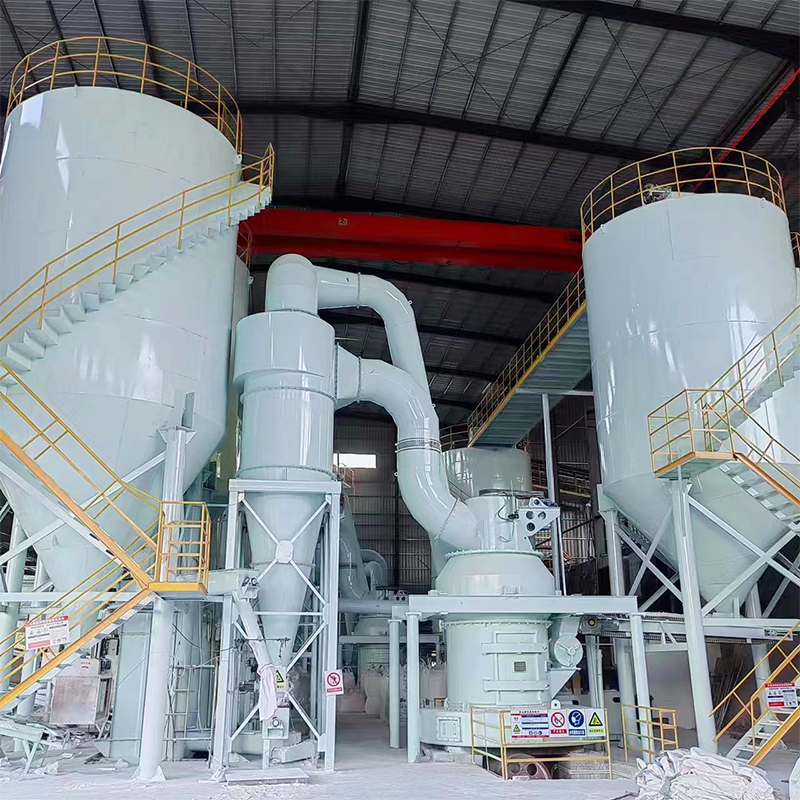 LYH998 Raymond Grinding Pendulum MillA mechanically straightforward workhorse for hydrated lime and limestone, with adjustable 60–600 mesh fineness and multiple model sizes.View Product →
The LYH996 new type intelligent vertical ring roller mill suits plants chasing higher throughput and a finer cut in the same footprint, with control logic that holds product fineness steady when feed quality drifts — helpful when quicklime arrives from more than one supplier.
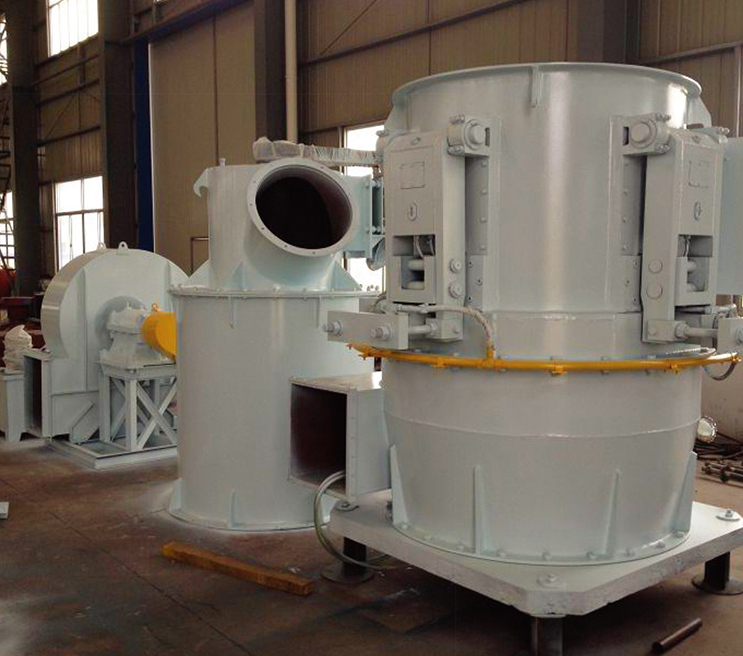 LYH996 Intelligent Vertical Ring Roller MillFor higher throughput and finer grinding in the same footprint, this hydraulic roller mill uses classifier sorting for 400–1500 mesh output.View Product →
For larger tonnages and integrated lines, the LYH1008 vertical grinding mill is the option we usually discuss with project teams planning a new powder workshop rather than an upgrade of an existing one.
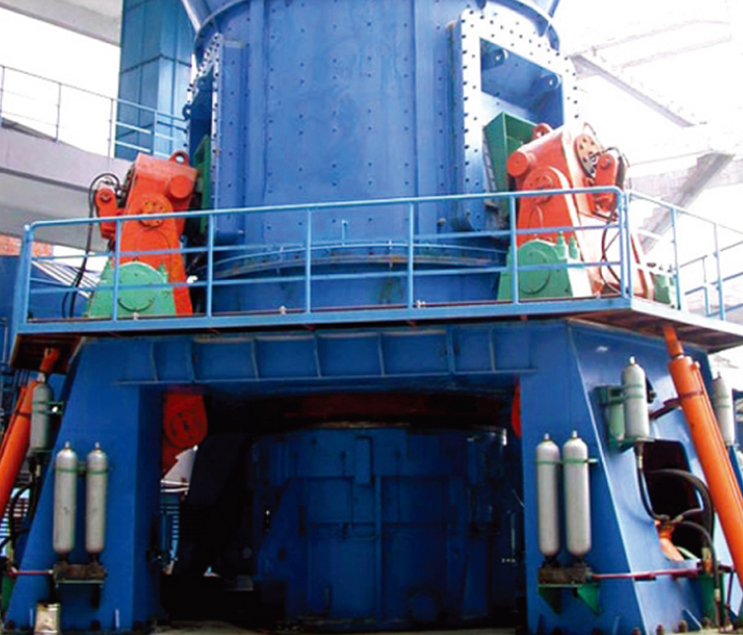 LYH1008 Series Vertical Grinding MillFor new powder workshops and larger integrated lines, this vertical mill combines grinding, classification and drying for 325–2000 mesh output.View Product →
Whatever the model, capacity should be sized from the slurry, not from the mill alone: solids percentage, daily reagent demand, and the hours per day the plant actually runs all matter more than a headline tonnage figure.
Field Notes That Save Weeks
Settling is inevitable, so plan for it
Hydrated lime slurry will settle in any tank given enough time. Design for slow, continuous recirculation and avoid dead corners; a conical bottom and a correctly placed agitator do more than a bigger pump.
Slaking heat raises the slurry temperature quickly, and warm slurry scales faster and loses water to evaporation. Cooling or controlled dilution before storage is not a luxury on continuous lines.
Carbonation quietly eats your reagent
Ca(OH)2 absorbs carbon dioxide from air and turns into calcium carbonate, which shows up as crust on tank walls and a slow drop in available alkalinity. Covered tanks and sensible turnover keep this in check.
Dust control protects the slurry as much as the operators
Dust collection at feed points keeps fines where they belong and prevents contamination that later blocks dosing nozzles.
Bringing the Line Together
A hydrated lime slurry plant usually lives at the intersection of two teams: the people who understand the chemistry and the people who understand the machinery. Getting the fineness, solids content, and agitation right at the design stage costs far less than correcting them after the first plugging event.
Our work spans mill selection, complete grinding lines, and the engineering and project delivery services that hold a powder plant together from layout to commissioning. If you are weighing a new slurry line or deciding whether your existing powder is fine enough for the reaction you need, send us your material data and target fineness — the answer is usually clearer than expected once the numbers are on the table.

 Email:
 Telephone: +86-13951382065
 Phone: +86-13951382065
