 Email:
 Telephone: +86-13951382065

 English
 中文简体
 русский
 Français
 Español
 عربى

Content
- 1 What "High-Capacity" Really Means on a Grinding Line
- 2 Matching the Mill Type to Your Throughput Target
- 3 Sizing the System, Not Just the Mill
- 4 Where High-Capacity Grinding Earns Its Keep
- 5 Energy, Dust and Uptime: The Quiet Capacity Levers
- 6 From a Single Machine to a Working Production Line
- 7 What to Bring to a First Conversation
High-capacity grinding equipment is one of those phrases that means something slightly different to everyone in the room. A buyer pictures a mill turning out twenty tonnes an hour. A plant manager pictures a line still running in week fifty, at the same fineness, without an unplanned stop for wear parts. A project engineer pictures the whole chain — feeder, mill, classifier, baghouse, fan — holding steady when the feed arrives a little wetter or coarser than the lab sample promised. All three are right, and that is exactly why capacity deserves to be treated as a property of the circuit rather than a number stamped on a nameplate. After years of building grinding lines for metallurgy, building materials, chemicals and mining, we have learned that the interesting conversations happen before the mill is selected, not after.
What "High-Capacity" Really Means on a Grinding Line
On paper, capacity looks like a single figure. In operation it is the product of several variables pulling in different directions, and the weakest one sets the ceiling. Feed size and crushability decide how much work the mill must do before the material even reaches the grinding zone. Target fineness decides how long the material stays inside the circuit, because 600 mesh demands far more residence time than 80 mesh. Hardness and moisture decide whether the mill grinds smoothly or spends its energy on sticking and recirculation. Airflow and classification decide whether finished powder leaves promptly or travels around the circuit a second and third time.
Then there is the variable nobody puts in a quotation: uptime. A line rated at fifteen tonnes per hour that stops every fortnight for a rushed repair delivers less annual tonnage than a twelve-tonne line that simply keeps running. When customers ask us for high-capacity grinding equipment, we usually reframe the question as "how many tonnes per year, at what fineness, with how many production hours" — and the answer often changes which machine makes sense.
| Factor | Effect on achievable output | What to confirm before quoting |
|---|---|---|
| Feed size and crushability | Coarse feed consumes capacity that would otherwise go to finished powder | Actual d80 from the quarry or crusher, not the ideal sample |
| Target fineness | Output falls as the product gets finer, typically across the 60–600 mesh band | Required mesh plus an acceptable particle size distribution |
| Hardness and moisture | Above roughly 7 Mohs or 6% moisture, throughput and stability both suffer | Petrographic check and a moisture reading from the stockpile |
| Classifier and airflow | Poor separation recycles finished powder and wastes grinding energy | Air volume matched to the mill, not inherited from an old drawing |
| Dust collection and pressure | Weak negative pressure means leakage, dust and lost availability | Baghouse sizing, fan curve, and duct routing reviewed together |
| Wear parts and access | Grinding elements that are hard to reach quietly cap annual tonnage | Replacement intervals and physical access at the design stage |
Matching the Mill Type to Your Throughput Target
There is no single best structure for every duty. Our range is built around three families, and the choice between them usually comes down to feed characteristics, product fineness and how much floor space the site can spare.
Four-roller pendulum mills
The pendulum design is the familiar workhorse of mineral powder processing, and the four-roller configuration spreads grinding load across a wider path than a single-roller arrangement. It suits plants that want a proven mechanical layout, straightforward operation and comfortable access for roller and ring replacement. Where a project needs dependable output in the middle of the fineness range and a maintenance team that already understands the machine, this is often the least dramatic and most sensible answer.
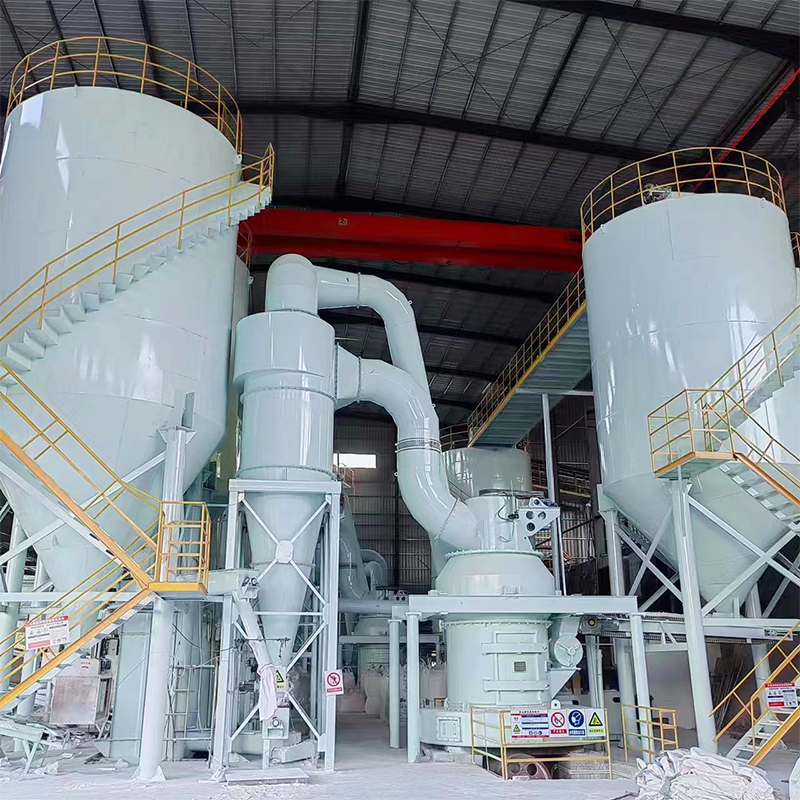 LYH998 Four-Roller Raymond Pendulum Grinding MillA proven four-roller pendulum mill for mid-range mineral fineness, offering straightforward operation and access for roller and ring maintenance.View Product →
Vertical grinding mills
Vertical layouts trade height for footprint, which matters on constrained sites and in retrofit projects where the building already exists. Material flow and classification are handled in a compact envelope, and the arrangement lends itself to a tidy circuit with shorter ducts and fewer transfer points — both of which help hold capacity steady once the line is running.
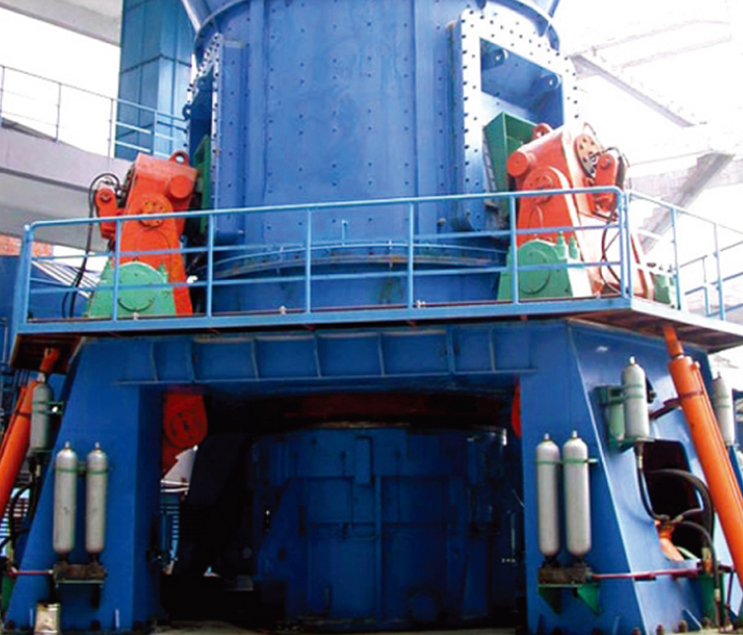 LYH1008 Series Vertical Grinding Mill for Ultrafine PowderA compact vertical mill integrating grinding, classification and drying for ultrafine mineral powders, with lower power use and a smaller footprint than ball-mill systems.View Product →
Intelligent vertical ring roller mills
Where the priority is stable ultrafine output with less operator intervention, the ring roller family adds control and monitoring to the vertical concept. Grinding pressure, feed rate and separation can be managed as a coordinated set rather than adjusted one at a time, which is how a line holds its fineness through the swing shifts and seasonal feed variation that quietly erode capacity elsewhere.
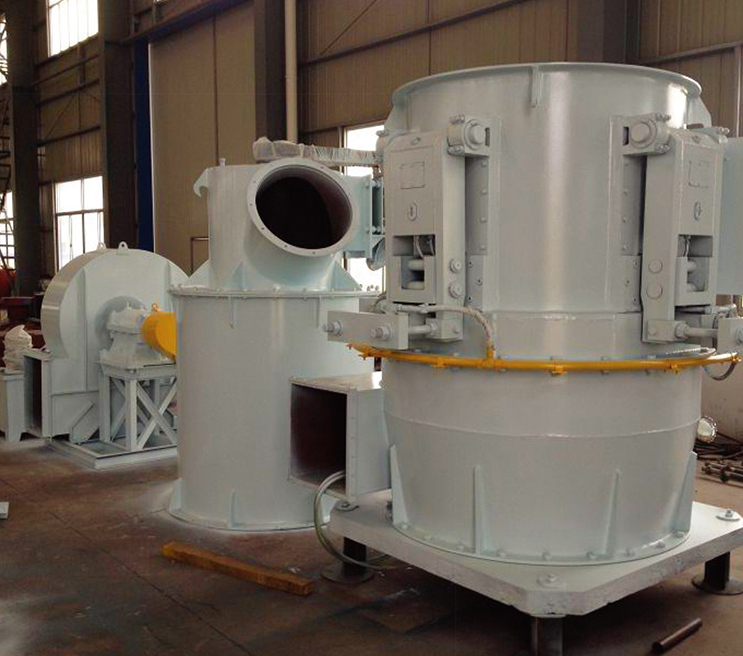 LYH996 Intelligent Vertical Ring Roller MillAn ultrafine ring roller mill with hydraulic pressure control, adjustable fineness and low iron contact, suited to stable high-capacity mineral powder production.View Product →
| Series | Structure | Typical fit |
|---|---|---|
| LYH998 | Four-roller pendulum mill | Established plants wanting a familiar mechanical layout and simple upkeep |
| LYH1008 | Vertical grinding mill | Space-constrained sites and retrofit buildings with limited headroom |
| LYH996 | Intelligent vertical ring roller mill | Ultrafine duties where consistent fineness and reduced manual adjustment matter |
Sizing the System, Not Just the Mill
Once the machine family is settled, the work turns to the circuit around it. This is the stage where most capacity is either protected or lost, and it follows a fairly disciplined sequence:
- Write down the product specification in full — mesh, acceptable oversize, whiteness or colour where relevant, and the packing format.
- Measure the feed as it actually arrives, including moisture variation across the working week and the share of fines already present.
- Choose the circuit: open or closed, single mill or staged, and how the classifier will return coarse material.
- Size the air side of the plant — fan, ducting, baghouse — as one system rather than three separate line items.
- Reserve maintenance access at the drawing stage, because a roller that takes a full shift to reach is a capacity problem disguised as an engineering detail.
- Cross-check the design against reference installations running comparable material at comparable fineness.
Our own mills work within a defined envelope: non-flammable, non-explosive mineral materials below about 7 on the Mohs scale, moisture under roughly 6%, and adjustable product fineness from 0.25 mm down to 0.023 mm — 60 to 600 mesh. Staying inside that envelope is not a limitation so much as a promise that the capacity you are quoted has a real chance of appearing on the tonnage sheet.
Where High-Capacity Grinding Earns Its Keep
Capacity only means something in relation to a material and a market. Our equipment is used across a wide spread of mineral powders, and the pattern of applications tells you a great deal about what a circuit must tolerate.
- Calcium-based and carbonate materials — limestone, calcite, marble, dolomite, cement clinker, lime and hydrated lime.
- Non-metallic minerals — quartz, feldspar, talc, barite, fluorspar, bentonite, kaolin, gypsum, graphite, mica and clay.
- Metals and metallurgical by-products — bauxite, manganese ore, iron ore, copper ore, phosphate, zircon sand, slag, water-quenched slag and red mud.
- Pigments and oxides — iron oxide red, iron oxide yellow and chrome green.
- Energy-related materials — bituminous coal, coking coal, lignite, coke, coal gangue, fly ash and activated carbon.
- Chemical and agricultural inputs — compound fertiliser and oilseed cake, where hardness and moisture still have to be checked first.
For sites that specifically want throughput in the middle of the fineness range with a pendulum circuit, our high-capacity Raymond mill page goes into the selection detail in more depth.
Energy, Dust and Uptime: The Quiet Capacity Levers
Two grinding lines with identical nameplates can differ by a wide margin on annual tonnage, and the gap almost always shows up in three places. The first is energy per tonne: recirculating powder that is already fine enough is pure waste, and it usually traces back to a classifier setting or an air balance nobody revisited after commissioning. The second is dust: a plant running under proper negative pressure is cleaner, safer and able to keep its planned hours instead of losing them to housekeeping and compliance interruptions. The third is maintenance rhythm. Lubrication schedules, worn roller or ring detection and genuine replacement parts are unglamorous, but they are what separates a line that holds capacity from one that gradually slides away from its original figures.
From a Single Machine to a Working Production Line
Many of our customers do not buy a mill at all — they buy a line. That is the practical meaning of the EPCM work we do: design, equipment supply and construction management handled as one engagement, with the same team answerable for the feeder, the mill, the classifier, the collector and the control logic. It is also why roughly a hundred energy-saving grinding lines are running today in metallurgy and mining operations. You can read more about how that scope works on our service and engineering support page, or simply bring us the material sample and let the circuit design follow from it.
What to Bring to a First Conversation
If you are comparing high-capacity grinding equipment options, the fastest way to a useful answer is a short, honest brief. Bring these six things and the discussion moves from marketing to engineering within minutes:
- The material, with its geological or chemical description if available.
- Feed size distribution and a moisture figure from real stock, not a dried sample.
- The finished product specification, including the tolerance you can accept.
- Target annual tonnage and the number of production hours you realistically expect.
- Site constraints — available footprint, headroom, power supply and any noise limits.
- Your maintenance capability, because that shapes how much automation actually pays back.
Capacity, in the end, is a promise about consistency. Anyone can quote a large number for a mill; the harder and more valuable work is designing the feeder, classifier, collector and maintenance routine that let the number be true in the second year as well as the second week. If you would like to walk through your material and your target mesh with our engineers, the conversation costs nothing and usually saves a great deal.

 Email:
 Telephone: +86-13951382065
 Phone: +86-13951382065
