 Email:
 Telephone: +86-13951382065

 English
 中文简体
 русский
 Français
 Español
 عربى

Content
Anyone who has opened a tin of paint and found a gritty, chalky film has seen what happens when pigment is not ground properly. Grinding pigment to paint is rarely one machine and one pass. It is a chain of decisions that starts with the raw pigment, runs through drying, crushing, milling and classification, and ends only when those particles are wetted out by resin on the paint line. Get the first half right and the second half becomes easy; get it wrong and no amount of dispersant will rescue the batch.
What follows is the dry grinding stage as it actually behaves in production — what fineness really buys you, where the practical limits sit, and how to match equipment to the pigment you are running.
Why the Grinding Stage Decides Color, Hiding Power and Gloss
Pigment arrives as clusters. What the paint needs is the primary particles inside those clusters, separated and evenly distributed. Until the agglomerates are broken down, light scatters unpredictably: hiding power drops, tinting strength falls short of the datasheet, and the film dries down dull and slightly rough.
Finer is not automatically better, either. Push a pigment well below the size the coating actually needs and you pay twice — the milling consumes more energy per ton, and the resulting powder has higher oil absorption, so the paint swallows more binder and gloss starts to slide. Every pigment family has a working window where the film looks right and the numbers still make sense.
A useful rule of thumb from the paint side: most architectural and general industrial coatings want agglomerates reduced far enough that a Hegman gauge reads around 6 to 7, roughly 25 to 12 micrometres. High-gloss and thin-film systems go finer, and those are usually finished by wet dispersion rather than dry milling.
The Dry Route from Pigment to Paint, Step by Step
The dry stage is simple in principle and fussy in practice. A route that works looks like this:
- Condition the feed. Moisture is the first enemy. Above roughly 6% water, pigment cakes on the grinding elements and output sags.
- Crush to a consistent feed size. A crusher ahead of the mill keeps the grinding zone evenly loaded and prevents surges.
- Grind and classify in one pass. The mill breaks the agglomerates; an air classifier lifts the finished powder out and returns the coarse fraction. Cut point, not brute force, controls the final curve.
- Collect and handle with care. Baghouse collection under negative pressure keeps pigment out of the building and stops cross contamination between colours.
- Check, then release. Sieve residue, Hegman fineness, moisture and colour against a retained standard — four numbers that catch most problems before the batch reaches the paint plant.
For mineral pigments such as iron oxide, chrome green, talc and calcium carbonate, dry grinding typically lands between 60 and 600 mesh (0.25 mm down to 0.023 mm), with the mill and the air classifier working together to hold that band steady instead of drifting with feed variation.
Matching the Mill to the Pigment
There is no universal pigment mill, only mills that suit a pigment, a fineness and a tonnage. Three configurations cover most of what we see in the paint supply chain.
Four-roller pendulum mills for iron oxide and earth pigments
The classic Raymond layout still earns its place. Rollers press pigment against a ring, an integral classifier lifts the fines, and the grinding zone is easy to open and inspect — which matters when a colour change means cleaning every surface. Iron oxide red and yellow, chrome green and similar abrasive mineral pigments run well here at medium fineness and small to mid-size batches.
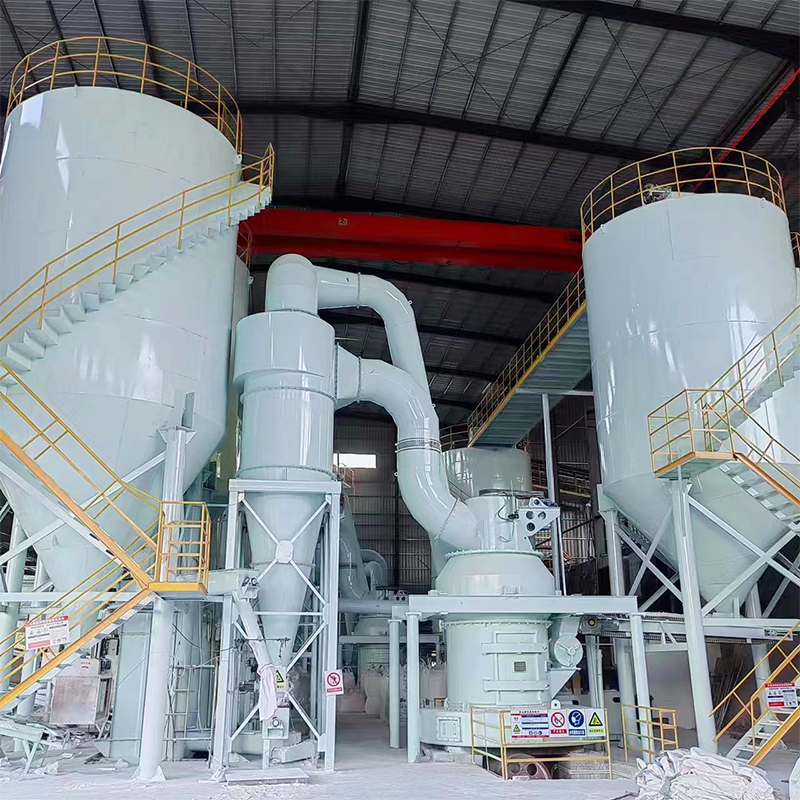 LYH998 Intelligent Raymond Pendulum Grinding MillFor medium-fineness mineral pigment batches, this intelligent Raymond mill offers PLC control, negative-pressure operation, and adjustable 60–600 mesh output.View Product →
Vertical mills for higher tonnage
When the paint plant is fed by tonnes per hour rather than kilos, a vertical mill usually wins on energy per ton and footprint. Grinding and classification happen inside one body, fineness is adjusted from the classifier speed, and the system runs comfortably under negative pressure. Fillers such as ground calcium carbonate, dolomite and talc are typical work here.
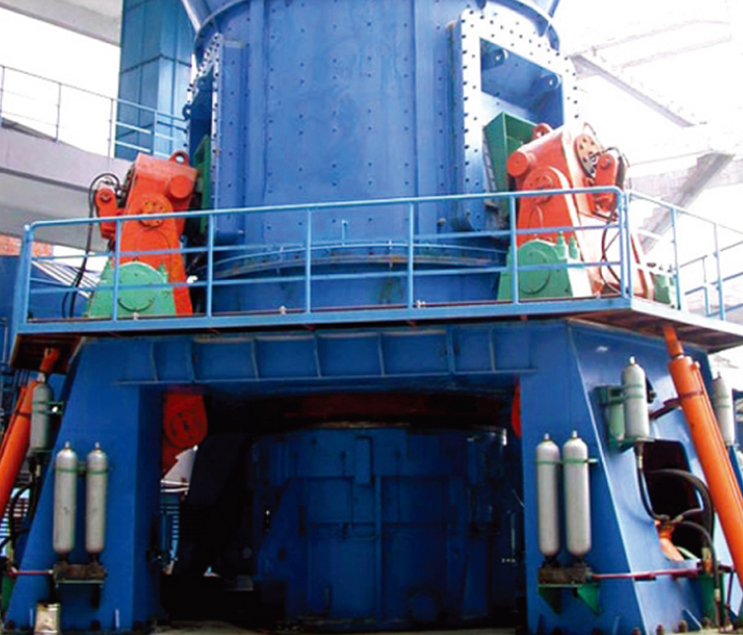 LYH1008 Series Vertical Grinding MillFor high-throughput filler grinding, this vertical mill integrates grinding, classification, and drying and offers 325–2000 mesh fineness with lower power consumption.View Product →
Ring roller mills when colour consistency is the priority
Where a small shade difference means a rejected batch, the newer ring roller designs with intelligent control are worth a look. Steady classifier speed and a steady feed rate keep the particle size distribution tight, and a tight distribution is what makes tinting strength repeatable from lot to lot.
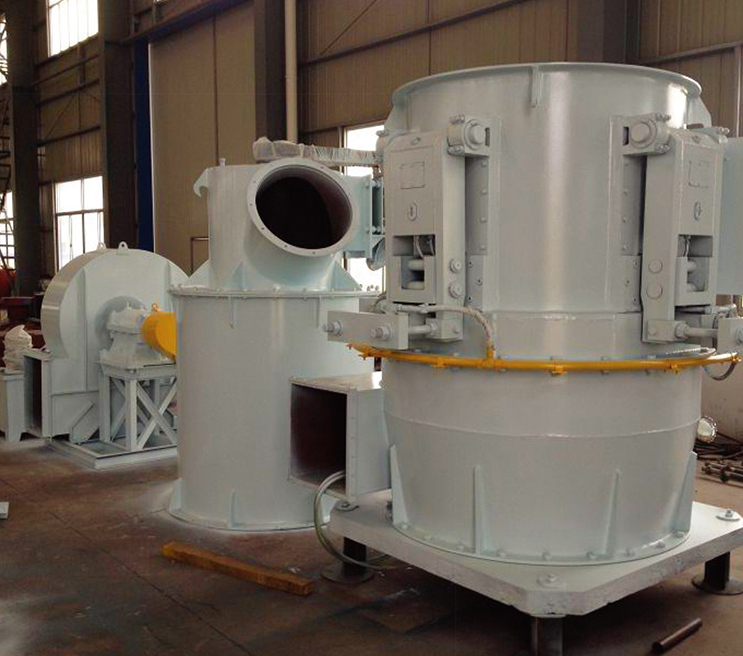 LYH996 Intelligent Vertical Ring Roller MillFor ultrafine pigment and mineral powders, this ring roller mill offers hydraulic loading, 400–1500 mesh output, and pulse dust collection for low-iron grinding.View Product →
Pigment-by-Pigment Starting Points
Treat the table below as a conversation starter for your process team, not as a specification. Every pigment source behaves a little differently, and the only real answer comes from a trial on your own material.
| Pigment | Working fineness | What to watch |
|---|---|---|
| Iron oxide red / yellow | 325–600 mesh | Hard and mildly abrasive; heat in the grinding zone can shift the shade |
| Chrome oxide green | 400–600 mesh | Roller and ring wear shows up as contamination and colour drift |
| Calcium carbonate extender | 200–400 mesh | Over-grinding raises oil absorption and quietly eats binder |
| Talc and kaolin | 325–600 mesh | Soft, plate-like particles pack easily; keep classifier air volume honest |
| Carbon black and organics | Below 25 µm, in liquid | Normally dispersed wet; a dry pendulum mill will not break these down |
If a target sits below about 600 mesh, that is usually the signal to stop pushing the dry mill and finish the job in the bead mill at the paint plant. Knowing where that line falls for your pigment is one of the most useful pieces of process knowledge a plant can hold.
Problems That Show Up on the Paint Side
Most pigment grinding complaints are not grinding complaints at all — they begin upstream and are discovered downstream. The recurring ones:
- Grittiness in the film. Almost always a classifier cut point that has drifted, or a torn baghouse filter sending coarse particles back into the product.
- Batch-to-batch shade variation. Uneven feed rate, worn grinding elements, or a mill running hot enough to alter the pigment surface.
- Sudden loss of output. Feed moisture above the limit, or an over-filled grinding zone choking the classifier.
- Rising binder demand. Fineness has crept finer than the coating needs. Pull the cut point back and recheck cost per ton.
- Dust and housekeeping issues. Negative pressure operation and correctly sized baghouse capacity solve more of this than any amount of sweeping.
Getting the Grinding Chain Right the First Time
Pigment grinding rewards the plant that thinks about the whole chain — feed condition, mill, classifier, collection, quality check — rather than the one that buys the biggest mill and hopes. A mill that is slightly oversized but runs steadily will outproduce a larger one that surges every shift.
This is the ground our own team works on. Nantong Liyuanheng Machinery builds vertical mills, ring roller mills and four-roller pendulum mills, and delivers them as complete grinding lines with EPCM support for pigment and mineral producers. Around a hundred energy-saving grinding lines are running in metallurgy, mining, building materials and chemical plants, handling materials from iron oxide and chrome green to limestone, barite and slag.
If you are weighing a new pigment line, or replacing a mill that has never quite delivered the colour you need, tell us what you are grinding and what the paint has to look like. A short conversation about moisture, target fineness and batch size usually narrows the choice to one or two configurations before any quotation is written.
Grinding pigment to paint is ultimately a matching exercise: match the fineness to the film, the mill to the pigment, and the classifier to the colour consistency your customers expect. Do that, and the dispersion step becomes what it should be — predictable, repeatable, and quietly profitable.

 Email:
 Telephone: +86-13951382065
 Phone: +86-13951382065
