 Email:
  Telephone: +86-13951382065
 English
 中文简体
中文简体 русский
 Français
 Español
 عربى
عربى
Content
- 1 What Fly Ash Processing Really Involves
- 2 Why Grinding Decides the Value of Your Fly Ash
- 3 Drying Before Grinding: Moisture Is the Quiet Problem
- 4 Removing Unburned Carbon and Other Contaminants
- 5 Matching the Mill to the Ash
- 6 Dust, Noise, and the Compliance Side of the Plant
- 7 From a Single Mill to a Working Line
Fly ash has a reputation problem. It is the fine mineral residue captured from coal-fired boiler flue gas, and for a long time it was treated as something to be moved, stored, and forgotten. Yet the same material, handled properly, becomes a pozzolan that replaces part of the cement in concrete, a filler for geopolymer and brick production, and a consistent mineral feed for several other industries. The distance between waste and product is almost entirely a matter of processing.
We have spent years building grinding lines for mineral powders, and fly ash comes up in almost every conversation about cement blends and industrial by-products. What follows is a practical walkthrough of what fly ash processing involves, where the technical decisions really sit, and which choices tend to matter most once the plant is running.
What Fly Ash Processing Really Involves
Every fly ash processing plant is assembled from the same small set of operations. What changes between projects is which of them you actually need, and in what order.
- Receiving and storage. Ash arrives by tanker or conveyor and goes into silos. Dust control, reliable discharge, and keeping different ash sources separate all matter here, because you cannot blend what you have already mixed.
- Drying. Moisture from pond storage, rain exposure, or wet collection has to come down before grinding and classification behave predictably.
- Grinding and classification. The core of the plant. Mills reduce particle size; air classifiers decide which particles leave as product and which go back for another pass.
- Beneficiation. Removal of unburned carbon, iron particles, and other contaminants that hurt concrete performance or product consistency.
- Blending, storage, and dispatch. Ground ash is homogenized, held in silos, and loaded out by bulk tanker or bag.
Small plants sometimes stop after steps one and three. Larger, market-facing plants usually run all five, and the layout should leave room for the stages added later.
Why Grinding Decides the Value of Your Fly Ash
Fineness is the variable that follows fly ash from one market to the next. Ash taken straight from the precipitator is inconsistent: some of it is fine enough for concrete, some is coarse enough to be nearly inert, and the balance shifts with the coal and the boiler load. Grinding removes that variability.
Mechanically, grinding does two useful things. It reduces the residue left on a 45 micron sieve, the number most concrete specifications are written around, and it increases specific surface area, which is what actually drives the pozzolanic reaction. Ground ash consumes lime faster, contributes more to early strength, and usually improves the water demand of a mix rather than hurting it.
Fineness also decides the selling price. The table below shows roughly how the market splits.
| Grinding target | Approximate fineness | Where it is usually sold |
|---|---|---|
| Coarse, as collected | High residue on 45 microns | Road fill, low-grade blends, landfill reduction |
| Standard | About 45 microns (325 mesh) | Blended cement, ready-mix concrete |
| Fine | About 25 microns (500 mesh) | High-strength concrete, grouting, precast |
| Ultrafine | 600 mesh and finer | Specialty cements, geopolymers, high-value fillers |
Going finer than the market needs is a common and expensive mistake. Every extra mesh costs energy, and energy is the largest single operating cost in a grinding plant. The right target is the coarsest product that still meets the specification your customers buy against.
Where tonnage matters more than ultrafine output, a vertical mill is usually the practical starting point. Our LYH1008 series vertical grinding mill is built for continuous duty in exactly this kind of service, with the classifier integrated into the mill body rather than bolted on afterwards.
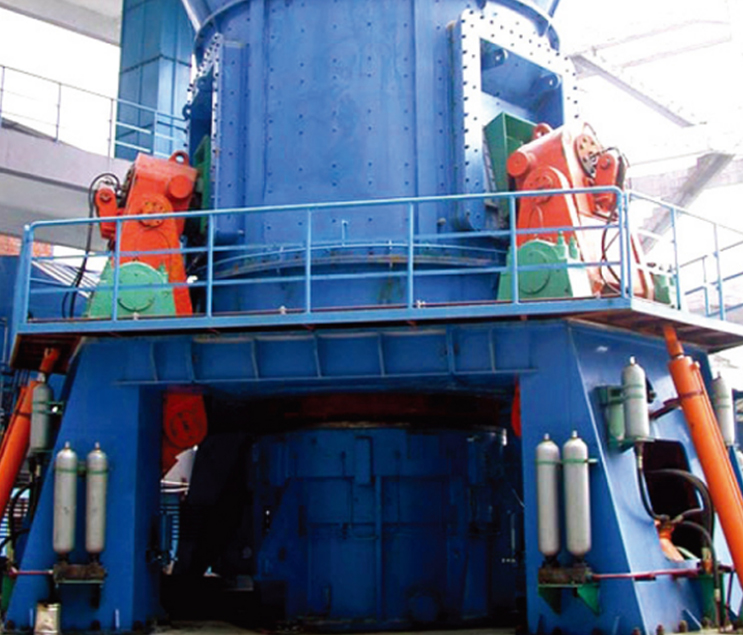 LYH1008 Series Vertical Grinding MillVertical roller mill with integrated classifier and drying, suited to continuous grinding where feed moisture and tonnage shape the flowsheet.View Product →
Drying Before Grinding: Moisture Is the Quiet Problem
Moisture is the cost nobody budgets for. Dry-collected ash from a modern boiler holds very little free water, and grinding it is straightforward. Ash reclaimed from ponds or old landfill cells can arrive at 10 to 20 percent moisture, and that changes the whole flowsheet.
Wet ash cannot be fed reliably into a mill. It bridges in silos, blinds screens, and turns a grinding circuit into a paste mixer. Drying, usually with waste heat, a hot gas generator, or a dedicated dryer, has to bring the feed down to a workable level before the mill sees it.
Model this early. Dryer fuel can quietly become the second-largest cost in the plant, and designing the heat source around available waste heat is far cheaper than adding one later.
Removing Unburned Carbon and Other Contaminants
Unburned carbon is fly ash's other liability. It adsorbs air-entraining agents, which damages freeze-thaw resistance in concrete, and it raises the loss-on-ignition figure that most specifications cap, often at five or six percent and considerably lower for premium grades.
- Electrostatic separation, which exploits the difference in conductivity between carbon and mineral particles.
- Froth flotation, effective on high-carbon ash but requiring water and dewatering afterwards.
- Sizing and classification, which can remove a coarse carbon-rich fraction from some ashes.
- Thermal processing, burning the carbon out, which works well where fuel, permits, and the heat balance all make sense.
Beneficiation is a project-specific decision rather than a catalogue item. The right route depends on carbon content, ash chemistry, and the specification you are selling into, which is why testing a sample first is always worth the delay.
Matching the Mill to the Ash
Grinding equipment for fly ash comes in a few broad families, and the differences matter more at scale than they do on paper.
Vertical mills for volume
Vertical roller and ring roller mills grind, classify, and dry in one vessel, which keeps the layout compact and the energy per ton low at higher capacities. Fly ash is not a hard material, so the mill spends its effort on fineness rather than on wear, and an integrated dynamic classifier can reach fine targets without a separate unit.
Pendulum mills for flexibility
Raymond-type pendulum mills remain a workhorse in mineral powder plants: robust, familiar to operators, and economical at small and mid-size capacities. A four-roller pendulum mill is often a sensible entry point for a producer testing the fly ash market before committing to a full-scale line.
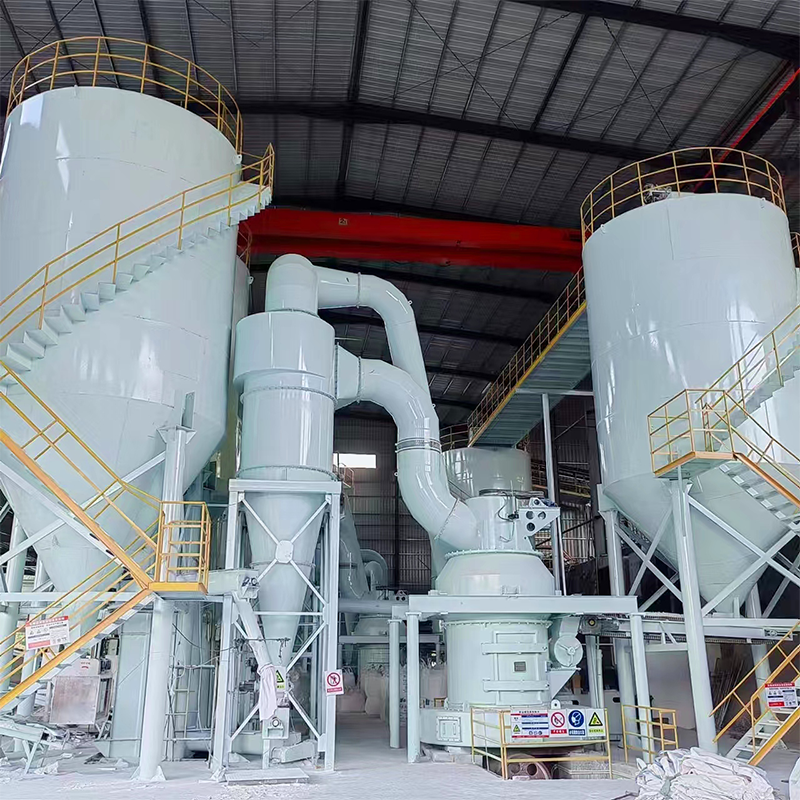 LYH998 Raymond Grinding Pendulum MillPLC-controlled Raymond pendulum mill with adjustable 60–600 mesh output, aimed at mineral powder producers evaluating fly ash processing.View Product →
Intelligent control on ring roller mills
The newer generation of ring roller mills puts the control system at the centre of the design: variable frequency drives, continuous pressure and vibration monitoring, and automatic adjustment of feed rate and classifier speed. For fly ash, where feed quality shifts batch to batch, that automatic compensation is worth more than it sounds.
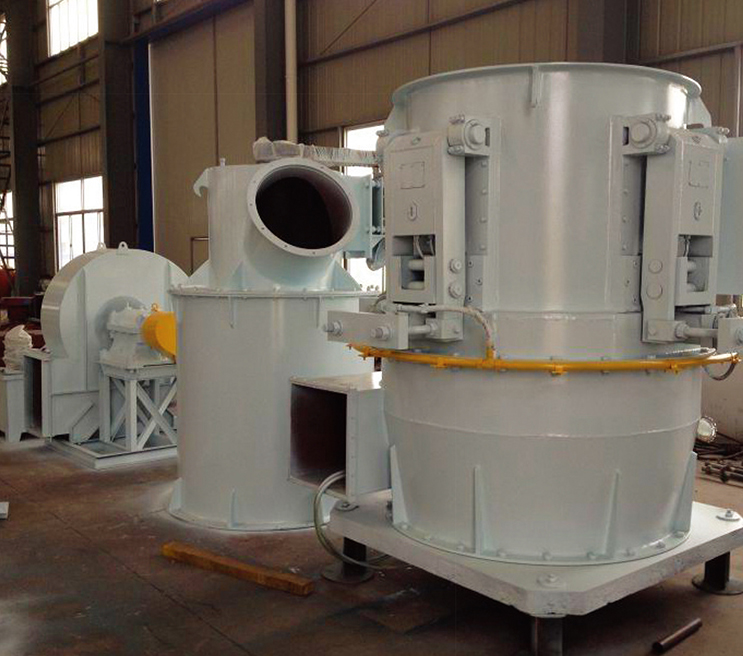 LYH996 Series Intelligent Vertical Ring Roller MillUltrafine ring roller mill with hydraulic pressurization, 400–1500 mesh output, and negative-pressure pulse dust collection for cleaner fly ash processing.View Product →
Dust, Noise, and the Compliance Side of the Plant
Fly ash is fine, light, and easy to put into the air, so dust control is not an add-on; it is part of the process design. Full negative-pressure operation, properly sized bag filters, and enclosed transfer points keep the plant clean and the emission figures inside the limits most jurisdictions now enforce.
If you are planning a new line or upgrading an existing one, our notes on dust emission control in powder plants describe what compliance-ready housekeeping looks like in daily practice.
From a Single Mill to a Working Line
A mill on its own does not make a product. The feeder, classifier, baghouse, fan, conveying system, and control logic all have to be sized together, and the layout has to leave enough space for maintenance access, a detail that is cheap at the design stage and very expensive afterwards.
We work at both ends of that spectrum: single machines, and complete grinding lines delivered as an EPCM package covering design, equipment supply, and construction management. Around 100 energy-saving grinding lines supplied into metallurgy, mining, and building materials sit behind the way we approach these projects today, and most of what we know came from commissioning sites rather than from a catalogue.
Our engineering and service capabilities page explains how a project usually runs from sample testing through to handover.
Fly ash processing rewards planning. Test the ash before you size the mill, decide the market before you decide the fineness, and design drying and dust control in from the start rather than fitting them around the equipment later. Do that, and a material that once looked like a disposal liability becomes a steady, specification-grade product line.
If you have a sample and a target, send both. Comparing a sieve analysis against your specification is usually the fastest route to a realistic circuit design, and that first conversation costs nothing.

 Email:
  Telephone: +86-13951382065
 Phone: +86-13951382065