 Email:
  Telephone: +86-13951382065
 English
 中文简体
中文简体 русский
 Français
 Español
 عربى
عربى
Content
Your mill output has drifted downward over two weeks, the fineness is no longer stable, and the drive current is climbing. When you open the grinding chamber, the grinding ring shows a deep, uneven groove on one side. That inspection result explains every symptom you have been chasing.
Grinding ring wear is a direct driver of operating cost, product quality, and downtime. The good news is that wear patterns are predictable, and most mills can be restored to their original performance with the correct ring material and a disciplined replacement procedure.
What a Grinding Ring Does Inside a Roller Mill
A grinding ring is the stationary or counter-rotating wear surface that forms the outer boundary of the grinding zone in a ring-roller mill. The roller presses the feed material against the ring as it rotates, crushing the particles and then shearing them into fine powder. This is the same principle behind the classic Raymond pendulum mill, the newer vertical ring roller mill, and the heavy-duty vertical grinding mill.
Most rings are cylindrical or slightly conical, with a hardened working face. Because the ring sees the highest contact stress in the entire milling circuit, its material, hardness, and profile define the practical capacity and efficiency of the machine. A worn ring changes the geometry of the grinding zone, which immediately affects throughput, particle size distribution, and energy consumption.
In a modern ring-roller machine such as the LYH996 series intelligent vertical ring roller mill, the ring is designed to distribute pressure evenly along the roller path. This reduces localized wear and keeps the product fineness stable over thousands of operating hours. Even with this improved geometry, the ring remains a consumable component that must be inspected on a regular schedule.
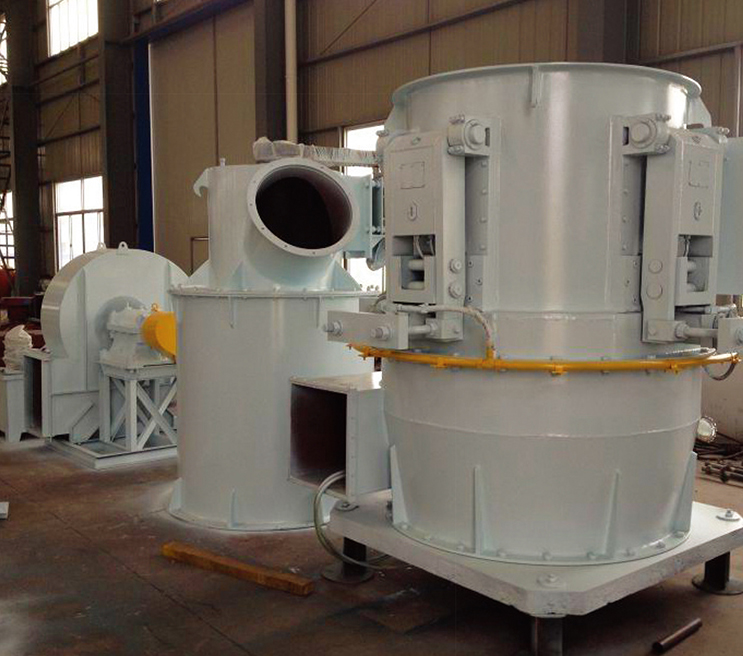 Ring Roller Mill Manufacturers, Vertical Roller Mill FactoryVertical Ring Roller Mill Manufacturers and Roller Grinding Machine Factory, Superfine Powder Roller Mill Suppliers in China, LIYUANHENG ...View Product →
The Main Wear Patterns and Failure Modes
Understanding how a grinding ring wears is the first step toward avoiding unplanned stops. Wear rarely happens uniformly. It depends on feed particle size, feed moisture, the hardness of the mineral, and the mechanical condition of the roller and scraper assembly.
| Wear Pattern | Main Cause | Result |
|---|---|---|
| Deep groove on lower face | Uneven feed distribution or roller misalignment | Lower capacity, coarser product, higher current |
| Stepped or wavy surface | Hard particle build-up, unsuitable ring material | Higher specific energy, vibration, unstable fineness |
| Cracking or spalling | Thermal fatigue, tramp metal impact | Discontinuous operation, risk of damage to roller assembly |
| One-sided wear | Worn yokes, scrapers, or incorrect ring leveling | Frequent adjustment, uneven roller wear, premature failure |
Which pattern you see tells you where to look next. A grooved ring often points to feed distribution. A wavy surface points to material selection or moisture. Cracking points to mechanical stress or foreign material in the feed. Correcting the root cause is just as important as replacing the ring itself.
How to Tell When the Grinding Ring Needs Replacement
Waiting for a visible ring failure increases the risk of damaging the roller assembly and the main shaft. The warning signs appear earlier if you compare current operating data with baseline values from when the mill was new.
Operational Signals
- Capacity drops: the mill can no longer sustain its rated throughput at the same classifier setting.
- Fineness shifts: the product becomes visibly coarser, and you adjust the classifier more often.
- Motor current changes: a worn ring creates higher friction in the grinding zone, so amps rise even though output falls.
- Vibration increases: an uneven ring profile produces a rotating imbalance that can be felt on the machine base.
- Seal leaks or product temperature rises: the ring may be moving slightly in its seat, breaking the internal seal and allowing fine powder to escape.
Visual Inspection
Look at the working face from several points around the circumference. A new ring has a uniform, smooth profile. A worn ring will show a stepped edge, a deep groove, or a polished area that is not concentric. Measure the remaining wall thickness with a caliper at four or more positions. If the difference between the thinnest and thickest point exceeds 5% of the original wall thickness, replace the ring rather than trying to reprofile it.
Material Selection and Ring Life
Ring material is the biggest variable in overall wear life. The right choice depends on the feed mineral, the feed moisture, and the target fineness. Two general families cover most applications: high-manganese steel for impact and heavy loading, and high-chromium cast iron for fine, abrasive feeds where hardness is the priority.
Matching Material to Feed Type
For limestone, calcite, and other materials around 60 to 400 mesh, high-manganese steel offers a good balance between toughness and work hardening. For quartz, granite, zircon sand, and other hard minerals above 5 on the Mohs scale, high-chromium iron resists micro-cutting and extends the interval between ring changes. Moisture also matters: if the feed exceeds 6% moisture, a smoother ring face may be needed to avoid material build-up and slippage.
Classic pendulum machines still rely on the same ring-and-roller concept as the LYH998 4-roller Raymond grinding pendulum mill. In these mills, the ring is usually segmented, which allows one or two segments to be replaced without disturbing the entire assembly. This is a practical advantage when feed conditions vary from one production run to the next.
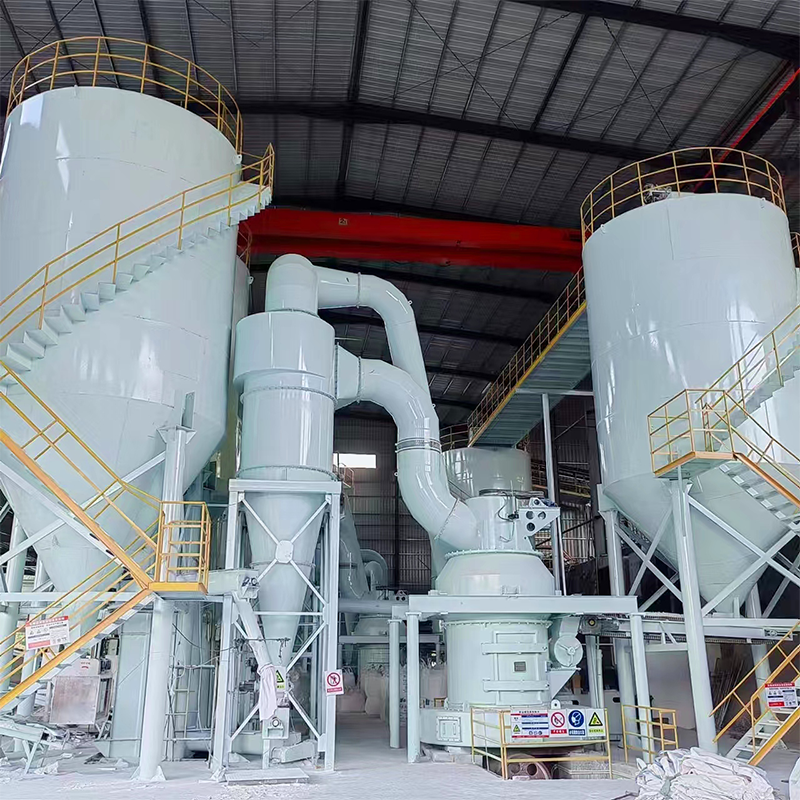 Raymond Mill Manufacturers, Pendulum Mill Factory, SuppliersLIYUANHENG - Raymond Roller Mill Manufacturers and Raymond Grinding Mill Factory, Pendulum Mill Suppliers in China, 4 Roller Raymond Pend...View Product →
Planning Replacement Around Real Cycle Times
Keep a simple wear log with three numbers: running hours, total tonnage passed, and ring wall thickness measured at the same location each time. After two or three ring changes, you will see a reliable pattern. For example, if a ring lasts 3,500 hours at an average throughput of 8 t/h, then a 1,000 t change in production plan will affect the next replacement date more than the calendar date. Use tonnage, not months, as your primary replacement trigger.
Replacement and Reconditioning
Replacing a grinding ring is not a simple bolt-off/bolt-on job. The ring seat and the roller profile must be aligned with each other or the new ring will wear unevenly within days. A disciplined procedure prevents most early failures.
- Shut down the mill and lock out the drive. Confirm that the grinding chamber is depressurized before opening inspection doors.
- Separate the grinding chamber and remove the worn ring with a suitable lifting device. Do not drag it across the chamber floor.
- Clean and inspect the ring seat for burrs, erosion, or old sealing compound. A damaged seat will concentrate stress on the new ring.
- Align the new ring to the centering marks and torque it to the specification in the manual. If segmented, stagger the joints and check face height with a dial indicator.
- Run the mill for a short break-in period with reduced feed before returning to full load. Check the ring temperature and vibration after one hour, then again after eight hours.
Larger vertical ring assemblies, such as the one used in the LYH1008 vertical grinding mill, require crane handling and careful leveling. A 2 mm mismatch between the ring face and the roller path will create uneven contact from the first start. Plan extra time for alignment when the ring has a large diameter or high mass.
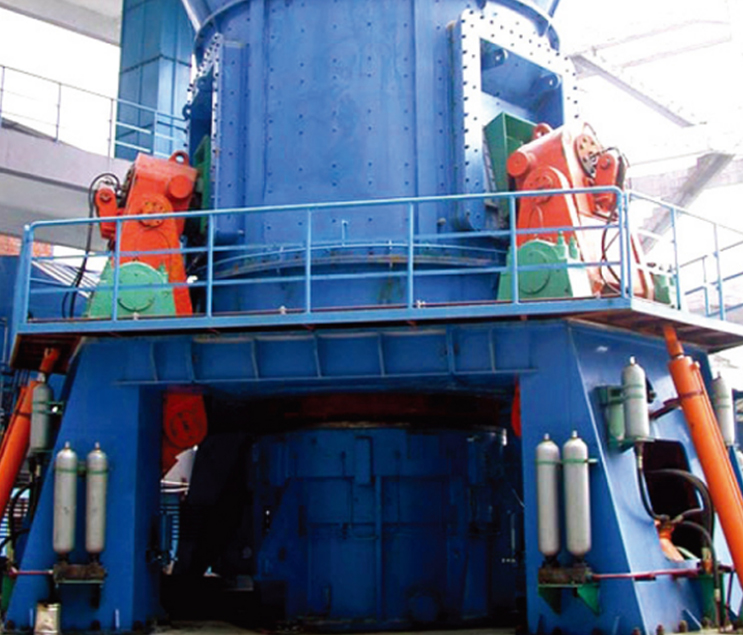 Vertical Grinding Mill Manufacturers, Factory, SuppliersLIYUANHENG Mineral Grinding Machine Manufacturers, China Vertical Grinding Mill Factory and Suppliers, Barite Grinding Mill and Dolomite ...View Product →
Procurement Considerations
Choosing a replacement grinding ring is not just about price per kilogram. The ring must match the original drawing for profile, hardness depth, and bolt pattern. Suppliers that build mills themselves, or that have access to original drawings, can also advise on how the ring will interact with your specific feed size and moisture content.
Purchase risk usually appears in three places: dimensional tolerance, internal casting quality, and after-sales support. A ring that is only 2 mm off in bore diameter can cause uneven roller contact from the first hour. Ask for a dimensional measurement report and a material certificate. If the supplier offers EPCM services, they can help you plan the downtime window, coordinate crane access, and check the roller surfaces at the same time.
Genuine wear parts are not always the most expensive choice when you calculate cost per ton. A lower-priced ring that lasts half as long will increase your labor cost, energy cost, and the risk of collateral damage to the roller assembly. Compare wear parts based on expected life in your application, not on initial price.
Conclusion
The grinding ring is not a sacrificial part you can ignore until the line stops. It is a precision component that controls the efficiency ceiling of your entire milling system. By understanding how it wears, choosing the right material for your feed, and replacing it at the right time, you can keep output stable, protect the roller assembly, and avoid unplanned downtime.
If you are evaluating ring materials, comparing supplier drawings, or planning a major mill overhaul, the decision does not end with the component itself. The surrounding grinding chamber, classifier, and drive system must all work together. To see the complete range of grinding systems and engineering services we offer, visit our company website.

 Email:
  Telephone: +86-13951382065
 Phone: +86-13951382065